

- Home
- /
- Digitalization
- /
- India Mobile Congress 2025: Charting…
Introduction: A Turning Point for India’s Tech Ambitions
The conversation around global technology leadership is shifting, and for four days in October 2025, its epicenter was New Delhi. The 9th edition of the India Mobile Congress (IMC) 2025, Asia’s most influential telecom and technology forum, concluded on a high note, solidifying India’s status not just as a consumer market, but as a formidable global digital flag bearer and solution provider.
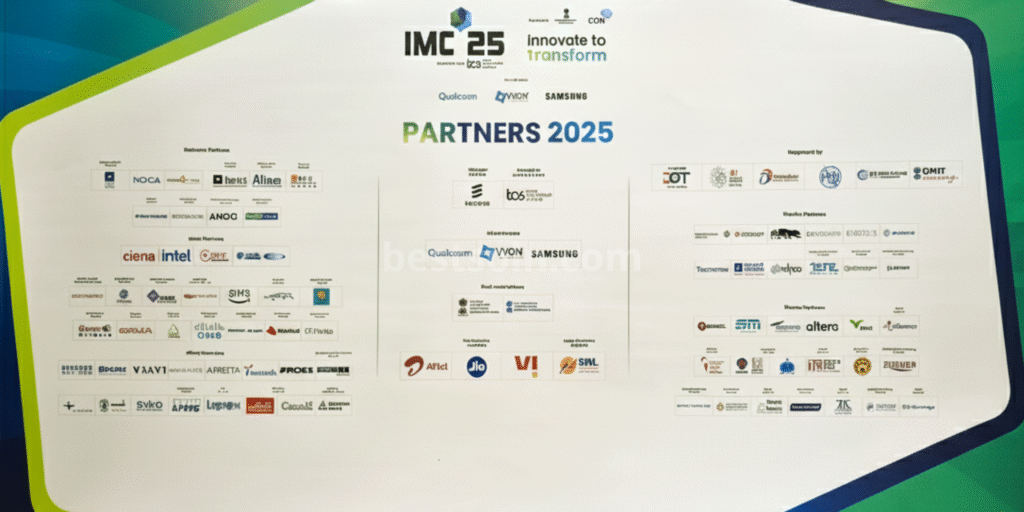
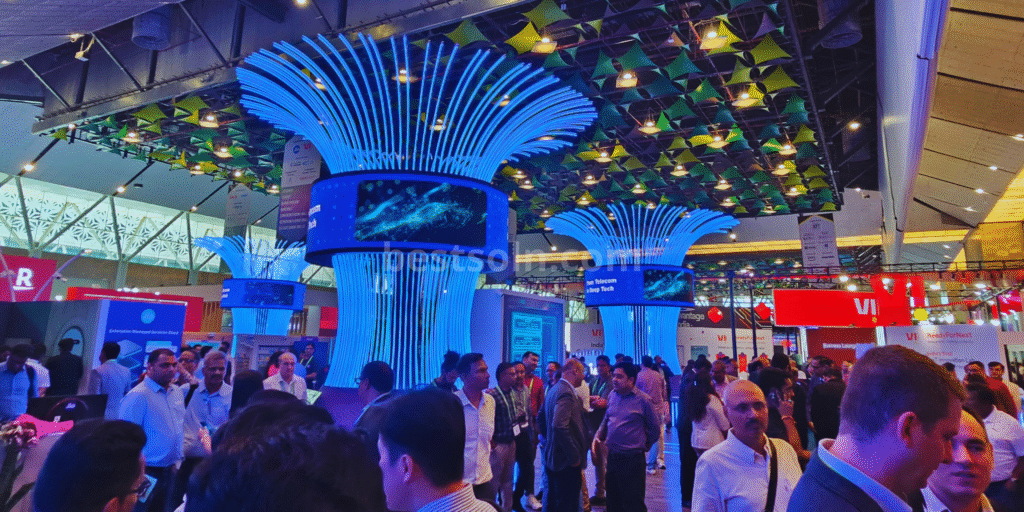
Held at the state of the art Yashobhoomi Convention Centre from October 8 to 11, the event drew over 150,000 visitors and featured delegates from more than 150 countries, including Japan, Canada, and the United Kingdom. Under the strategic theme, “Innovate to Transform,” IMC 2025 was a powerful showcase of India’s technological self reliance (Atmanirbhar Bharat) and its commitment to using digital connectivity for inclusive national and global growth.
From Technology Taker to Global Contributor
The central narrative of IMC 2025 was India’s remarkable transformation in the digital arena. This sentiment was echoed in the opening sessions, where Union Minister for Communications, Jyotiraditya Scindia, highlighted the country’s evolution from a “technology taker” to a global pace setter.
The scale of India’s digital infrastructure is staggering:
- The country is now home to 1.2 billion mobile subscribers, representing 20 percent of the world’s mobile population.
- Broadband users have soared to 944 million, up from a mere 60 million in 2014, establishing what the government terms the world’s largest Digital Highway.
- Crucially, the average cost of mobile data has plummeted by 98 percent over the last decade, making connectivity affordable and accessible to millions.
This unprecedented growth lays the groundwork for next generation technologies, positioning India as a model for emerging economies that seek to expand digital access without compromising on scale, security, or affordability.
Policy Vision: 5G, 6G, and Digital Sovereignty
The policy direction set by India’s leadership was a defining element of the Congress. Prime Minister Narendra Modi, in his inaugural address, reinforced the government’s commitment to self reliance and technological sovereignty.
The Indigenous Push
The Prime Minister celebrated the success of the nationwide 5G rollout, which has already reached every Indian district, and pointed to the indigenous 4G stack as a cornerstone of technological freedom. The mandate for the industry is clear: India must be seen by the world as a solver of technology bottlenecks, not just a market. This vision ties directly into cybersecurity efforts and the need for robust digital trust frameworks.
Leading the Charge to 6G
Discussions around the future were dominated by the impending arrival of 6G. Experts confirmed that India has a strong 5G user base (over 65 million users) and is now shifting focus to widespread utilization and developing future networks.
Significantly, the International Bharat6G Symposium 2025, held alongside the IMC, saw key global research alliances issue a joint statement endorsing crucial 6G design principles. They agreed that next generation connectivity must be: trusted, secure, resilient, open, interoperable, inclusive, sustainable, and globally connected. India is actively positioning itself to lead and influence the development of these global standards.
New Frontiers: Space Networks and Deep Tech
IMC 2025 broadened its scope beyond terrestrial mobile networks, embracing the transformative potential of space and indigenous deep technology.
India’s First Satcom Summit
A key feature was India’s first ever Satcom Summit, themed “Space Networks for Universal Connectivity.” This summit addressed how satellite communication can be leveraged to effectively bridge the digital divide, bringing services like remote healthcare and education to the remotest parts of the country. With the government finalizing clear regulatory frameworks for the sector, and ISRO targeting parity with developed spacefaring nations by 2040, the integration of satellite technology into the national telecom strategy is rapidly moving from theory to reality.
Innovations on Display
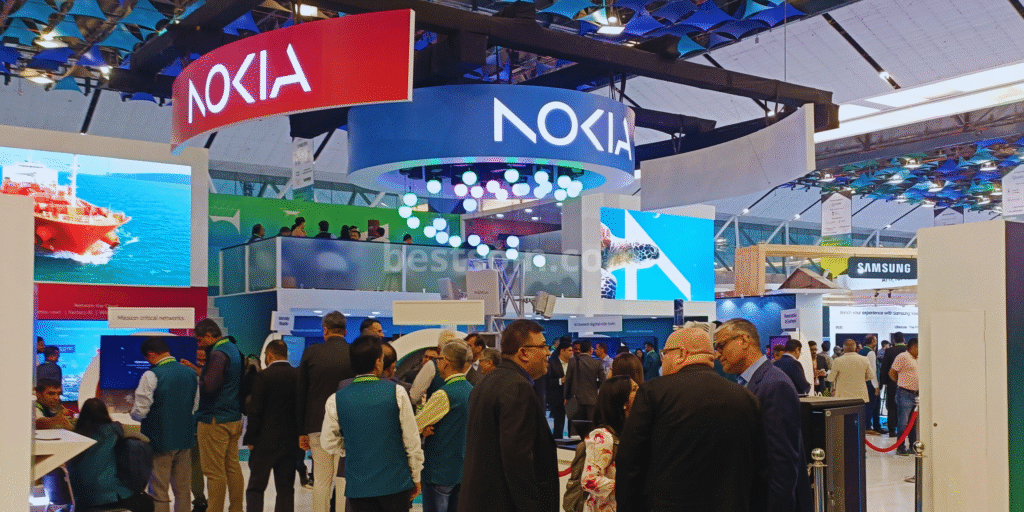
Exhibitors showcased tangible results of the self reliance push. Tejas Networks, for example, demonstrated its Direct to Mobile (D2M) technology, an indigenously developed deep tech stack ready for deployment. This, alongside displays of locally produced base stations, optical modules, and secure network architectures, underscored the maturity of India’s telecom manufacturing ecosystem. Additionally, global players like MediaTek participated, unveiling new flagship chipsets like the Dimensity 9500, designed for next generation 5G devices.
The Innovation Launchpad: Awards and Hackathons
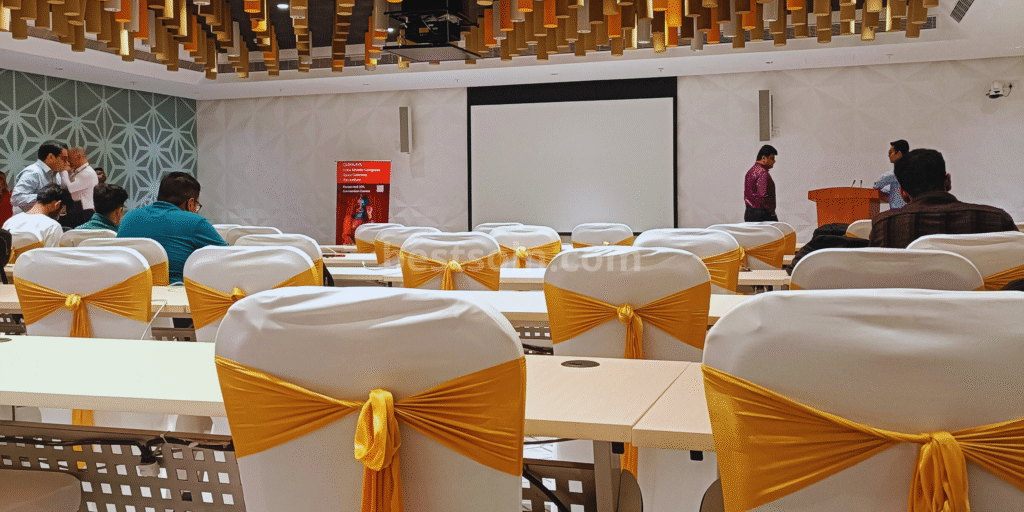
The IMC served as a dynamic platform for recognizing and nurturing grassroots entrepreneurship.
The Startup World Cup India Edition crowned Astrome Technologies, a Bengaluru based deep tech firm, as the champion for its wireless backhaul innovations aimed at accelerating rural 5G deployment.
Meanwhile, the GSMA Open Gateway Hackathon: APIs for a Billion Lives, co hosted with Nokia, showcased the potential of network APIs. The winning team, with its “PinPoint” innovation, demonstrated how telecom Application Programming Interfaces (APIs) can enable intelligent, location based services, signalling the industry’s shift toward a platform economy where network intelligence is easily accessible to developers.
The event concluded with the prestigious IMC Awards 2025, celebrating achievements in digital inclusion, AI in telecom, and rural connectivity solutions across 15 categories, further cementing the ethos of innovation with social impact.
Recommended Readings
For deeper insights into innovation and telecom, consider these books:
- “The Digital Transformation Playbook” by David L. Rogers: A foundational guide on how established businesses can adapt and thrive in the era of digital change, relevant to India’s push for digital economy growth.
- “5G NR: The Next Generation Wireless Access Technology” by Erik Dahlman, Stefan Parkvall, and Johan Skold: A technical guide to 5G and its implications.
- “The Fourth Industrial Revolution” by Klaus Schwab: Explores the convergence of physical, digital, and biological spheres, offering a global context for India’s advancements in AI, IoT, and next generation networks like 6G.
- “The Innovator’s Dilemma“ by Clayton M. Christensen: A classic book on disruptive innovation, providing insights into how new technologies, like indigenous 4G/5G stacks and D2M, challenge established market leaders and systems.
- “Zero to One“ by Peter Thiel: A perspective on building revolutionary companies and creating new things, highly relevant to the entrepreneurial spirit celebrated at the IMC Startup World Cup.
Frequently Asked Questions (FAQ)
Q1: What is India Mobile Congress?
A: IMC is Asia’s largest telecom, media, and technology forum, jointly organised by the Department of Telecommunications and COAI.
Q2: What was the main goal of the India Mobile Congress 2025?
A: The primary goal was to solidify India’s strategic vision for its telecom and digital sector. It focused on accelerating indigenous 5G/6G development, promoting digital inclusivity, strengthening cybersecurity, and fostering innovation through startups.
Q3: What was the theme of IMC 2025?
A: The central theme of the 9th India Mobile Congress was “Innovate to Transform,” emphasising India’s commitment to leveraging innovation for profound digital and societal change.
Q4: Where and when was the event held?
A: The four day event took place from October 8 to 11, 2025, at the Yashobhoomi Convention Centre in New Delhi, India.
Q5: What was the significance of the Satcom Summit?
A: IMC 2025 hosted India’s first Satcom Summit, focused on “Space Networks for Universal Connectivity.” Its goal was to align policymakers and industry leaders on using satellite technology to connect remote areas and bridge the country’s digital divide.
Q6: Which startup won the India Mobile Congress Startup World Cup?
A: Astrome Technologies, a Bengaluru based deep tech startup, emerged as the India champion for its wireless backhaul innovations designed to accelerate rural 5G deployment.
Q7: Was 6G launched at IMC 2025?
A: No, 6G was not launched. Commercial 6G is not expected until around 2030 globally. However, IMC 2025 was a crucial platform to showcase India’s progress in 6G research and development through testbed demonstrations and to announce the roadmap for the ‘Bharat 6G’ initiative.
Q8: What is India’s current status on 5G and 6G?
A: India has successfully achieved a nationwide 5G rollout, reaching all districts. The focus is now shifting to commercial utilization and actively leading research and development for 6G trials and global standards.
Q9: How does the event benefit the common person in India?
A: The technologies and policies discussed have a direct impact. It leads to faster and more reliable internet, the development of practical applications in healthcare, education, and agriculture, and the creation of new job opportunities in the tech sector. The focus on connecting rural areas also aims to bridge the digital divide.
Q10: Who participates in the India Mobile Congress?
A: It’s a mega-event that attracts a wide range of participants, including government officials and ministers, CEOs and leaders from global and Indian tech/telecom companies, innovators and startups, investors, academic researchers, and international delegates.
Conclusion
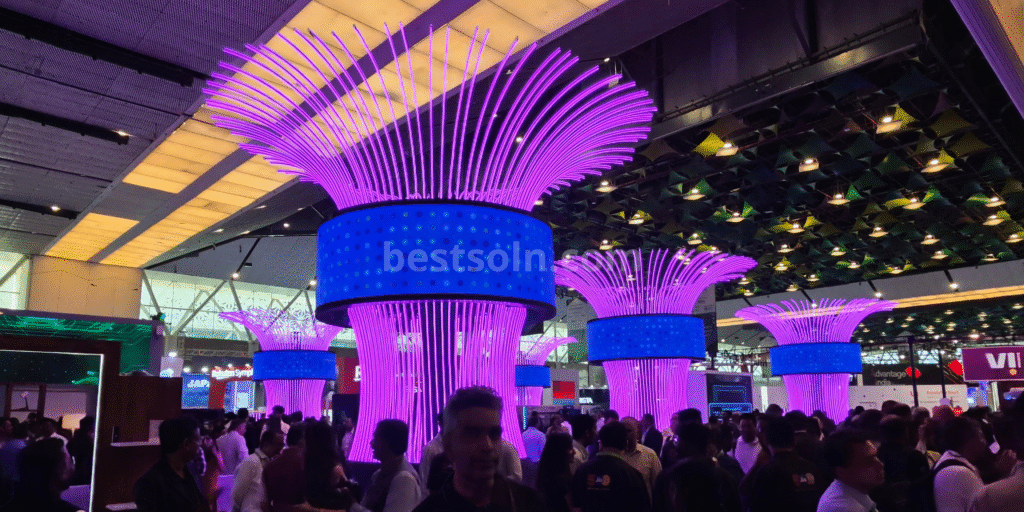
The 9th India Mobile Congress 2025 was more than an industry event; it was a powerful statement of intent. The strategic vision laid out by the leadership, coupled with the palpable entrepreneurial energy and global collaboration, makes it clear that India’s telecom ecosystem is no longer playing catch up. It is actively co creating the future of networks and connectivity.
The focus on Innovate to Transform ensures that technological progress in India is anchored not just to market growth, but to the long term pillars of self reliance, security, and sustainability. As the industry looks ahead to IMC 2026, the global digital community is assured that India will be at the forefront, driving the next wave of ubiquitous, secure, and inclusive connectivity worldwide.












Leave a Reply