

⏱️ Read Time:
Introduction
For decades, the Indian video game ecosystem operated primarily as a backend technical engine for the international games industry. Major global publishers routinely turned to studios in cities like Mumbai, Bengaluru, and Chennai to handle visual effects pipelines, environmental asset modeling, and quality assurance. While this work cultivated a highly skilled workforce of digital artists and programmers, local creators rarely controlled the intellectual property or held creative direction over the stories being told.
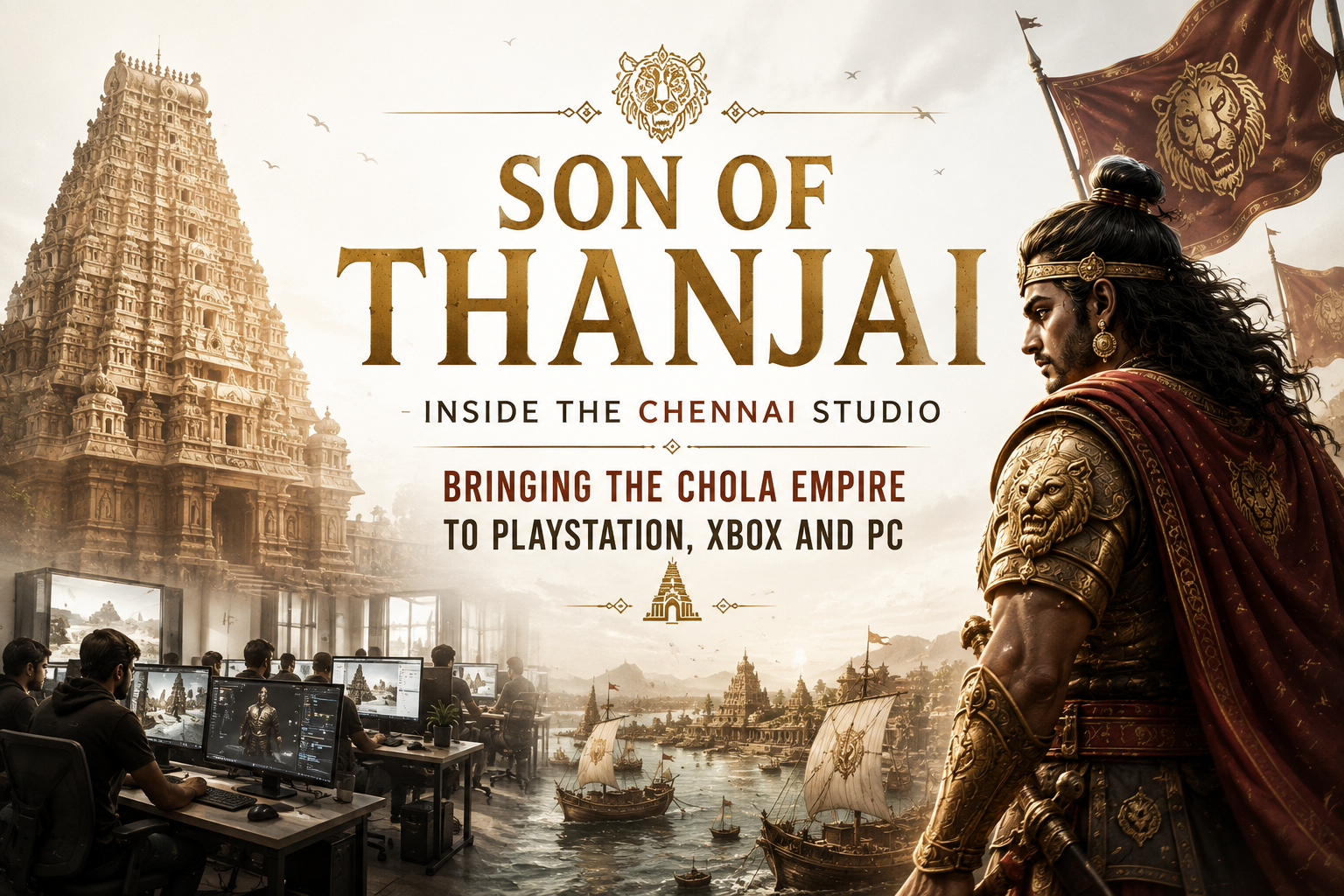
A major shift is now transforming the country’s interactive media landscape as independent Indian studios step forward as complete creative authors. Leading this transition is Son of Thanjai, a single-player action-adventure game developed and published by Chennai-based Ayelet Studio. Set in eleventh-century South India during the height of the Chola Dynasty, the title represents an ambitious attempt to translate regional historical memory into a high-budget action game for global console and PC audiences. By integrating traditional combat arts, classical Tamil literary taxonomy, and native voice acting, Son of Thanjai establishes a new milestone for cultural representation in global gaming.
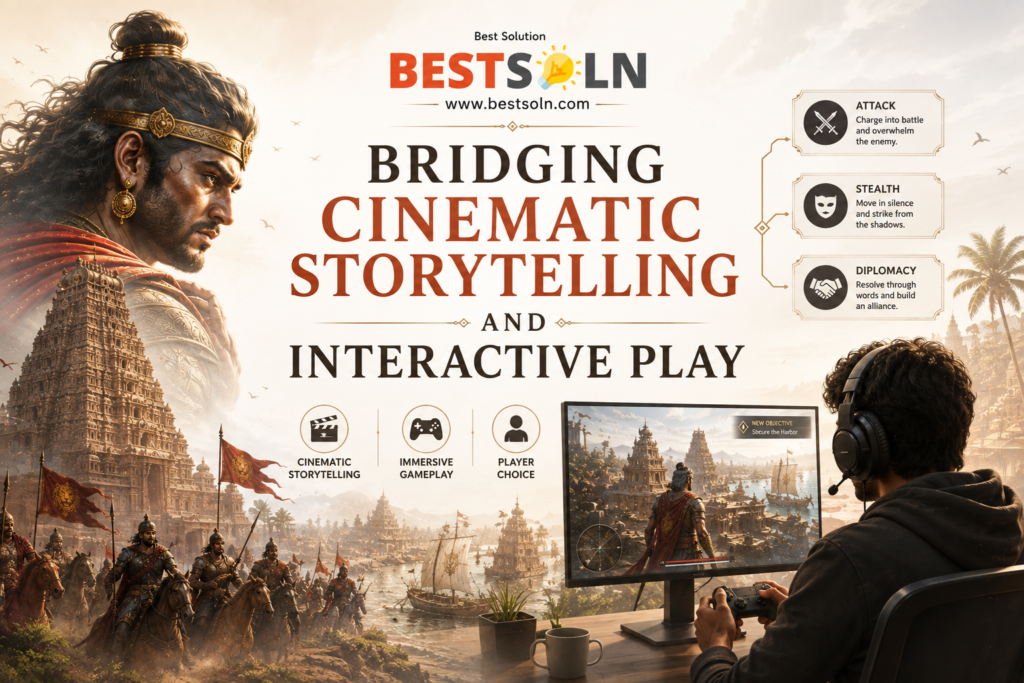
Bridging Cinematic Storytelling and Interactive Play
The Narrative Architecture of Madhan Karky
The narrative foundation of Son of Thanjai is crafted by acclaimed Tamil screenwriter and lyricist Madhan Karky, marking his formal entry into video game development. Karky is widely known for his story and dialogue contributions to massive Indian film productions, including Enthiran, Baahubali, Mersal, and Vikram. His work on the game extends beyond writing linear cutscene scripts; Karky designed the core plot framework, branching side quests, environmental world-building, non-player character dialogue, and original lyrical compositions.
This holistic writing strategy brings emotional depth and political nuance to the virtual world. Rather than delivering a predictable hero fantasy, the narrative examines the burdens of royal privilege, the ethics of imperial expansion, and the personal cost of maintaining political power.
The Exile of Prince Vinnendiran and Court Intrigue
The story centers on Prince Vinnendiran, a nineteen-year-old heir who begins his arc accustomed to royal luxury and untested by real adversity. The narrative also frames his journey around a reimagined early life of King Rajendra Chola. The game opens during a period of acute internal vulnerability for the empire. The reigning monarch, King Sengaalar, is terminally ill, encouraging ambitious courtiers to conspire inside the palace while foreign covert operatives work to destabilize border provinces.
When a sudden palace betrayal strips Vinnendiran of his title and lineage, he is forced into exile among the streets of Thanjavur. Stripped of his royal identity, the young prince must wander through busy temple settlements, rural farming valleys, and dangerous frontier roads. To survive and expose the traitors eroding the throne, Vinnendiran must learn to build grass-roots alliances, manipulate regional unrest, and weaponize fear against a collapsing empire.
Linguistic Authenticity in Mainstream Media
A defining feature of Son of Thanjai is its commitment to language preservation and authenticity. The project stands as the first major title targeting current-generation platforms to feature native Tamil audio as its default voice track, supported by localized multilingual subtitles.
Historically, popular media outside South India has often flattened or caricatured the region’s cultural heritage. By anchoring the voice performances in spoken Tamil, Ayelet Studio preserves the phonetic cadences, classical terminology, and socio-cultural mannerisms of the era, inviting international players to experience eleventh-century India without cultural compromise.
Re-Engineering Historical Combat and Stealth Systems

Choreographing the Surul Vaal Whip Sword
Central to the gameplay loop is the Surul Vaal, a flexible coil-steel whip-sword deeply tied to the South Indian martial tradition of Kalaripayattu. Designing a whip-sword for a real-time melee combat system introduced unique technical hurdles, as the weapon needs to seamlessly alternate between a firm thrusting blade and a sweeping, fluid whip.
In active combat, the Surul Vaal offers dynamic crowd control. Wide sweeping attacks can disarm enemy groups or break defensive shield lines at a distance, while quick coiling maneuvers allow the player to pull opponents closer for swift parries and close-range strikes. The weapon physics model captures the kinetic weight and momentum of actual Kalaripayattu weapon handling, making every swing feel precise and dangerous.
Morale Based Encounters and Martial Tradition
The combat design rejects simple health attrition mechanics in favor of a dynamic morale system. Drawing from historical military encounters, enemy squads operate as cohesive tactical units held together by mutual discipline and leadership.
When players execute squad commanders or pull off high-skill Kalaripayattu combinations, surrounding soldiers suffer instant morale drops. Shocked enemies may lose tactical formation, hesitate during combat, drop their shields, or retreat from the fight entirely. This mechanic encourages players to assess battlefield ranks and strike high-value targets strategically rather than relying on repetitive button press sequences.
Earned Information Stealth and Diegetic Design
Stealth mechanics follow a design concept defined as earned information stealth. The development team purposefully avoided artificial visual aids such as floating objective markers, wall-tracking vision, or glowing enemy outlines.
Infiltrating fortified royal outposts or enemy border camps requires real environmental observation. Players gather actionable intelligence by eavesdropping on patrol guards, disguising themselves in local attire to blend into civilian crowds, discovering custom access passwords, and creating organic distractions to draw guards away from key targets.
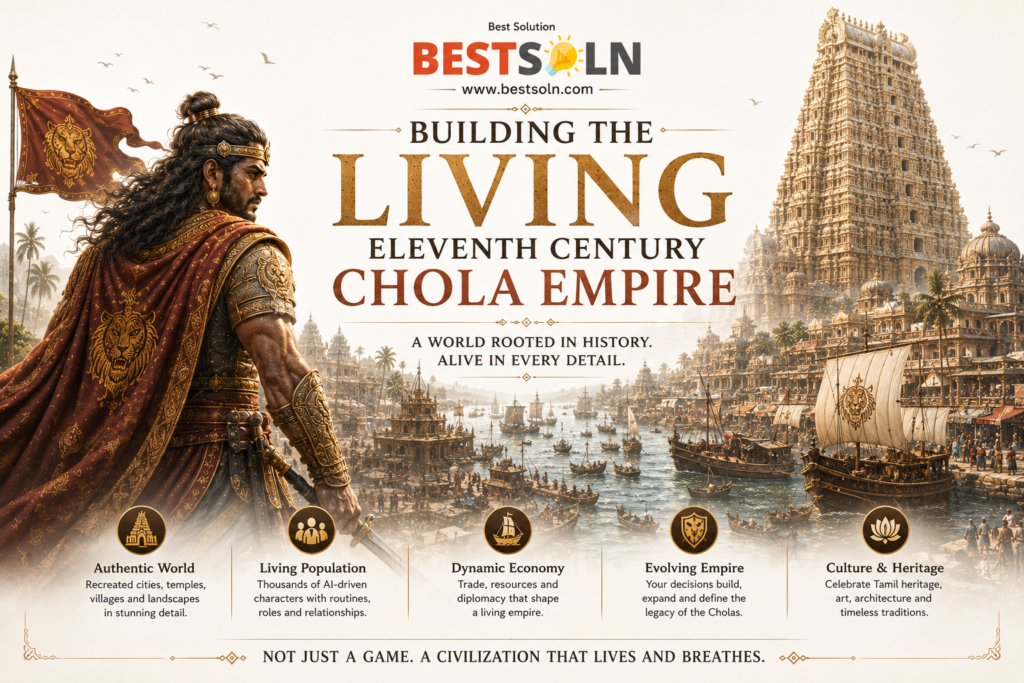
Building the Living Eleventh Century Chola Empire
The Five Tinai Landscape Framework
The environmental design applies the classical Tamil Tinai framework, an ancient eco-literary model that classifies geography and human behavior into distinct environmental zones. Rather than serving as static backdrops, each region shapes local livelihoods, civilian interactions, and available traversal options.
| Eco-Zone Biome | Regional Visual Identity | Distinctive Gameplay Dynamics |
| Thanjai Capital City | Dense urban center with Dravidian stone architecture, lively markets, and Therukoothu street theater. | High NPC density enables social stealth, disguise mechanics, and crowd blending. |
| Kaveri Riverlands | Lush agricultural farmlands crossed by irrigation canals and river transport networks. | Open visibility requiring usage of tall crops and water channels for hidden movement. |
| The Paalai Wastes | Arid, sun-bleached frontier scrublands and desolate highways past kingdom borders. | Low civilian presence, sparse natural cover, and high risk of organized ambush. |
| Open Trade Roads | Connecting highways lined with traveler inns, merchant caravans, and military checkpoints. | Dynamic encounters, intelligence gathering from travelers, and mounted combat opportunities. |
| Sacred Temples and Ruins | Multi-tiered granite temple complexes and decaying hillside ruins. | Vertical platforming, architectural navigation, and stealth operations inside ancient corridors. |
Performance Capture and the Ayelet Labs Pipeline
To realize this detailed historical setting, Ayelet Studio established its own internal performance capture studio, known as Ayelet Labs. By using full performance capture technology, the developer records actor motion, facial expressions, voice lines, and martial arts stunt choreography in simultaneous takes.
This dedicated motion capture setup allows the thirty-person development team to achieve visual animation quality comparable to larger international production teams. The technology also captures subtle cultural expressions, such as traditional Therukoothu theatrical movements and authentic martial forms, ensuring natural motion throughout civilian life and combat encounters.
Production Specifications and Platform Overview
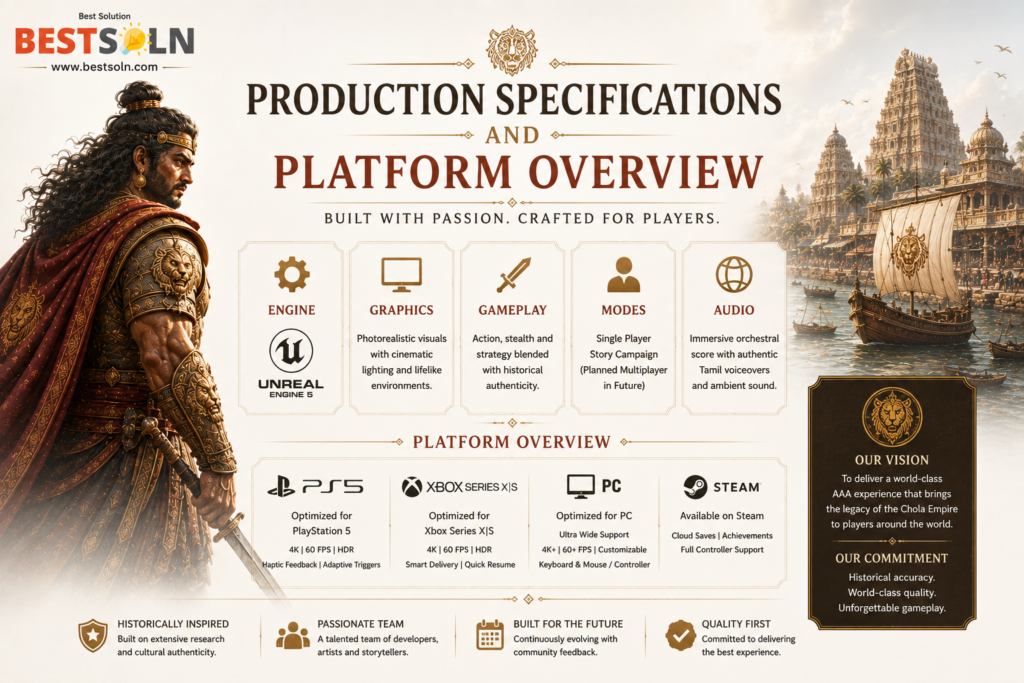
Son of Thanjai is built for current generation hardware platforms, targeting distribution across PlayStation 5, Xbox Series X/S, and PC through Steam and the Epic Games Store.
| Project Element | Official Specification |
| Title | Son of Thanjai |
| Development Studio | Ayelet Studio (Chennai, India) |
| Lead Narrative Writer | Madhan Karky |
| Studio Head and Creative Lead | Abraham K |
| Primary Platforms | PlayStation 5, Xbox Series X/S, PC (Steam, Epic Games Store) |
| Game Genre | Cinematic Action-Adventure / Narrative Single-Player |
| Signature Weapon | Surul Vaal (Flexible Coil-Steel Whip-Sword) |
| Core Fighting System | Kalaripayattu Martial Traditions |
| Audio Configuration | Native Tamil Audio Track with Localized Subtitles |
| Core Animation Tech | Ayelet Labs Performance Capture |
| Gameplay | Open-world, cinematic action-adventure. Features intense combat centered around the Surul Vaal (a flexible, whip-like coil of steel rooted in Kalaripayattu), enemy morale mechanics, stealth elements, and social deception. |
| Story | Set in an alternate-history reimagining of 11th-century medieval South India during the height of the Chola dynasty. Players follow Vinnendhiran, a 19-year-old prince who is betrayed, stripped of his crown, and cast into exile. Forced to live among farmers, rebels, and spies, he must navigate a fractured empire to understand what it truly takes to rule. |
| Features | • Open-world exploration spanning bustling temple towns, markets, and frontier roads • Unique combat mechanics utilizing the traditional South Indian flexible whip-sword (Surul Vaal) • Morale-based combat where enemies can surrender or break under pressure • Immersive stealth, disguise, and intelligence-gathering systems instead of magical tracking abilities • Living, breathing alternate-history socio-political ecosystem |
Similar Games: Raji Kaliyuga and Unleash the Avatar.
Cultural Representation and the Future of South Asian Gaming
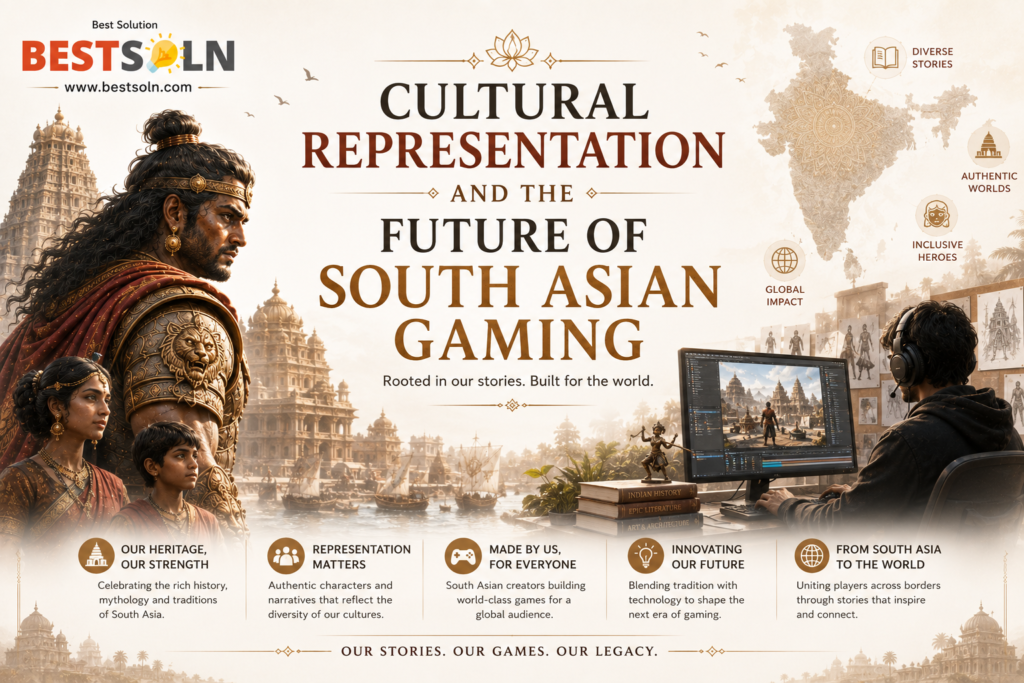
The launch of Son of Thanjai carries major importance for the broader South Asian media landscape. For decades, global video games featuring Asian settings focused almost exclusively on Feudal Japan, Ancient China, or the Middle East. When South Asia appeared in mainstream releases, it was often used as a generic backdrop for modern action titles or depicted through exoticized historical tropes.
By placing the eleventh-century Chola Empire at the center of an ambitious action game, Ayelet Studio demonstrates that South Asian history holds immense narrative appeal for international audiences. Successful execution of this project offers a clear blueprint for other independent studios across the global south, showing how teams can leverage local heritage, literature, and regional arts to create memorable media on the world stage.
Recommended Readings

- The Cholas by K.A. Nilakanta Sastri: The classic foundational historical text detailing the political history, administration, social structures, and naval expeditions of the Chola Dynasty.
- Lords of the Deccan: Southern India from the Chalukyas to the Cholas by Anirudh Kanisetti: A narrative history exploring medieval South India, focusing on political rivalries, military campaigns, and cultural transformations.
- South India Under the Cholas by Y. Subbarayalu: An empirical study examining the administrative geography, agrarian systems, trade networks, and local self-governing bodies of the Chola period.
- Ponniyin Selvan by Kalki Krishnamurthy: The classic five part Tamil historical novel that shaped popular imagination of the Chola era and inspired recent film adaptations.
Frequently Asked Questions
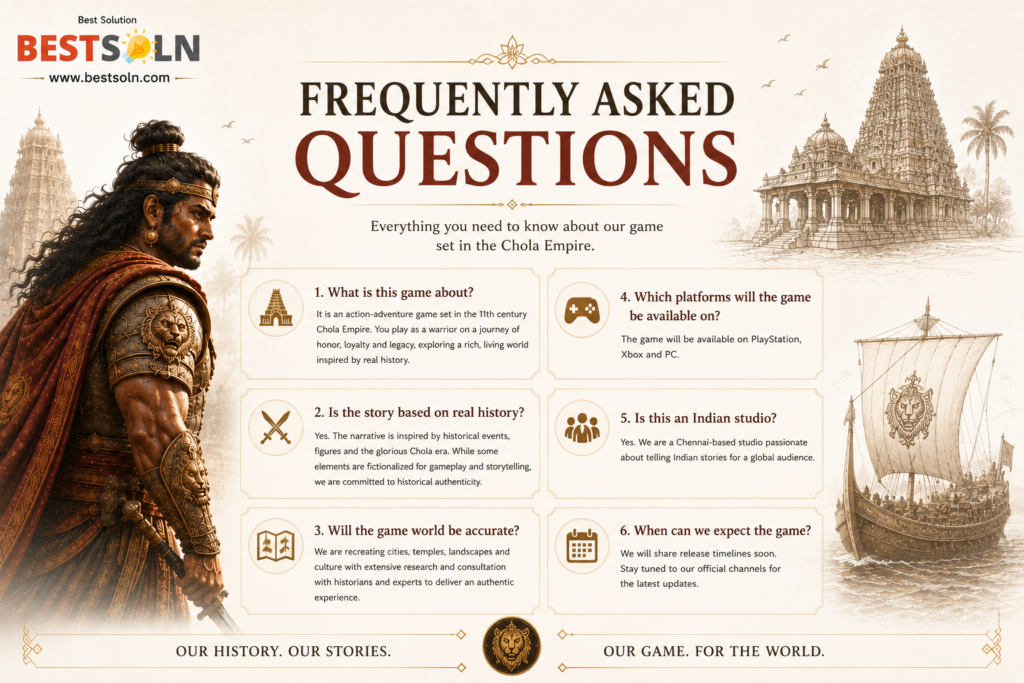
Which platforms will Son of Thanjai launch on?
The game is currently in development for PlayStation 5, Xbox Series X/S, and PC via Steam and the Epic Games Store.
Who is handling the narrative and dialogue writing for the game?
The narrative structure, dialogue, side quests, and world lore are written by acclaimed Tamil screenwriter and lyricist Madhan Karky.
What is the primary weapon featured in the combat mechanics?
The protagonist wields the Surul Vaal, a flexible whip-sword forged from coiled steel, which originates from traditional South Indian martial arts.
Will the game feature full native voice acting in Tamil?
Yes, the project is designed with native Tamil voice acting as its primary audio track, alongside localized subtitles for global players.
Is Son of Thanjai a strict historical retelling or an original fiction?
The game is an alternate-history cinematic action-adventure set against the historical backdrop of the eleventh-century Chola Dynasty.
Conclusion
Son of Thanjai represents a pivotal moment in how South Asian history is adapted for digital entertainment. By combining historical research, innovative whip-sword mechanics, and detailed writing from Madhan Karky, Ayelet Studio is creating a project that respects its cultural origins while meeting modern action-adventure standards. By stepping away from oversimplified tropes and grounding its design in authentic language, regional martial arts, and classical landscape taxonomy, the game stands out as a meaningful reclamation of historical memory through interactive media.













Leave a Reply