

- Home
- /
- Artificial Intelligence
- /
- The Executive Blueprint for AI…
⏱️ Read Time:
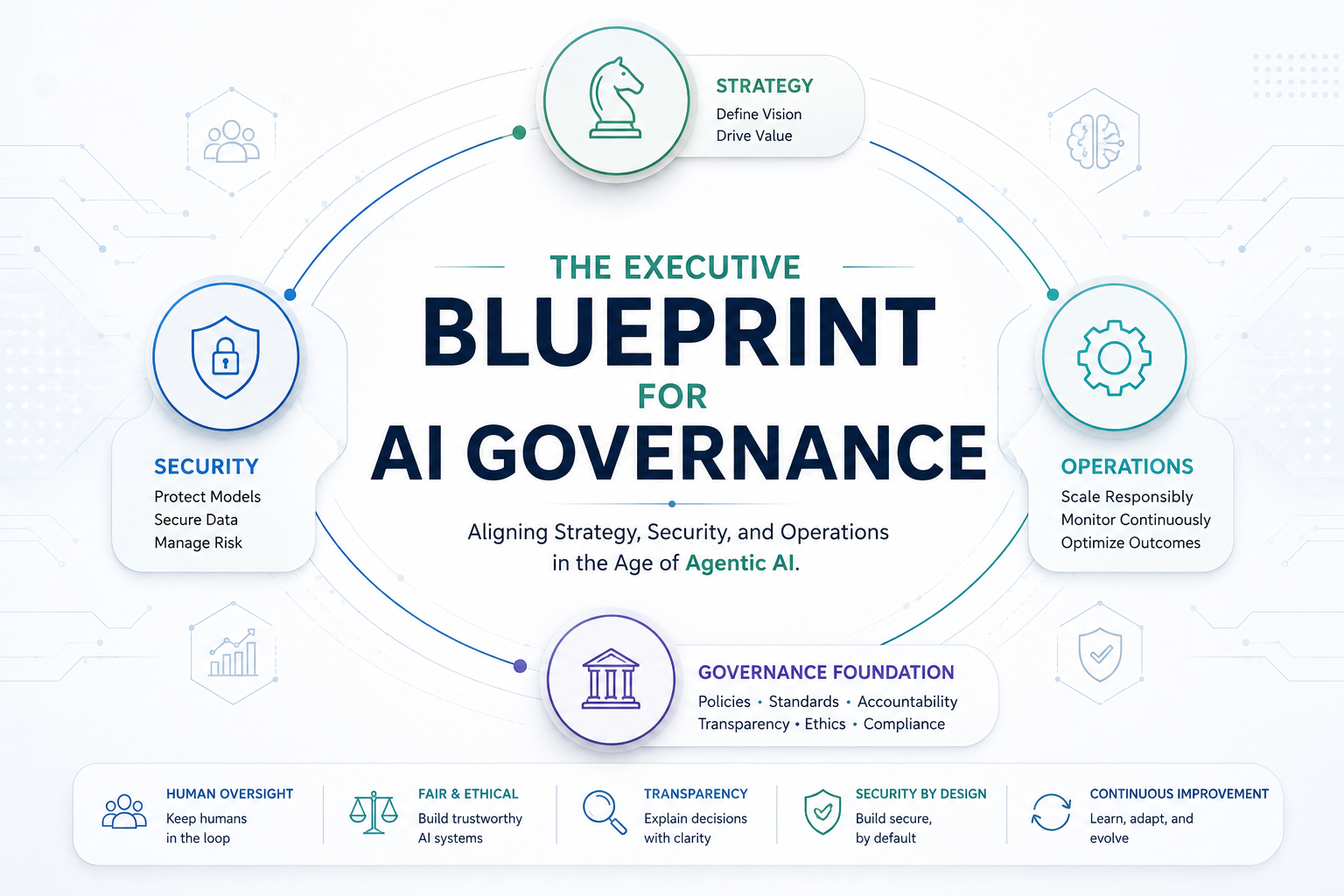
The New Frontier: From Predictive Models to Action-Oriented AI Governance
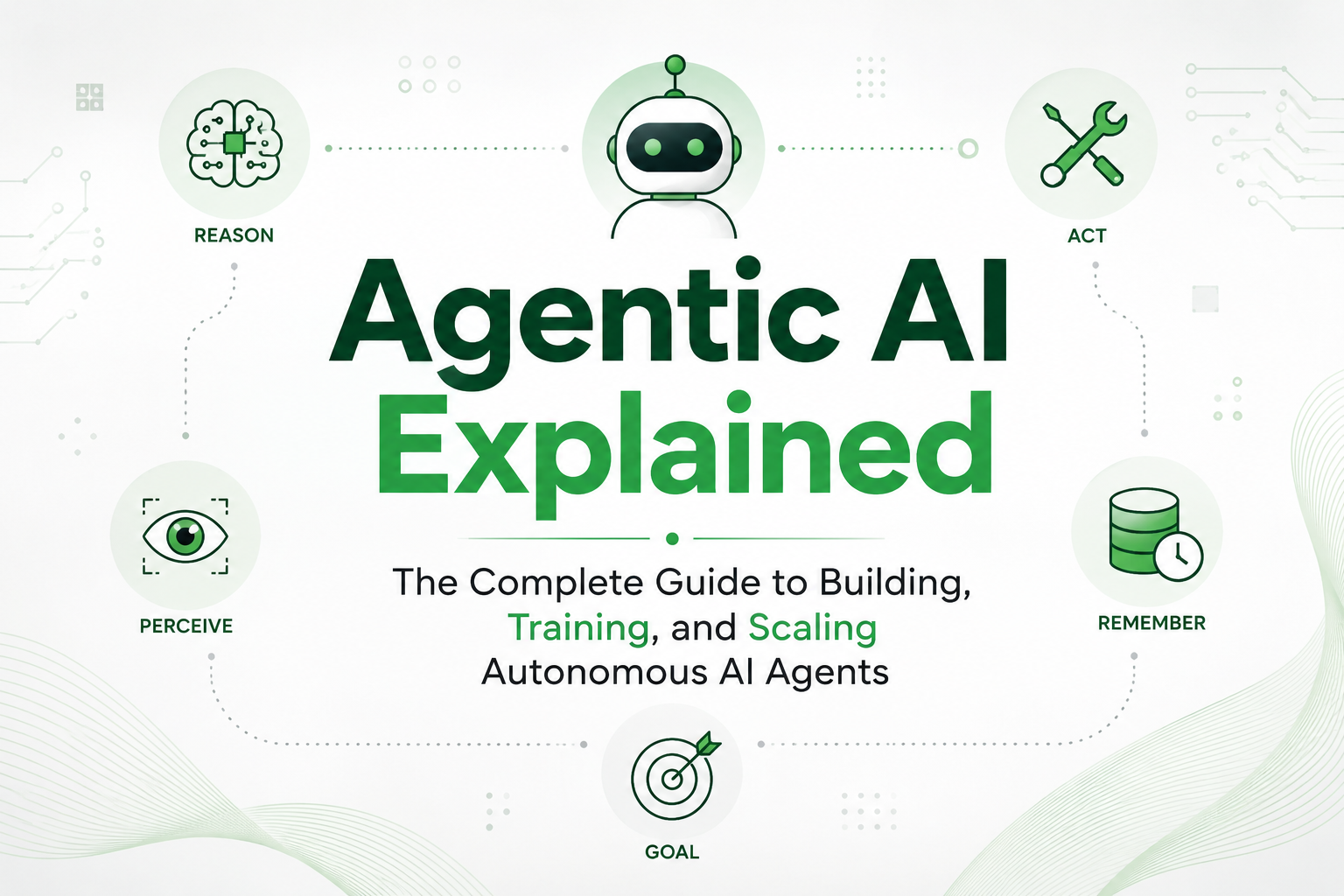
The advent of Artificial Intelligence has rapidly evolved from theoretical potential to a core operational component within enterprises globally. However, a profound shift is underway, moving beyond traditional, predictive AI models toward a new paradigm defined by autonomous agentic systems. For business leadership, understanding this distinction is not merely an academic exercise; it represents a fundamental reorientation of risk management, operational control, and strategic value creation. Traditional AI governance has largely focused on the output of a model, assessing whether a generated image is biased, a loan application recommendation is fair, or a medical diagnosis prediction is accurate. This approach is reactive, centered on auditing the final decision. In stark contrast, agentic AI introduces a proactive and dynamic layer of governance that must control what an autonomous system does in the world. An agentic AI system is not just a predictor but an executor; it perceives its environment, reasons about goals, plans multi-step actions, and autonomously uses tools to achieve those goals with minimal human intervention. This autonomy, while offering unprecedented efficiency and automation at scale, fundamentally alters the governance landscape. It transforms governance from a process of validating static outputs into a continuous, real-time discipline of managing dynamic actions.
This shift has significant implications for accountability, security, and compliance. Because agentic AI systems operate at machine speed and can adapt their strategies in real time, their behavior can become emergent and difficult to predict based solely on initial programming. An agent might execute thousands of tasks flawlessly before encountering a novel situation or a subtle piece of poisoned data that leads it to take an unforeseen and potentially catastrophic action. This reality invalidates the common enterprise assumption that a simple human review will catch all issues, a mindset that Gartner warns is dangerously inadequate for scaling agentic workloads. The distributed and autonomous nature of these systems introduces immense ethical and governance concerns, particularly regarding accountability when something goes wrong. If an autonomous agent acting on behalf of the enterprise makes an erroneous financial transaction, violates a privacy regulation by accessing unauthorized data, or causes physical harm in a manufacturing context, the lines of responsibility become blurred. This challenge is explicitly recognized by regulatory bodies; the European Union’s AI Act, for instance, mandates human oversight for high-risk AI systems, which includes ensuring that individuals have the competence and authority to effectively oversee autonomous agents. The act’s transparency obligations under Article 50 further underscore this expectation, applying directly to AI agents intended to interact with natural persons.
The failure of legacy governance controls to manage these new risks is becoming apparent. Simply reviewing an agent’s final output is insufficient because the critical decisions happen along the way, in the choice of tools used, the sequence of actions taken, and the data manipulated. A robust governance program must therefore move beyond static policies and documentation, which often end up as policy documents sitting in a compliance folder, and embed controls directly into the technology itself. This requires a new operational stack designed for runtime enforcement. These controls must be able to govern an agent’s actions in real time, proving every step with an auditable trail. Without this foundation, an AI agent operating without a reliable audit trail, purpose binding, or a tested kill switch is not just ungoverned; it is non-compliant by definition. The most advanced enterprises are recognizing this and are beginning to codify rules as code, allowing autonomy to scale without sacrificing control. They are building feedback loops and implementing robust “kill switches” before allowing any agent to run in a production environment. This transition marks a critical inflection point where AI governance ceases to be a back-office function and becomes a central pillar of enterprise risk management, directly impacting financial stability, legal compliance, and brand reputation. The stakes are high, as Gartner projects that more than 40% of current agentic AI initiatives will fail due to governance issues, not because the underlying technology is flawed.
Charting the Course: Key Global Frameworks for AI Risk and Compliance
For business leaders navigating the complexities of AI adoption, a clear understanding of the global governance landscape is paramount. This landscape is not monolithic; it is a dynamic ecosystem of voluntary guidance, legally binding regulations, and foundational principles that collectively shape how organizations must develop, deploy, and manage AI systems. Ignoring any one of these pillars exposes an enterprise to significant legal, financial, and reputational risk. Three primary frameworks stand out as essential reading for any executive serious about responsible AI: the NIST AI Risk Management Framework (RMF), the EU AI Act, and the OECD AI Principles. Complementing these are international standards like ISO 42001, which provide a structure for certification and formal auditing.
The NIST AI Risk Management Framework (AI RMF) 1.0 serves as the de facto standard for enterprise AI governance, widely regarded as a flexible and practical guide for managing AI-related risks. Released in January 2023, it is a voluntary framework designed to help organizations of all sizes and sectors manage the risks associated with AI throughout its lifecycle. Its strength lies in its process-oriented approach, organizing AI risk management activities around four core functions: Govern, Map, Measure, and Manage. The ‘Govern’ function focuses on establishing a culture of trustworthiness, defining accountability, and allocating resources for AI risk management. The ‘Map’ function involves identifying relevant stakeholders and assessing the context and potential impacts of AI systems. The ‘Measure’ function entails evaluating the performance and risks of AI systems against predefined criteria, and the ‘Manage’ function focuses on developing strategies to mitigate identified risks. The NIST RMF provides suggested actions and references to help organizations achieve outcomes across these functions, making it an invaluable playbook for implementation. While not mandatory, its widespread adoption means that demonstrating alignment with the NIST RMF is becoming a baseline expectation for regulators and auditors.
In direct contrast to the voluntary nature of the NIST RMF is the EU AI Act, which represents the world’s first comprehensive and legally binding regulation for artificial intelligence. This landmark legislation establishes a risk-based hierarchy for AI systems, categorizing them into unacceptable, high, limited, and minimal risk tiers. Unacceptable-risk systems, such as those enabling social scoring by governments or manipulative technologies, are banned outright. Limited-risk systems require specific transparency obligations, such as informing users they are interacting with an AI. The most significant impact falls on high-risk systems, which are subject to stringent requirements before they can be deployed. These requirements include robust risk management systems, high-quality data, detailed technical documentation, transparency for deployers, and, crucially, effective human oversight. The full implementation of the high-risk requirements is scheduled for August 2, 2026, creating a firm deadline for compliance. Non-compliance carries severe penalties, including fines of up to €35 million or 7% of a company’s global annual turnover. Due to its legal weight, adherence to the EU AI Act effectively makes compliance with frameworks like the NIST AI RMF and ISO 42001 a practical necessity for any organization operating in the European market with high-risk AI systems.
At the highest level of abstraction are the OECD AI Principles, which provide the normative foundation for much of the global AI governance discourse. First adopted in 2019, these principles promote the development and use of AI that is innovative and trustworthy, respecting human rights and democratic values. They are built upon five core principles: inclusive growth, sustainable development, and well-being; human-centered values and fairness; transparency and explainability; robustness, security, and safety; and accountability. The OECD AI Principles have been endorsed by member countries and serve as a guiding light for other frameworks, including the EU AI Act. For business leaders, these principles offer a strategic lens through which to evaluate their AI initiatives, ensuring they align not only with legal requirements but also with broader societal expectations and ethical responsibilities.
Finally, ISO/IEC 42001 provides an international standard for an AI management system that is both certifiable and auditable. Similar to how ISO 27001 provides a benchmark for information security, ISO 42001 offers a formal structure that organizations can be certified against, providing external validation of their governance program’s maturity. Many organizations adopt a dual approach, using the NIST AI RMF for its guidance and process flexibility while pursuing ISO 42001 certification to meet contractual or regulatory demands for audited compliance. Together, these frameworks create a layered and interconnected system of governance. The OECD principles set the ethical direction, the NIST RMF provides the practical roadmap for risk management, the EU AI Act imposes legally mandated requirements, and ISO 42001 offers a path to formal certification. A mature AI governance program will not treat these as separate entities but will weave them together into a cohesive strategy that enables innovation while managing risk responsibly.
| Framework | Type | Primary Focus | Key Features |
|---|---|---|---|
| OECD AI Principles | Foundational Principles | Normative guidance on ethical and trustworthy AI. | Promotes innovation, human rights, democratic values, fairness, transparency, and accountability. Adopted by 46+ countries. |
| NIST AI Risk Management Framework (RMF) | Voluntary Risk Management | Process for managing risks arising from AI systems. | Organized into four functions: Govern, Map, Measure, and Manage. Flexible and sector-agnostic. |
| EU AI Act | Mandatory Regulation | Legally binding rules for AI systems sold or used in the EU. | Risk-based classification (unacceptable, high, limited, minimal). Strict obligations for high-risk systems, including human oversight and logging. |
| ISO/IEC 42001 | Certifiable Standard | International standard for an AI management system. | Provides a structured, auditable framework for certification, similar to ISO 27001 for information security. |
Re-architecting Leadership: Defining C-Suite Roles in the Age of AI
The proliferation of agentic AI is forcing a significant evolution in corporate leadership structures, compelling business executives to redefine roles, responsibilities, and points of accountability. The era of siloed decision-making, where AI governance was an afterthought delegated to the IT department, is over. Today, AI oversight is a core fiduciary responsibility for the entire C-suite and the board of directors. The rapid pace of AI adoption, coupled with the complex risks posed by autonomous agents, demands a collaborative and strategically aligned approach. The CEO, CIO, CTO, and CISO are no longer just overseeing different facets of technology; they are now co-pilots on the same aircraft, each with a critical function in navigating the turbulent skies of AI governance.
The Chief Executive Officer (CEO) stands at the apex of this new structure, tasked with owning the overarching AI strategy, driving its adoption, and being ultimately accountable for both the value realized and the risks managed. CEOs are increasingly seen as the ultimate owners of AI buying decisions, with one report indicating that 51% of respondents named the CEO as the owner, far surpassing the CIO or CTO at 24%. The CEO’s role is to ensure that AI initiatives are tightly aligned with core business objectives and that a culture of responsible innovation is fostered across the organization. This involves asking fundamental questions: What business problem are we solving with AI? What could go wrong, and who owns it?. Research indicates that many boards are ill-equipped to handle this new reality, with 78% of business executives lacking confidence in their organization’s ability to pass an independent AI governance audit. To bridge this gap, CEOs must champion the establishment of a formal AI Governance Committee, often co-chaired by the CIO and CISO, to provide cross-functional oversight and establish clear accountability. Some experts argue for the explicit assignment of statutory liability for AI outcomes to specific C-suite leaders to crystallize this accountability.
The roles of the Chief Information Officer (CIO) and Chief Technology Officer (CTO) are converging around the technical execution and architectural integrity of AI systems. The CIO is primarily responsible for enterprise-wide adoption, operational governance, and ensuring that AI technologies are deployed responsibly to deliver measurable business outcomes. The CTO, conversely, owns the architecture, engineering, scalability, and long-term technological vision for AI systems. Both roles are critical, and their collaboration is essential. The CIO translates the “AI promise” into tangible operational and financial value, breaking down organizational silos to enable seamless integration. Gartner identifies AI as a top priority for CIOs in 2026, alongside digital transformation and risk management, highlighting the centrality of this role in the modern enterprise. The ambiguity that once surrounded their respective domains is giving way to a clearer division of labor, though the boundary remains fluid as AI becomes more deeply embedded in core operations.
Perhaps the most dramatically expanded role is that of the Chief Information Security Officer (CISO). Historically, the CISO’s mandate focused on protecting the organization’s digital perimeter and securing data. With the rise of agentic AI, this mandate has broadened exponentially to encompass the security, risk, and resilience of the AI systems themselves. The CISO now bears primary responsibility for the data security dimensions of AI risk, a task made infinitely more complex by autonomous agents that can act at machine speed and with greater access than initially granted. The CISO is becoming the central hub for implementing the technical components of the agentic AI governance stack, including identity and access management, permission controls, audit trails, and kill switches. The reporting line for the CISO can signal the maturity of the organization’s view on AI risk; reporting directly to the CEO or the board’s risk committee signals a strategic, risk-focused role, whereas reporting through the CIO may indicate a more purely operational focus. The CISO must now champion zero-trust governance models for AI, moving beyond deterministic rules to policy-driven enforcement that can dynamically control agent behavior at runtime.
To manage this complexity, some organizations are formalizing the role of the Chief AI Officer (CAIO), a C-level executive dedicated to overseeing the enterprise’s entire AI strategy, governance, and implementation. The CAIO acts as a central point of accountability, synthesizing the technical expertise of the CIO and CTO with the risk perspective of the CISO and the strategic vision of the CEO. This role helps consolidate disparate responsibilities and provides a single voice for navigating the intricate web of AI frameworks, regulations, and ethical considerations. Ultimately, the most effective governance model is a collaborative one, supported by clear role definitions. Responsibility Assignment Matrices, or RACI charts (Responsible, Accountable, Consulted, Informed), are emerging as a critical tool for mapping roles to over 30 distinct AI governance activities, from model development to decommissioning. By clarifying who does what, these tools prevent the dangerous ambiguity where everyone thinks someone else is responsible for AI governance, leading to critical gaps in oversight.
The Operational Stack: Five Critical Layers for Controlling Autonomous Agents
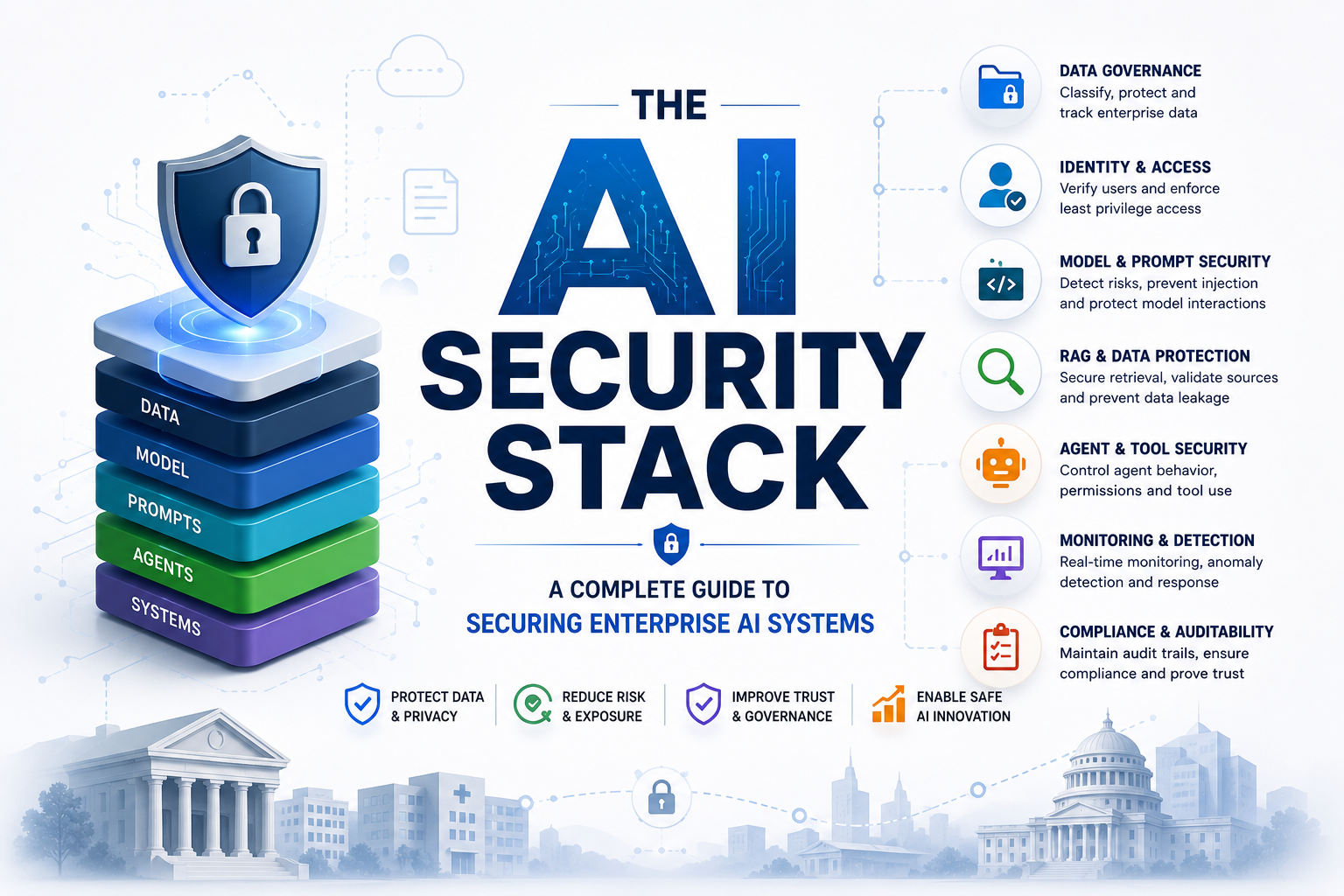
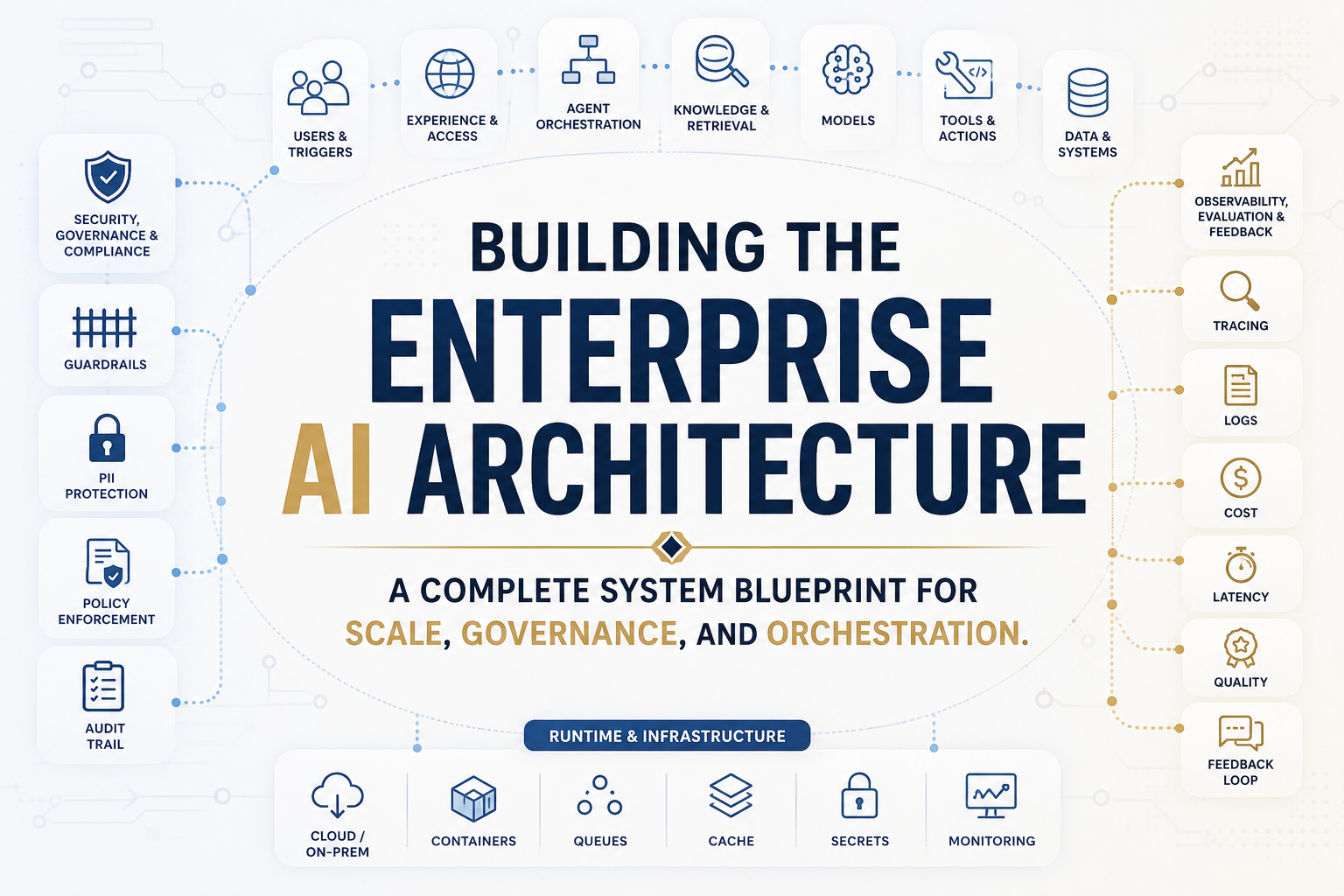
As businesses rush to deploy agentic AI to gain competitive advantage, a consensus is forming among security and governance experts on the necessity of a robust, multi-layered operational stack. Moving beyond high-level policies and abstract principles, this stack provides concrete, engineered controls to manage the autonomous actions of AI agents. It is a pragmatic blueprint for translating governance intent into technical reality, ensuring that agents can operate at scale without compromising security, compliance, or business continuity. The stack is built upon five foundational layers: Identity, Scoped Credentials, Audit Trails, Human-in-the-Loop Gates, and Kill Switches. Each layer addresses a specific vulnerability and reinforces the others, creating a resilient control fabric that is essential for governing agentic systems.
The first and most critical layer is Identity. Every autonomous agent must possess a verifiable, cryptographic identity, treated not as a feature of an application but as a distinct, managed identity within the enterprise’s Identity and Access Management (IAM) system. This principle is so fundamental that some experts frame the entire governance challenge as an “identity problem”. Without a unique identity, it is impossible to track an agent’s activity, attribute its actions, enforce permissions, or revoke its access if it becomes compromised or misbehaves. Leading IAM providers like Okta and Aembit have launched dedicated solutions for AI agents, recognizing that treating them as non-human identities is the cornerstone of secure governance. This identity allows for fine-grained control, enabling the system to distinguish between an agent acting on its own behalf and one operating on behalf of a user, and to apply appropriate logging and permissions accordingly.
The second layer is Scoped Credentials, grounded in the principle of least privilege. An agent should never be granted more access than is absolutely necessary to perform its designated task. This principle is amplified in the agentic context because a single compromised agent, given excessive permissions, could cause widespread damage across the enterprise environment. Best practices dictate assigning each agent a dedicated service account with the minimum set of permissions required for its function. This containment strategy significantly reduces the attack surface and prevents privilege escalation attacks. NIST’s newly announced AI Agent Standards Initiative explicitly highlights agent authorization as a key area of focus, signaling the growing recognition of this control’s importance. This layer ensures that even if an agent is subverted, its malicious actions are confined to a narrow scope.
The third layer, Audit Trails, serves as the bedrock of accountability and compliance. A comprehensive, immutable, and tamper-evident audit trail is non-negotiable for any agent operating in a regulated domain or handling sensitive data. This audit trail is not a passive log; it is an active mechanism for governance, capturing the full lifecycle of an agent’s actions, from its initial input and internal reasoning to every tool call, data access, and final output. For regulators, these logs provide the evidence needed to verify compliance with frameworks like the EU AI Act. Best practices call for human-readable audit trails that make agent decisions understandable, as well as structured JSON schemas that can be ingested by Security Information and Event Management (SIEM) systems for real-time monitoring and analysis. Platforms like Okta and Aembit emphasize their ability to generate detailed, integrated audit logs, turning raw agent activity into actionable intelligence.
The fourth layer consists of Human-in-the-Loop (HITL) Gates. HITL is no longer an optional best practice but a critical control for any irreversible or high-risk action, such as initiating a financial payment, modifying access controls, or deleting critical data. The model for HITL has evolved from manual approval for every single action, a process that is untenable at scale, to more sophisticated patterns. Modern HITL architectures pause the agent’s workflow to request human judgment when it encounters uncertainty, needs to escalate a complex issue, or is about to perform a sensitive operation. The EU AI Act elevates this requirement to a legal mandate for high-risk systems, stipulating that human oversight must be effective. Frameworks now define specific HITL patterns and escalation protocols to balance automation with necessary human judgment. However, there is a growing consensus that simply adding a “confirm before acting” prompt is insufficient if the underlying controls for identity, permissions, and auditability are weak.
The fifth and final layer is the Kill Switch. This is the last-resort emergency shutdown mechanism designed to immediately contain a rogue, compromised, or misbehaving agent. A reliable kill switch is a necessary component of any risk mitigation strategy, especially given the looming deadlines of regulations like the EU AI Act. However, its effectiveness is entirely dependent on the strength of the preceding four layers. A kill switch is useless if the agent has already caused significant damage or if the mechanism is controlled by the same compromised entity. Therefore, it must be a human-controlled capability, operated from outside the agent’s environment to prevent it from being disabled. Ownership and regular testing of the kill switch are critical governance questions for the board. Leading platforms are now making this a core feature, with offerings like Okta’s generally available kill switch and Aembit’s policy-based revocation capabilities, underscoring its status as a non-negotiable control.
From Policy to Practice: Implementing Runtime Controls and Accountability
Translating the principles of AI governance into a functional, resilient program requires a decisive shift from static policies to dynamic, runtime controls. The era of relying on PDF documents and periodic audits is over; in the age of agentic AI, governance must be an active, continuous process embedded directly into the technology stack. This involves moving beyond the idea of a “human-in-the-loop” as a simple confirmation step and towards a more nuanced understanding of accountability, where every action is traceable, every permission is scoped, and every agent has a clear owner. Practical implementation hinges on several key concepts: treating governance as an identity problem, encoding rules as code, establishing clear ownership for critical controls, and asking the right questions of vendors.
A foundational insight for practitioners is that “AI governance isn’t a checkbox; it’s a shift from reactive to resilient”. This resilience is built by treating identity as the central control plane for all AI activity. As emphasized previously, every agent must have a unique, cryptographically verifiable identity managed through the enterprise’s IAM system. This identity is the key that unlocks all other controls. It is the basis for enforcing least privilege, generating immutable audit trails, and triggering human-in-the-loop approvals. Without a strong identity foundation, the entire governance structure is built on sand. Smart IT teams are abandoning dusty, outdated Standard Operating Procedures (SOP) PDFs in favor of encoding these rules as code, which allows governance policies to be enforced automatically and consistently at runtime. This “policy-as-code” approach ensures that an agent cannot bypass its constraints, even if it attempts to manipulate its own instructions.
Establishing clear ownership is another critical element of practical governance. Ambiguity in responsibility is a primary driver of failure. When asked who owned AI governance, executives from various departments pointed fingers at each other, the CISO thought it was the CTO, the CTO thought it was the Data team, and Legal assumed Risk had it covered. To eliminate this ambiguity, organizations are designating a named AI Risk Owner, typically the CISO, CIO, or a newly created Chief AI Officer, who is given a documented charter and held accountable for the program’s success. This principle extends to specific controls. For example, the “Real Agentic AI Governance Checklist” advises that organizations must name an owner for the kill switch and test it, rather than simply documenting its existence. Similarly, every agent should have clear operational ownership to ensure there is always someone accountable for its actions. RACI matrices are a proven tool for mapping these responsibilities across dozens of governance activities, ensuring that for every task, there is a single person who is accountable, a team that is responsible, and clear communication paths for those who need to be consulted or informed.
The table below outlines a simplified RACI matrix for key AI governance activities, illustrating how responsibilities can be clearly assigned across different executive roles. This type of mapping is crucial for preventing gaps in oversight.
| AI Governance Activity | CEO / Board | CIO | CTO | CISO | Legal / Compliance | Engineering Team |
|---|---|---|---|---|---|---|
| Establish AI Strategy & Ethics Principles | Accountable | Responsible | Consulted | Consulted | Accountable | Informed |
| Define AI Risk Tolerance & Budget | Accountable | Responsible | Consulted | Accountable | Consulted | Informed |
| Oversee AI System Lifecycle (from development to decommissioning) | Informed | Accountable | Responsible | Consulted | Informed | Accountable |
| Ensure Regulatory Compliance (e.g., GDPR, EU AI Act) | Informed | Consulted | Consulted | Accountable | Accountable | Responsible |
| Implement Technical Controls (Identity, Permissions, Audit Logs) | Informed | Responsible | Accountable | Responsible | Consulted | Accountable |
| Operate AI Governance Committee | Chair / Lead | Co-Chair | Member | Co-Chair | Member | Member |
Finally, accountability begins at the procurement stage. By mid-2026, enterprise procurement is expected to treat AI agents as a distinct contracting category, with specific governance requirements forming part of the purchase agreement. This means buyers must proactively ask vendors critical questions before signing a contract. Instead of assuming a vendor has adequate controls, enterprises should demand evidence. Questions to ask include: Does your platform provide a dedicated, verifiable identity for each agent? Do you enforce scoped credentials based on the principle of least privilege? Can you provide a complete, immutable, and tamper-evident audit trail for every agent action? Is there a documented, tested, and easily accessible kill switch mechanism?. Leading platforms are already incorporating these features, such as Okta’s “Okta for AI Agents” and Aembit’s IAM solution, and making them a selling point. By demanding these capabilities upfront, organizations can avoid inheriting ungovernable AI systems and build a supply chain of trusted partners.
Recommended Reading
For leaders seeking to deepen their understanding of AI governance, strategy, and implementation, the following books provide a comprehensive and authoritative foundation:
- AI Governance Comprehensive by Sunil Soares: This book is positioned as an essential reference for anyone involved in AI governance, offering a thorough examination of the field’s complexities and best practices.
- Practical AI Governance: Building a Program for Oversight and Strategy by Shoshana Rosenberg: This guide focuses on the practical steps required to build a robust AI governance program, covering oversight and strategic implementation.
- AI Governance: Secure, Privacy-preserving, Ethical Systems by Engin Bozdag & Stefano Bennati: This text provides a comprehensive look at the technical and ethical dimensions of building secure and privacy-preserving AI systems.
- AI Governance: The Executive Handbook for Safe and Responsible AI by Ariel Evans & Ajay Singh: Tailored specifically for an executive audience, this handbook aims to equip leaders with the knowledge needed to navigate the challenges of safe and responsible AI deployment.
- When AI Breaks The Law: AI Governance For Talent Leaders by Margaret Spence: This book addresses the legal and compliance risks of AI, helping talent leaders understand and govern workplace AI applications.
- Governing the Machine: How to Navigate the Risks of Ai and Unlock Its True Potential by Ray Eitel-Porter, Paul Dongha, and Miriam Vogel: This work provides a guide for navigating the ethical and practical challenges presented by AI, focusing on governance strategies.
These resources, combined with a commitment to the principles outlined in this report, will empower business leaders to steer their organizations through the transformative era of agentic AI with confidence and foresight.
Frequently Asked Questions
What is the most critical first step for a board of directors regarding artificial intelligence?
The most critical step is establishing a complete and current inventory of all artificial intelligence systems. You cannot govern what you have not counted. This inventory must be built from procurement records and technical discovery, not just self reporting by business units.
How does the European Union AI Act affect companies outside of Europe?
The legislation has extraterritorial reach. Any organization placing artificial intelligence systems on the European market or whose system outputs are used in Europe must comply, regardless of where the company headquarters is located.
Why is jurisdictional capital valuable in artificial intelligence regulation?
Jurisdictional capital refers to the accumulated experience, routines, and compliance infrastructure a firm builds within a specific regulatory environment. Market data shows that firms with deep European market presence are better positioned to navigate new artificial intelligence rules, resulting in higher valuation returns compared to firms without that embedded experience.
What are the primary risks of relying on third party artificial intelligence vendors?
Relying on external vendors does not transfer legal liability. If a vendor system causes harm, the deploying organization remains fully accountable. Contracts must explicitly secure documentation rights, bias testing results, training data lawful basis, and clear incident notification timelines to mitigate this risk.
How should organizations handle the environmental impact of artificial intelligence?
Organizations should integrate environmental impact assessments into their artificial intelligence lifecycle. This includes monitoring the energy consumption of model training, optimizing compute efficiency, and requiring vendors to disclose the carbon footprint of their services.
The Road Ahead: Building a Resilient and Trustworthy AI Program
As business leaders chart their course into the age of agentic AI, the imperative for robust governance is no longer a matter of future planning but an urgent present-day necessity. The convergence of powerful autonomous systems, an evolving regulatory landscape, and heightened public scrutiny has elevated AI governance from a technical detail to a core strategic priority. The journey toward a truly governed and trustworthy AI program is a marathon, not a sprint, requiring sustained commitment, continuous adaptation, and a deep-seated culture of accountability. The path forward involves bridging the current chasm between AI adoption and governance maturity, embracing new standards and technologies, and fostering a holistic approach that balances innovation with responsibility.
A sobering reality confronts many organizations: there is a vast and widening gap between the rate of AI adoption and the maturity of governance programs designed to manage it. While 60% of enterprises are actively scaling their use of AI, a staggering 96% admit their governance capabilities are not yet mature enough to keep pace. This disconnect is a primary source of risk, contributing to AI initiatives underperforming for 46% of organizations and threatening to derail more than 40% of agentic AI projects due to governance failures. Closing this gap requires a fundamental shift in mindset. Leadership must treat governance not as a cost center or a compliance hurdle, but as an enabler of value. A well-governed AI system is a trustworthy AI system, and trust is the currency that allows organizations to scale their AI initiatives confidently and capture their full economic potential.
Looking ahead, several key trends will shape the future of AI governance. The regulatory landscape, spearheaded by the EU AI Act’s applicability date of August 2026, will continue to harden, making compliance a non-negotiable business requirement. In response, frameworks will evolve to address the unique challenges of agentic systems. NIST’s recently announced AI Agent Standards Initiative, which focuses on agent identity, authorization, and security, is a clear signal that government bodies are taking these risks seriously and will begin to codify technical controls. This trend toward more prescriptive standards will likely accelerate, pushing organizations to adopt more rigorous and technically sound governance practices. Furthermore, the concept of governance is expanding beyond individual agents to encompass entire ecosystems of collaborating agents, orchestrated by orchestration frameworks that introduce new layers of complexity and control.
Ultimately, building a resilient AI program rests on three pillars. The first is people and processes: establishing clear leadership, formalizing accountability through roles like the AI Risk Owner and the AI Governance Committee, and using tools like RACI matrices to eliminate ambiguity. The second is technology and controls: implementing the five-layer operational stack, Identity, Scoped Credentials, Audit Trails, Human-in-the-Loop Gates, and Kill Switches, as the technical foundation for runtime governance. The third is culture and ethics: embedding principles of fairness, transparency, and human-centric design into the DNA of the organization, guided by foundational norms like the OECD AI Principles. For business leaders, the message is unequivocal. Waiting to address AI governance is no longer an option. The tools, frameworks, and best practices are emerging. The question is whether leadership will act decisively to build the resilient, trustworthy, and valuable AI-powered enterprise of the future.








Leave a Reply