

- Home
- /
- Case Studies
- /
- Beyond the Hype: Deconstructing the…
⏱️ Read Time:
Navigating a Revised Release Timeline Amidst Unprecedented Anticipation
The journey toward the release of Grand Theft Auto VI has become a narrative in itself, defined by escalating anticipation, significant delays, and a level of public scrutiny rarely seen outside of major global events. For years, fans have lived in a state of near-constant speculation, tracking every leaked screenshot, developer interview, and financial report for clues about the game’s status. This prolonged wait has transformed the simple act of a video game launch into a complex logistical and psychological challenge for both the developers at Rockstar Games and the publisher, Take-Two Interactive. The current trajectory points to a release date of May 26, 2026. This date represents a substantial postponement from its previously anticipated window in the fall of 2025. The announcement of this delay came via a formal statement from Rockstar, which included an apology for the “significant delay,” underscoring the seriousness with which the studio views the project’s completion. This latest extension is not an isolated incident but rather the culmination of a trend of repeated postponements, each fueled by the immense ambition driving the game’s development.
Development Hell or Creative Perfection? Inside the Studio’s Struggle
The primary catalyst for these delays is the sheer scale and technical complexity of the undertaking. Sources suggest that the development process has entered a state akin to “development hell,” where the pursuit of perfection necessitates an extended timeline far beyond initial projections. The project involves creating a vast open world, rich with detail, dynamic systems, and a compelling narrative, all of which demand an extraordinary amount of resources and time. Internal reports from early 2026 indicated that the game was still not considered content-complete, and even some of the developers themselves had expressed skepticism about meeting earlier, more optimistic release deadlines. This internal doubt highlights the monumental task of balancing creative vision with practical production constraints. The decision to delay was likely a difficult one, but it reflects a commitment to quality control and ensuring that the final product meets the high standards set by the franchise over the past two decades. The game is understood to be built upon an upgraded version of Rockstar’s proprietary RAGE engine, which has been enhanced with new tools specifically for rendering, animation, and artificial intelligence. This foundation of proven technology, significantly augmented rather than completely rebuilt, speaks to a desire to maintain the series’ signature look and feel while pushing technical boundaries. The extensive development cycle is therefore not merely a matter of coding and asset creation; it is a deep dive into refining the core mechanics that define the Grand Theft Auto experience.
The Digital-First Gamble: Why Physical Copies Might Wait Until 2027
A critical strategic shift born directly from this protracted development phase is the potential adoption of a digital-first launch strategy. Reports indicate that due to the persistent and damaging risk of leaks surrounding the highly anticipated title, Rockstar Games may prioritize a full digital release over physical copies for the initial launch period. This move is a direct response to the challenges of maintaining secrecy in an age of constant online monitoring and data sharing. The fear is that if physical copies were released simultaneously with the digital version, they could be compromised, leading to widespread spoilers and premature exposure of the game’s content, thereby diminishing the impact of the official launch. Consequently, the availability of physical copies of Grand Theft Auto VI could be delayed until 2027, a year after the game’s initial debut. This decision underscores the immense commercial value placed on the game’s first-day reveal. By controlling the narrative and limiting access, Rockstar aims to preserve the sense of discovery and surprise that is crucial to generating massive word-of-mouth momentum. It is a calculated gamble that prioritizes the integrity of the launch event over immediate physical media sales, betting that the long-term benefits of a clean, spoiler-free rollout will outweigh any short-term losses from delaying boxed sets. This strategy reflects a mature understanding of modern game marketing, where exclusivity and controlled information flow are powerful tools for building hype.
Wall Street Reacts: How Investors Are Weathering the Delay Storm
The constant stream of delays and the resulting uncertainty have inevitably impacted the broader business landscape. Take-Two Interactive’s stock price experienced notable volatility following the announcement of the latest delay, hitting a low point as investor anxiety mounted. However, despite this initial market jolt, analyst sentiment has remained remarkably resilient. As of March 2026, out of 29 analysts covering the stock, 27 rated it a “buy,” with a consensus price target suggesting a potential 25% upside from its current value. This strong analyst backing indicates that the market places immense faith in the eventual payoff from Grand Theft Auto VI. Investors appear willing to tolerate the developmental turbulence because the projected returns, estimated to be phenomenal, are seen as justification for the wait. Furthermore, the prolonged anticipation has created a unique marketing challenge. Take-Two CEO Strauss Zelnick has described the necessary promotional campaign as needing to be “delicate”. The goal is to sustain fan excitement without oversaturating the market or revealing too much of the game’s secrets prematurely. The marketing vacuum left by the long silence has given way to a delicate dance of teasers, interviews, and carefully managed reveals, all designed to keep the game at the forefront of public consciousness without burning out the audience. The sheer weight of expectation means that every communication must be measured, a stark contrast to the typical marketing cycles of other games. The success of the launch will depend not only on the quality of the game itself but also on Rockstar’s ability to navigate this precarious balance between revealing enough to excite and holding back enough to surprise.
| Feature | Status / Details |
|---|---|
| Confirmed Release Date | May 26, 2026 |
| Previous Release Window | Fall 2025 |
| Primary Reason for Delay | Project scale, technical complexity, and quality assurance. |
| Platform Availability | Information not available in provided sources. |
| Physical Copy Strategy | Potential digital-first launch; physical copies may be delayed until 2027 to prevent leaks. |
| Parent Company Reaction | Apology issued by Rockstar; Take-Two maintains confidence in the project. |
| Market Reaction (Stock) | Stock hit a low point post-delay, but analyst ratings remain overwhelmingly positive (27/29 “Buy”). |
This revised timeline, while frustrating for consumers, provides a clearer picture of the immense effort being invested behind the scenes. The May 2026 date is now the most concrete anchor point for planning, though it remains subject to the ongoing demands of a project of unprecedented scope. The potential for a staggered physical release further demonstrates a strategic evolution in how blockbuster titles are launched in the modern era. The path forward for Grand Theft Auto VI is paved with both immense pressure and profound opportunity. The success of its launch will be determined by the studio’s ability to deliver a finished product that lives up to the hype, all while managing the intricate web of expectations from players, investors, and the gaming industry at large.
The Premium Value Proposition: Pricing Strategy and Global Market Considerations

The pricing strategy for Grand Theft Auto VI is a cornerstone of its commercial blueprint, representing a deliberate attempt to position the game not just as a product, but as a premier entertainment event. After months of intense speculation and conflicting rumors, a clear picture has emerged, centered on a premium price point justified by an unparalleled volume of content and the enduring strength of the franchise brand. Multiple credible sources confirm that the final retail price for the standard edition of GTA 6 will fall within the $70 to $80 USD range. This figure effectively debunks persistent rumors that suggested a potentially controversial $100 price tag, which had been circulating widely among gaming communities. The confirmation of a sub-$100 price point, while still firmly in premium territory, helps to temper some of the backlash that might have accompanied a higher cost, particularly in light of growing consumer sensitivity to game pricing.
The “Compact with the Consumer”: Justifying the Cost Through Content
Take-Two Interactive CEO Strauss Zelnick has publicly articulated the philosophy behind this premium model, framing it around a fundamental promise to the consumer. He acknowledged that a price of this magnitude would seem entirely unfair if the resulting product were merely average or mediocre. However, his argument hinges on the concept of perceived value. Zelnick stated that the company feels a “compact with the consumer” and is committed to delivering “way more value than what we charge”. This sentiment transforms the high price from a simple transactional cost into a statement of quality and commitment. It positions the purchase of GTA 6 as an investment in a comprehensive and deeply rewarding experience, one that is substantiated by the sheer size of the game world, the depth of its story modes, and the long-term viability of its online component, Grand Theft Auto Online. This messaging is crucial for justifying the price to a discerning market and reinforcing the idea that GTA 6 is in a category of its own, worthy of a top-tier price label. The expectation is that the game’s content will be so vast and engaging that players will feel the cost is fully warranted by the hours of gameplay and the overall quality of the experience.
Global vs. Local: How India and Other Markets Get Tailored Pricing
The pricing structure extends beyond a single standard edition, offering additional tiers to cater to collectors and die-hard fans. One report outlines a Special Edition priced at approximately Rs 7,299 in India (around $80 USD), while another mentions a Collector’s Edition with a price range of $250 to $300. These variations allow the company to capture different segments of the market, from those seeking the base game to enthusiasts willing to pay a significant premium for exclusive physical items, art books, or other memorabilia. The existence of these tiers is a standard practice in the gaming industry for major franchises, but in the context of GTA 6, it serves to further cement its status as a multi-faceted cultural product, not just a software application. The detailed breakdown of pricing across editions demonstrates a sophisticated approach to monetization, designed to maximize revenue while giving consumers clear choices based on their level of engagement and financial commitment.
Collector’s Editions and Microtransactions: The Full Revenue Ecosystem
A critical aspect of this strategy is the implementation of region-specific pricing, which illustrates a nuanced understanding of global economic disparities. While a direct currency conversion might suggest a uniform global price, the evidence points to a more localized approach. The Indian market provides a clear example of this strategy in action. Rumors had circulated that the game might cost as much as Rs 9,000 in India, a figure that would be exceptionally high for the region. However, confirmed pricing details show a more reasonable and accessible structure: the Standard Edition is pegged at Rs 5,999 (approximately $65 USD) and the Special Edition at Rs 7,299 (approximately $80 USD). These prices are strategically set below the rumored highs and are more reflective of local purchasing power. This approach prevents alienating a large and important market segment and acknowledges that a one-size-fits-all global price is impractical and potentially damaging to sales. It signals that Take-Two is not simply maximizing revenue on a per-unit basis globally, but is instead employing a thoughtful strategy that balances profitability with market accessibility. This regional consideration is vital for a game aiming for record-breaking global sales figures.
| Edition | Price (USD Approx.) | Price (India INR) | System Requirements (Example) |
|---|---|---|---|
| Standard Edition | $70 – $80 | ₹5,999 | Windows 10/11 64-bit, Intel Core i5-8400 or AMD Ryzen 5 1600, 16 GB RAM, NVIDIA GeForce GTX 1660 Super or AMD Radeon RX 5500 XT |
| Special Edition | $80 (approx.) | ₹7,299 | Not Available |
| Collector’s Edition | $250 – $300 | Not Available | Not Available |
This comprehensive pricing framework, anchored by a justified premium price and tailored to regional economies, is designed to build anticipation and ensure a massive opening weekend. The strategy relies on the assumption that the game’s quality will validate its cost. Analysts have already begun to quantify the financial potential, with early predictions suggesting GTA 6 could generate an astonishing $3.2 billion in revenue during its first year alone. Such a projection is predicated on the successful execution of this pricing model, assuming that millions of players will be willing to pay a premium price for what is expected to be the definitive open-world experience of the generation. The success of this strategy will ultimately depend on whether the final product can deliver on the immense value proposition that Take-Two has promised.
Technology and Creativity: A Deliberate Stance on Artificial Intelligence

In an industry increasingly embracing artificial intelligence as a tool to accelerate development and expand creative possibilities, Rockstar Games and its parent company, Take-Two Interactive, have charted a notably cautious and deliberate course regarding the use of generative AI in Grand Theft Auto VI. This strategic decision is not a blanket rejection of technological advancement but rather a carefully considered philosophy that prioritizes human-driven creativity and artistic integrity above all else. The official stance, articulated clearly by Take-Two CEO Strauss Zelnick, is that GTA 6 will not incorporate generative AI for the creation of its core creative assets, such as character designs, storylines, or dialogue. This position stands in stark contrast to the practices of many other major studios who are actively experimenting with AI to generate everything from landscapes to non-player character (NPC) behaviors. By making this choice, Rockstar is reinforcing the perception of the Grand Theft Auto series as a meticulously crafted, hand-made masterpiece, a hallmark of its identity that has contributed significantly to its critical acclaim and loyal fanbase.
The rationale behind this decision is twofold, addressing both creative control and player experience. On the creative front, Zelnick has argued that while AI tools can assist in certain tasks, they cannot replicate the spark of human imagination required to create truly original and impactful content. He has stated that “These tools may help you create assets, but that won’t help you create hits”. This sentiment suggests a belief that the unique voice, dark humor, and social commentary that define the GTA series are products of a specific human creative vision, and that outsourcing parts of this process to AI could dilute or erase that distinct identity. The fear is that an over-reliance on AI could lead to formulaic, uninspired content that lacks the soul and unpredictability that players have come to expect. This perspective positions Rockstar as champions of traditional game development values, emphasizing craftsmanship and authorial intent in an era of increasing automation.
The “Creepy” Factor: Protecting Immersion from Algorithmic Glitches
From a player experience standpoint, the concern is that AI-generated content can sometimes result in uncanny or unsettling outcomes. Zelnick has hinted that players might find AI-created elements to be “creepy,” a reaction that could shatter immersion and break the fourth wall in unintended ways. In a game like GTA VI, where believable characters and a cohesive world are paramount, any element that feels artificial or glitchy can be detrimental. The developers’ commitment to creating a world that feels alive and authentic, populated by characters with distinct personalities and motivations, requires a level of nuance and consistency that AI models may struggle to produce reliably. Therefore, by eschewing generative AI for core creative components, Rockstar is safeguarding the immersive quality of its sandbox environments. This decision reinforces the brand promise of delivering a polished, thoughtfully constructed world rather than a technologically experimental one.
Behind the Scenes: Where AI Tools Actually Help Without Taking Over
However, this is not to say that AI is entirely absent from the development pipeline. Zelnick has offered a more nuanced perspective, clarifying that AI tools can be valuable for “creating assets”. This distinction is crucial. It implies that while AI will not be used to write the script or design the main protagonists, it might be employed in the background for more technical or repetitive tasks. Potential applications could include procedural generation of minor environmental details, such as foliage or small props, texture enhancement, facial motion capture cleanup, or optimizing various technical workflows to increase developer efficiency. This allows the studio to leverage the productivity gains offered by modern AI without compromising the central creative vision. The game is understood to be built on an upgraded version of Rockstar’s proprietary RAGE engine, which has been augmented with new tools for rendering, animation, and AI. This suggests a hybrid approach where established, proven technology forms the bedrock of the project, with targeted AI integration used to support, rather than dictate, the creative process.
Craftsmanship as a Marketing Tool in an Automated Age
This deliberate technological stance is a powerful marketing angle that differentiates GTA VI from its contemporaries. In a market where many studios are touting AI-assisted development, Rockstar’s explicit rejection of generative AI for core content becomes a badge of honor. It frames the game as a labor of love, a triumph of human creativity over algorithmic shortcuts. This narrative resonates strongly with a segment of the gaming audience that values authenticity and craftsmanship. It also helps to manage expectations, assuring fans that the soul of the franchise remains intact. The message is clear: GTA VI will be a product of human genius, not machine learning. This philosophy is a calculated risk. While it may slow down certain aspects of development, it aligns perfectly with the brand’s identity and promises to deliver a final product that feels uniquely and undeniably like a Grand Theft Auto game. The emphasis on creativity over “AI magic” is a central pillar of the game’s identity, shaping everything from its development to its marketing.
Market Positioning and Competitive Dynamics in a Crowded Landscape
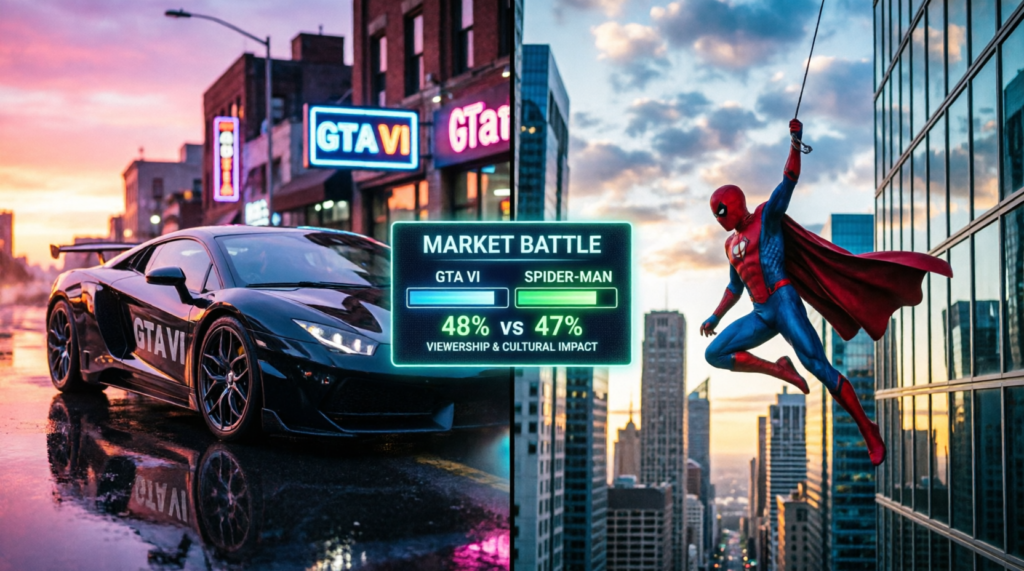
Grand Theft Auto VI enters the market not merely as a new product, but as a cultural phenomenon in the making, poised to reshape commercial expectations for the entire video game industry. Its market positioning is built on a legacy of innovation and a level of pre-launch hype that is virtually unmatched. The anticipation surrounding the game has generated astronomical financial expectations. Industry analysts have projected that GTA 6 could achieve first-year revenues of $3.2 billion, a figure that dwarfs the earnings of most other entertainment products combined. This staggering forecast is rooted in the franchise’s proven track record of selling tens of millions of copies per installment and cultivating a massive, long-running online community. The marketing momentum has already been explosive; the game’s initial reveal trailer shattered records, accumulating over 84 million views in its first 24 hours, establishing a new benchmark for engagement in the gaming world. This level of initial traction confirms its status as the most anticipated game of the generation and solidifies its position as a prime target for the holiday 2026 season.
Marketing in a Vacuum: The Delicate Art of Sustaining Hype for a Year
Despite this formidable lead, the competitive landscape of 2026 is more crowded and dynamic than ever before. A pivotal moment in gauging the intensity of this competition occurred with the release of the first trailer for Spider-Man: Brand New Day. This highly anticipated title from Insomniac Games reportedly broke the engagement records previously set by GTA 6’s own trailer, capturing a massive audience and reigniting interest in one of Sony’s flagship franchises. This event serves as a crucial reality check for Rockstar and Take-Two. It demonstrates that while GTA 6’s hype is immense, it is not infinite, and the market’s attention is a finite resource. Competing titles from major intellectual properties can still command significant audience share and critical attention, challenging the notion that a game’s popularity is solely a function of its brand recognition. The performance of Spider-Man: Brand New Day’s trailer highlights the need for Rockstar to execute a flawless long-term marketing strategy that sustains momentum and continues to differentiate GTA 6 from its rivals. The gaming landscape is no longer a monolith where a single title can dominate without opposition; it is a multi-front battlefield where sustained engagement and continuous surprise are key.
Beyond GTA: The Rising Tide of Open-World Contenders in 2026
The marketing challenge for Rockstar is to maintain this delicate balance of mystery and revelation. With the May 2026 release date now set, the studio has a long runway of nearly a year to communicate with its audience. Take-Two CEO Strauss Zelnick has described the necessary marketing push as needing to be “delicate”. This phrase encapsulates the core tension: the game’s appeal is intrinsically linked to discovery and the joy of uncovering its secrets firsthand. Any misstep, such as leaking too much information or releasing trailers that feel repetitive, could dampen enthusiasm and lead to “launch fatigue.” The strategy must therefore be carefully curated, using teasers, developer diaries, and limited gameplay reveals to keep the conversation going without exhausting the audience. The depth of fan engagement is already evident in the numerous community-led initiatives aimed at getting Rockstar’s attention through unconventional means on social media, demonstrating a passionate and invested fanbase that is eager for any scrap of new information. This grassroots energy is a powerful asset that the marketing team can harness, but it also adds pressure to deliver content that is substantive and exciting.
Fan Fatigue or Fever Pitch? Managing Community Expectations
Furthermore, the market is brimming with other highly anticipated titles that will vie for consumer attention and wallet share during the critical holiday season. The list includes major releases from established franchises like Marvel, LEGO, and Capcom, alongside potential contenders for Game of the Year that could challenge GTA 6’s dominance. One developer associated with the original Grand Theft Auto V, Tim Craig, has even suggested that Crimson Desert could pose a threat to GTA 6’s accolades, provided Rockstar makes a significant misstep. This external assessment underscores the fact that a superior product is not a guarantee of victory; timing, marketing, and the overall quality of competing titles all play a role. The success of GTA 6 will depend not only on its intrinsic quality but also on its ability to stand out in a sea of excellent games. The franchise’s historical dominance in defining the open-world genre gives it a significant advantage, but it does not make it immune to the realities of market saturation. The final outcome will be a result of a complex interplay between the game’s quality, the effectiveness of its marketing, and the strength of its competitors.
| Aspect | Details | Implications |
|---|---|---|
| Revenue Projections | First-year revenue projected at $3.2 billion. | Sets a historic benchmark for commercial success. |
| Initial Trailer Performance | Over 84 million views in 24 hours. | Establishes a high bar for engagement and marketing success. |
| Key Competitor Mention | Spider-Man: Brand New Day | Demonstrates that competing titles can capture significant audience attention, serving as a market reality check. |
| Marketing Challenge | Requires a “delicate” approach to sustain hype without oversaturation. | High stakes in managing long-term consumer engagement. |
| Competitive Landscape | Other major releases expected in 2026 from Marvel, LEGO, and Capcom. | Increased competition for consumer attention and wallet share during the peak sales season. |
Ultimately, Grand Theft Auto VI’s market positioning is one of both dominance and vulnerability. It holds the crown as the most anticipated game, backed by a franchise with a history of setting industry standards. However, it must navigate a fiercely competitive environment where consumer patience is tested by long waits and attention is fragmented across multiple high-quality offerings. The path to achieving its projected financial goals will require not only a flawless final product but also a masterful execution of its marketing strategy and an ability to adapt to the shifting dynamics of the gaming market.
Corporate Philosophy and Business Model: Advertising, Investor Sentiment, and Brand Integrity

The overarching corporate philosophy guiding the development and release of Grand Theft Auto VI is one of unwavering confidence, brand protection, and a steadfast commitment to a premium user experience. This ethos is evident in the decisive stances taken by Take-Two Interactive’s leadership on issues ranging from in-game advertising to investor relations, all of which contribute to the game’s positioning as a high-value cultural artifact rather than a mere commodity. At the heart of this philosophy is a firm rejection of integrating traditional in-game advertising into the core experience of GTA 6. Take-Two CEO Strauss Zelnick has publicly dismissed the notion, stating that it would seem “unfair” to ask players to watch ads in a premium-priced game. This position is a logical extension of the game’s premium pricing strategy. By charging a top-tier price, the company is implicitly promising a pure, uninterrupted experience free from the distractions and intrusions of third-party advertisements. This commitment to a seamless player journey reinforces the value proposition associated with the high cost of entry and aligns with the expectations of a discerning consumer base accustomed to ad-free experiences in other forms of premium entertainment.
Premium Pricing Means Premium Experience: The Anti-Ad Promise
This anti-advertising stance is further solidified by Take-Two’s explicit rejection of unskippable ads. In an era where some mobile and free-to-play games rely heavily on mandatory, unavoidable ad placements, Rockstar and Take-Two are drawing a clear line in the sand. They are signaling that GTA 6, regardless of its platform, will respect the player’s time and agency. This decision is not merely a matter of principle; it is a strategic business choice that enhances the game’s perceived quality and desirability. A clean, ad-free interface contributes to the immersive quality of the game world, preventing moments of “bleed-through” that can break immersion and frustrate players. It reinforces the idea that the product is a complete, self-contained work of art, not a vehicle for ancillary revenue streams. This philosophy of brand integrity is a key differentiator that sets GTA VI apart from many of its contemporaries and strengthens its appeal to the core gaming audience that values immersion and creative expression above all else.
Confidence in Chaos: Why Analysts Remain Bullish Despite Delays
Despite the significant development delays that have plagued the project, the sentiment from investors and analysts remains overwhelmingly positive, reflecting a deep-seated confidence in the ultimate success of the venture. Following the news of the latest delay, Take-Two’s stock experienced a dip, but this was quickly overshadowed by continued bullish sentiment from financial experts. The analyst consensus, with 27 out of 29 rating the stock a “buy,” points to a collective belief that the eventual return on investment will be substantial enough to justify the extended wait. This resilience in the face of development setbacks speaks volumes about the perceived invincibility of the Grand Theft Auto brand. Investors understand that while delays carry risks, the potential rewards from a successful GTA launch are astronomical. Strauss Zelnick himself has expressed absolute certainty in the game’s reception, stating that he cannot fathom anyone who would want to play the game not wanting to play it, and that the financial performance will be “phenomenal”. This top-down conviction from the company’s leader provides a crucial sense of stability and reassurance to stakeholders, signaling that the executive team stands firmly behind the project and its ambitious vision.
Protecting the Crown: Long-Term Brand Equity Over Short-Term Gains
This combination of a premium, ad-free product and confident corporate backing creates a powerful business model. The strategy is built on a foundation of trust: trust that Rockstar can deliver a perfect product, and trust that consumers will reward them for it with their loyalty and money. Every decision, from the careful management of the release timeline to the explicit rejection of disruptive monetization tactics, is filtered through the lens of preserving and enhancing the game’s brand equity. The goal is not just to sell a game, but to create a lasting cultural touchstone that reinforces the prestige of the Rockstar and Take-Two names. The company is leveraging its strongest asset, the GTA franchise, to command premium pricing and market dominance, underpinned by a consistent message of quality and respect for the player. This approach minimizes risk by focusing on a proven formula executed to the highest possible standard, rather than chasing fleeting trends or experimenting with divisive monetization strategies. The end result is a business model that is both commercially aggressive and artistically protective, designed to maximize returns while safeguarding the very essence of what makes the Grand Theft Auto series so beloved.
Recommended Readings

For readers interested in diving deeper into the history of open-world gaming, the business mechanics of the video game industry, and the creative philosophies that shape blockbuster titles, the following books offer invaluable insights:
1. Blood, Sweat, and Pixels: The Triumphant, Turbulent Stories Behind How Video Games Are Made by Jason Schreier This essential read provides a behind-the-scenes look at the grueling development cycles of modern video games. Schreier investigates the “crunch” culture and the chaotic realities faced by developers, offering context for why massive titles like GTA often face delays and the human cost behind creating virtual worlds.
2. Masters of Doom: How Two Guys Created an Empire and Transformed Pop Culture by David Kushner While focused on the creators of Doom and Quake, this book is a definitive history of the video game industry’s rise. It explores the tension between creative freedom and commercial success, themes that are highly relevant to understanding Rockstar Games’ position today as a dominant cultural force.
3. The Ultimate History of Video Games, Volume 3: Modern Consoles, Mobile Gaming, and the Future by Steven L. Kent This comprehensive volume covers the evolution of the industry from the late 90s to the present day. It provides excellent background on how franchises like Grand Theft Auto reshaped the landscape of interactive entertainment and set the standards for the open-world genre that GTA VI is poised to redefine.
4. Extra Lives: Why Video Games Matter by Tom Bissell Bissell, a writer who has also worked on game scripts himself, offers a thoughtful critique and appreciation of video games as an art form. This book helps frame the discussion around why the narrative depth and creative choices in games like GTA are significant beyond just their sales figures.
5. Play Money: How I Quit My Day Job and Made Millions Trading Virtual Loot by Julian Dibbell Though published earlier, this book remains a fascinating exploration of virtual economies. Given the massive economic ecosystem of GTA Online, Dibbell’s analysis of how virtual items acquire real-world value provides a foundational understanding of the financial models that likely underpin the upcoming title’s online component.
Frequently Asked Questions (FAQs)
Q1: When is the official release date for Grand Theft Auto VI?
A: The confirmed global release date for Grand Theft Auto VI is May 26, 2026. This date represents a significant shift from the originally targeted Fall 2025 window, a decision made by Rockstar Games to ensure the final product meets their rigorous quality standards given the project’s immense scale and technical complexity.
Q2: How much will GTA 6 cost at launch?
A: The standard edition of GTA 6 is expected to retail between $70 and $80 USD. In specific regions like India, pricing has been localized to reflect market conditions, with the Standard Edition listed around ₹5,999 and the Special Edition near ₹7,299. These prices debunk earlier rumors of a $100 price tag, aligning instead with a premium value proposition that Take-Two Interactive claims will be justified by the sheer volume and quality of content.
Q3: Will there be unskippable ads in GTA 6?
A: No. Take-Two Interactive CEO Strauss Zelnick has explicitly stated that the company rejects the idea of including unskippable advertisements in premium titles like GTA 6. The philosophy is that players paying a top-tier price deserve an uninterrupted, immersive experience. While the game will likely feature robust in-game economies and microtransactions within GTA Online, the core single-player narrative will remain free of third-party ad intrusions.
Q4: Is Rockstar using Artificial Intelligence to create the game world?
A: Rockstar Games has taken a distinct stance against using generative AI for core creative assets such as character design, storytelling, or dialogue. The studio believes that true creativity and the unique “soul” of the franchise come from human developers. However, they do utilize AI tools for technical assistance, such as optimizing rendering pipelines, enhancing animations, or generating minor environmental details, ensuring efficiency without compromising artistic integrity.
Q5: Will physical copies of GTA 6 be available on day one?
A: There is a strong possibility that the initial launch will be digital-only. Reports suggest Rockstar may delay physical disc releases until 2027 to mitigate the risk of leaks and spoilers. By controlling the distribution channel digitally at launch, the studio aims to preserve the surprise elements of the story and world, which are critical to the player experience. Physical editions would likely follow once the initial wave of discovery has passed.
Q6: Which platforms will support GTA 6 at launch?
A: Grand Theft Auto VI is confirmed for release on PlayStation 5 and Xbox Series X/S. As of the latest information, a PC version has not been confirmed for the May 2026 launch window. Historically, Rockstar has often released PC versions of their major titles a year or more after the console debut, though no official timeline for a PC port has been announced yet.
Q7: Why was the game delayed from 2025 to 2026?
A: The delay was attributed to the unprecedented scope of the project and the need for additional time to polish the game to Rockstar’s standards. Internal reports indicated that the game was not yet “content complete” by early 2026, and the complexity of the new RAGE engine upgrades required more development time than initially anticipated. The studio prioritized avoiding a rushed launch over meeting the original deadline.
Synthesis and Strategic Outlook for a Cultural Phenomenon

The forthcoming release of Grand Theft Auto VI represents a confluence of immense creative ambition, calculated business strategy, and intense market pressure. An analysis of its expected release timeline, pricing, technological approach, and market positioning reveals a project defined by a singular objective: to recapture and amplify the cultural dominance of its predecessors while navigating the evolving complexities of the modern gaming industry. The journey to a May 26, 2026 release date has been fraught with delays, driven by the sheer scale and uncompromising quality standards of Rockstar Games. This extended development cycle, while testing consumer patience, has allowed the studio to refine its vision and mitigate risks, culminating in a potential digital-first launch to protect against leaks and preserve the impact of its debut. This strategic patience is backed by a resilient investor base and a confident corporate leadership that believes the eventual payoff will be commensurate with the wait.
The Verdict on Patience: Will the Wait Pay Off for Players?
The game’s pricing strategy is a masterclass in value-based marketing. By anchoring the price in the $70-$80 range and explicitly defending it as a reflection of the “way more value” the game delivers, Take-Two has framed the purchase not as a cost, but as an investment in an unparalleled entertainment experience. This premium positioning is reinforced by a steadfast commitment to an ad-free experience, a decision that protects the game’s immersive quality and aligns with the expectations of a premium-priced title. The company’s deliberate rejection of generative AI for core creative elements further cements this narrative, portraying GTA VI as a triumph of human craftsmanship over algorithmic production, a powerful marketing angle that distinguishes it from many of its peers. This calculated approach to technology ensures that the game’s unique artistic voice remains the central focus, a critical factor in maintaining the franchise’s identity.
Setting the New Standard: What GTA 6 Teaches the Industry About Quality
As Grand Theft Auto VI prepares for its launch, it enters a competitive market where the record-breaking engagement of rival trailers serves as a potent reminder that hype is not guaranteed. The success of the game will hinge not only on its quality but also on Rockstar’s ability to execute a “delicate” and sustained marketing campaign that manages expectations and continues to surprise the dedicated fanbase. Ultimately, Grand Theft Auto VI is positioned not just as a game, but as a cultural event. Every strategic decision, from the painstaking development timeline to the premium price point and the cautious embrace of technology, has been made with the goal of delivering a product that is not only commercially successful but also a defining piece of interactive entertainment for a generation. The outcome will be a testament to the enduring power of the franchise and the ability of its creators to balance artistic vision with market dominance.











Leave a Reply