


Introduction: The Boy with a Sketchbook
In Marceline, Missouri, a young boy spent his days delivering newspapers for his father, a task he often found difficult. To escape, he would sketch animals and characters from the rural world around him. That boy was Walt Disney. Decades later, his name would become synonymous not just with animation, but with imagination itself. He would be the man who taught the world that a mouse could be a hero, that dreams could be engineered into theme parks, and that family entertainment was a global language.
Walt Disney’s story is not one of unbroken success. It is a story of spectacular failures, bankruptcies, and betrayals that would have crushed a less determined dreamer. But his unique genius was an unwavering faith in his own ideas, even when no one else shared them. He was not just an artist; he was an entrepreneur who built an entire universe of wonder, one sketch, one film, one “castle” at a time.
The Early Years: From Failed Businesses to a Lucky Rabbit
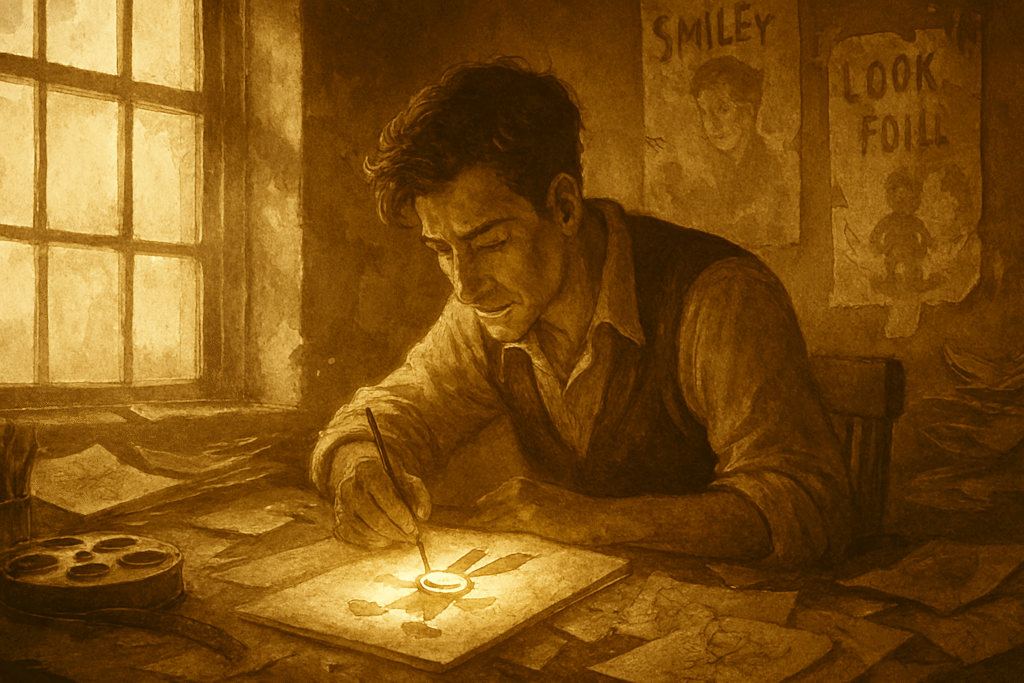
Walt’s early career was a cascade of setbacks. He started his first animation studio, Laugh O Gram, in Kansas City in 1921. It went bankrupt. With just $40 to his name, he bought a one-way train ticket to Hollywood, believing the future of film was there.
He started anew with his brother Roy as his business partner. Their first successful character was Oswald the Lucky Rabbit, distributed by Universal Pictures. In a devastating blow, Walt discovered that Universal owned the copyright to Oswald and had poached most of his animators. He lost everything except his talent and his determination. On the long, dejected train ride home from New York after this betrayal, he started doodling a new character.
The Big Idea: The Mouse that Roared
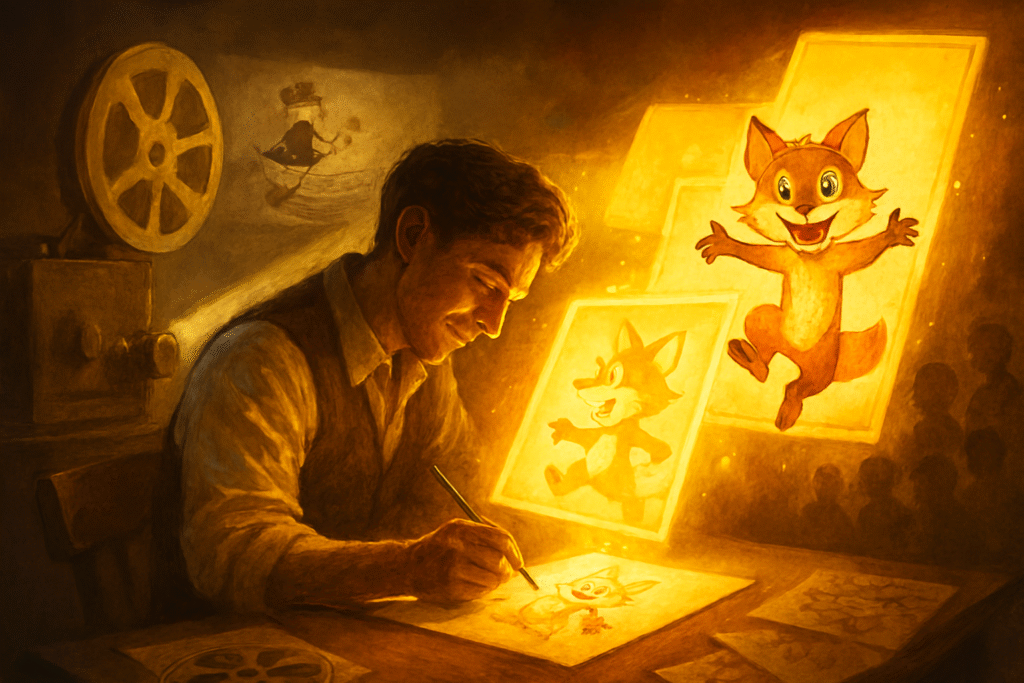
That new character was Mortimer Mouse. His wife, Lillian, suggested the name sounded too pompous and proposed “Mickey” instead. In 1928, Walt provided the voice for Mickey Mouse in the first synchronized sound cartoon, “Steamboat Willie.” It was a sensation. Audiences were captivated by the personality and the novelty of sound.
But Walt was never content. He saw animation as an art form, not a novelty. In 1937, he bet everything on a crazy idea: a full-length animated feature film. The press called it “Disney’s Folly.” They said no one would sit through a 90-minute cartoon. He mortgaged his house and poured every resource into “Snow White and the Seven Dwarfs.” The premiere was a triumph. The film earned a standing ovation and became the highest-grossing film of its time, proving that animation could carry deep emotion and epic storytelling.
Building the Magic Kingdom: The Power of Quality and Innovation
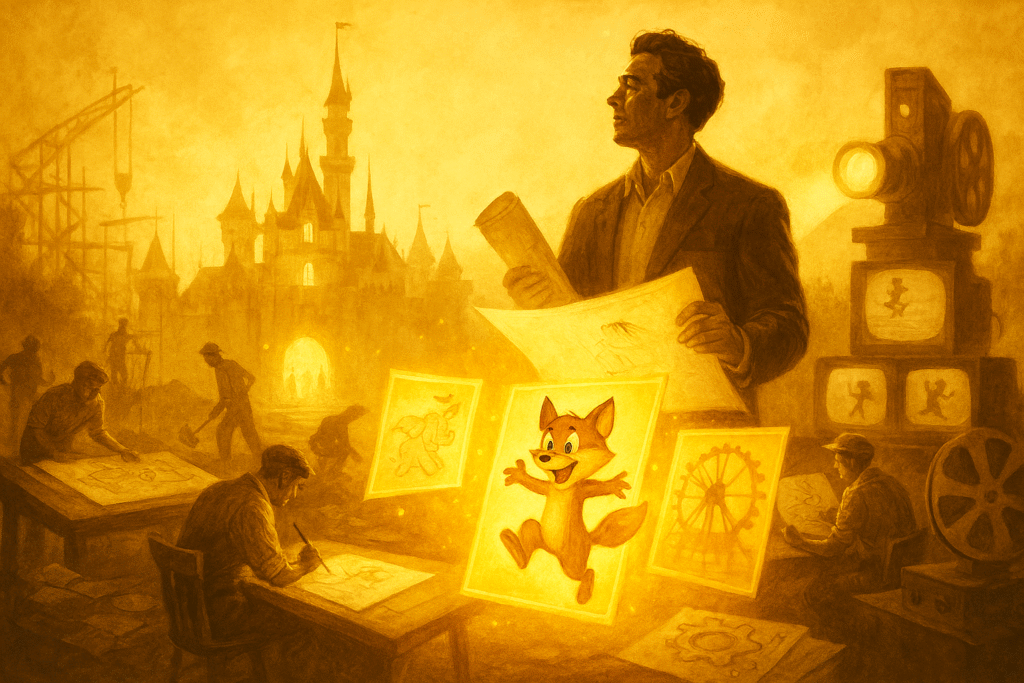
Walt Disney’s business philosophy was simple yet radical: the quality of the product is the best business strategy. He constantly reinvested profits into pushing the boundaries of technology and art.
- Technological Pioneer: He pioneered Technicolor in animation, the use of the multiplane camera to create depth, and later, explored television and audio animatronics.
- The Disney Standard: He drove his animators relentlessly, demanding realistic movement and emotional depth. This pursuit of excellence built the Disney brand as a mark of quality that parents trusted implicitly.
- The Ultimate Bet: Disneyland: His most audacious idea was a clean, safe, immersive theme park where parents and children could have fun together. Again, critics doubted him. He was told a “theme park” would never work. To fund it, he created the first weekly television series, “Disneyland,” to get the money and the publicity. When Disneyland opened in 1955, it was a disaster, with counterfeit tickets and plumbing failures. But the public adored the idea. It became an instant cultural landmark, a physical manifestation of his storytelling genius.
The Man Behind the Mouse: Vision and Drive
Walt was a complex figure. To his employees, he was both an inspiring leader and a demanding perfectionist. He was not a businessman in a traditional sense; he was a creative force who understood how to monetize imagination. He smoked three packs of cigarettes a day, was known for his temper, but also for his childlike enthusiasm. He would often walk through the Disneyland construction site alone at night, imagining the magic that would soon fill it. His brother Roy handled the finances, which allowed Walt to focus relentlessly on the creative vision, a partnership that was the engine of the company.
The Final Dream: Florida and Beyond
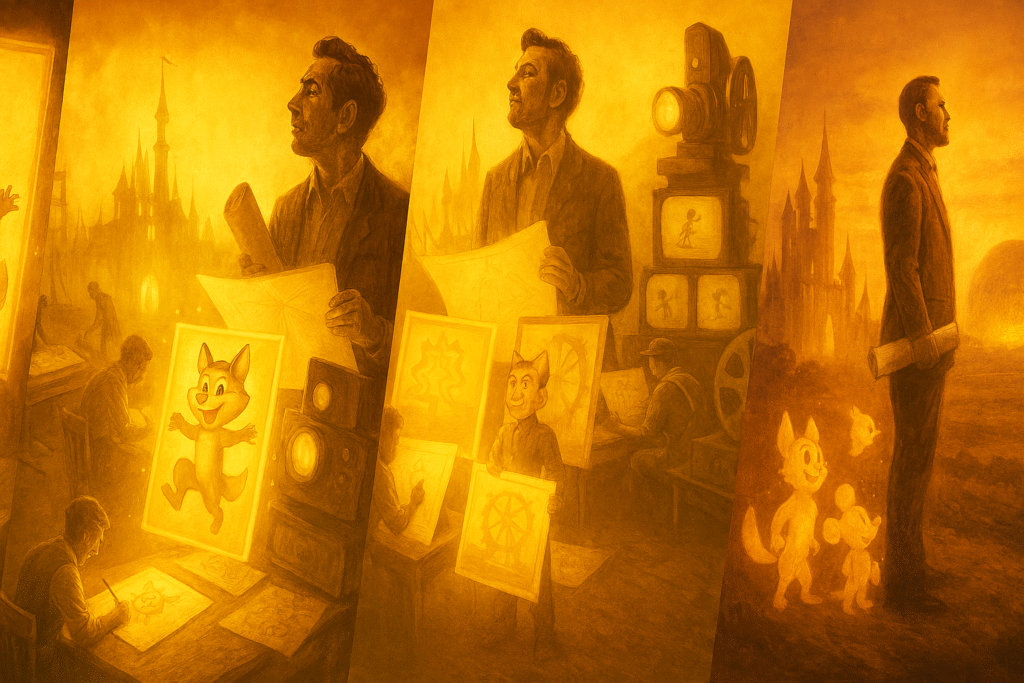
In his final years, Walt became obsessed with a new project, something even grander than Disneyland. He secretly began acquiring vast tracts of land in Florida for what he called “The Florida Project.” He dreamed of an “Experimental Prototype Community of Tomorrow (EPCOT)”, a planned city of the future. He did not live to see it. Walt Disney died of lung cancer on December 15, 1966.
The company, under Roy’s stewardship, would open Walt Disney World in 1971 as a tribute to his brother. EPCOT would eventually be built, though in the form of a theme park, not a functioning city.
Recommended Reading
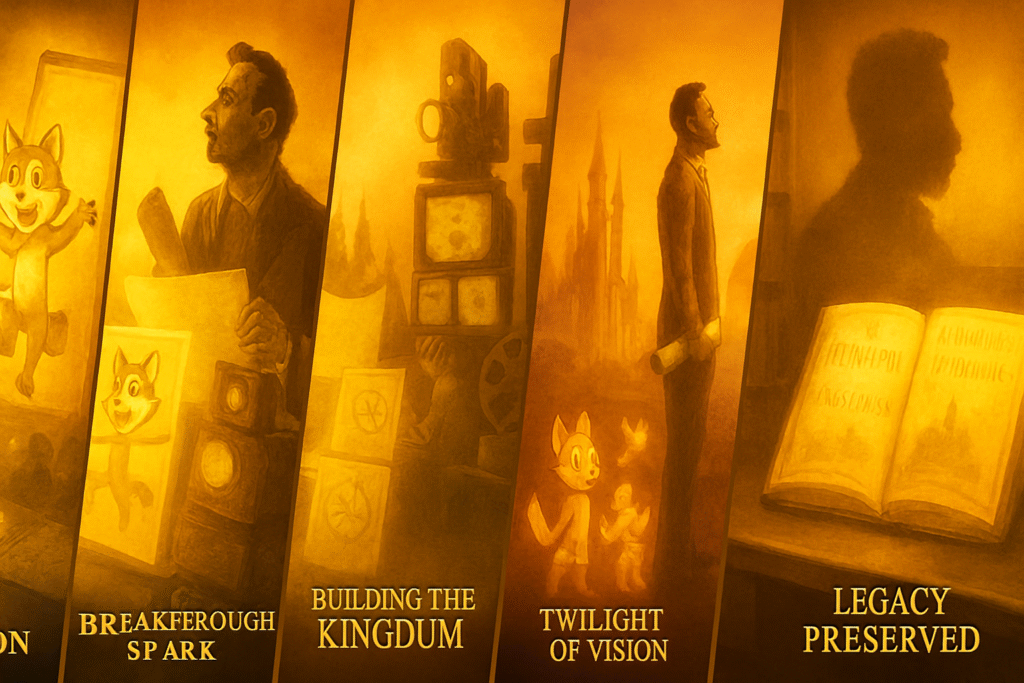
To step deeper into the world of Walt Disney, these books offer incredible insight:
- “Walt Disney: The Triumph of the American Imagination” by Neal Gabler: This is widely considered the most comprehensive and authoritative biography, detailing his immense successes and personal complexities.
- “The Story of Walt Disney: Maker of Magical Worlds” by Bernice Selden: A great, more concise biography for those looking for an accessible introduction to his life.
- “Dream It! Do It!: My Half-Century Creating Disney’s Magic Kingdoms” by Marty Sklar: Written by a legendary Disney Imagineer, this book provides a fascinating look at how Walt’s vision was executed in the parks.
Frequently Asked Questions (FAQ)
Q1. Did Walt Disney actually draw Mickey Mouse?
A: Walt Disney was the original creator and voice of Mickey Mouse and drew the early versions. However, the character’s iconic design was largely refined and perfected by his lead animator, Ub Iwerks.
Q2. Is it true Walt Disney was cryogenically frozen?
A: This is a persistent urban myth. There is no credible evidence to support it. Walt Disney was cremated, and his ashes are interred at Forest Lawn Memorial Park in Glendale, California.
Q3. What was Walt Disney’s biggest failure?
A: The loss of his first successful character, Oswald the Lucky Rabbit, was a profound professional and personal betrayal. However, he learned a critical lesson: he would never again work without owning his own intellectual property.
Q4. How many times did Walt Disney go bankrupt?
A: His first company, Laugh O Gram Studio in Kansas City, went bankrupt in 1923. This was his only formal bankruptcy, though he faced near financial ruin multiple times, most notably during the production of “Snow White.”
Conclusion: The King of Wishful Thinking
Walt Disney’s legacy is the empire of joy he built from the ashes of his failures. He was a storyteller who used technology as his brush and the world as his canvas. He taught us that a sketch could become a film, a film could become a brand, and a brand could become a destination.
More than the movies or the parks, his greatest creation was the Disney ethos itself: a stubborn, almost irrational belief in magic, in story, and in the power of a good dream. He proved that the most valuable commodity in business is not money, but imagination. The world he built continues to grow, a timeless kingdom ruled by a mouse, built by a dreamer, and visited by millions who still believe in the magic he promised.














Leave a Reply