

- Home
- /
- Artificial Intelligence
- /
- Claude’s Invisible Watermark Is Here:…
⏱️ Read Time:
Introduction
Generative AI tools are everywhere – from writing assistants to chatbots – raising questions about authorship, trust and misuse. In response, Anthropic (maker of the Claude AI assistant) has begun invisibly watermarking all text its models generate. Under new EU rules, every piece of content Claude produces (or even processes) will carry a hidden signature that lets detectors flag it as AI‑touched. Starting from 2 August 2026, all new Claude models worldwide will insert these imperceptible codes into their text outputs. Images and other files generated by Claude will carry signed provenance metadata too (using the C2PA standard) to confirm origin and tamper status.
In this deep dive, we examine why Anthropic is doing this, how the watermark works, and the tech and policy issues it raises. We’ll look at the EU AI Act driving it, the technical trade-offs, the reactions in the tech community, and what it could mean for students, workers and anyone using AI to write or edit content. We’ll also cover similar efforts by other companies and discuss the limits of watermarking.
Why Watermarks? EU Rules and Transparency
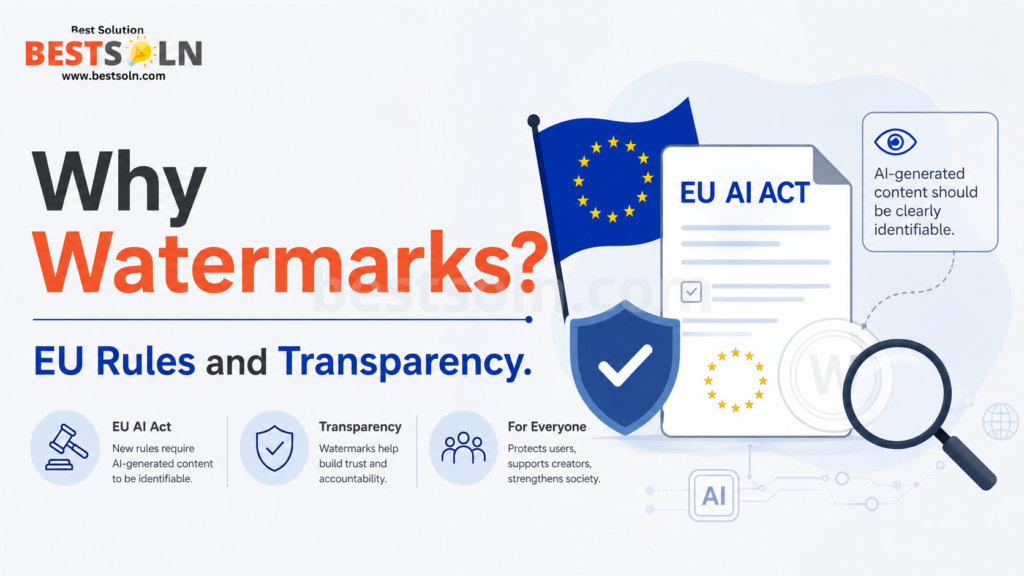
The immediate trigger for Anthropic’s move is Europe’s new AI law. The EU’s “AI Act” (transparency code, Article 50) took effect on 2 August 2026, and it requires providers of generative AI to label or mark content in a machine-readable way. The goal is to ensure downstream users or platforms can detect AI-generated or -edited material. Non-compliance can carry massive fines (up to €15 million or 3% of global revenue). Anthropic signed the EU’s voluntary Code of Practice on Transparency (part of the AI Act framework) along with almost 200 other companies (including Google, Microsoft, Meta and OpenAI). As a result, all Claude models released on or after 2 Aug 2026 will embed these marks by default, worldwide – not just in EU accounts. In short, Anthropic is treating it as a legal requirement rather than an optional feature.
Watermarking is now industry-standard policy. Google has been watermarking AI images since 2023 and recently extended it to text, audio and video. OpenAI has long had watermarking for images (SynthID), but so far hasn’t deployed it on ChatGPT text. Elon Musk’s X (formerly Twitter) also tags detected AI content with a “Made with AI” label. With the EU law in force, many other labs will follow or face fines. Anthropic frames its policy as compliance: “we’re adding marking to comply with the EU AI Act, and other labs are taking similar steps,” said the company.
Beyond legal compliance, the move is pitched as improving transparency. Anthropic and others argue that watermarks give readers context, helping to calibrate trust. It can make it easier to spot plagiarism or AI “slop,” prevent misuse (like undetected AI propaganda or cheating), and deter companies from unknowingly training models on AI-generated text. Software developers like Donn Felker have welcomed it: watermarking can prevent AI models from being trained on their own outputs, a “snake eating itself” problem that could degrade future AI quality.
How the Watermark Works
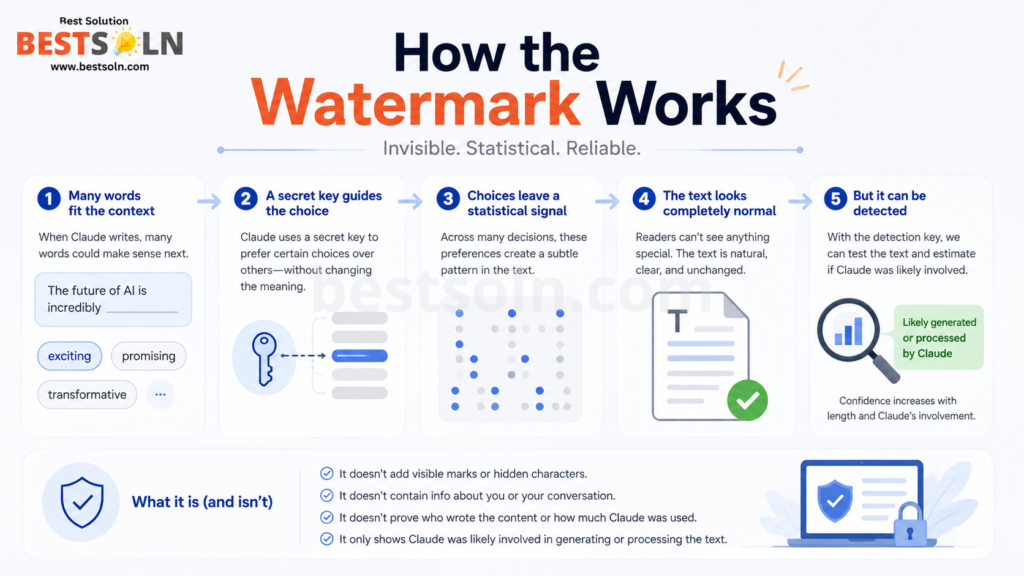
Anthropic explains that Claude’s watermark is ”imperceptible” – no visible label or logo. Instead, it’s a hidden code woven into the choice of words. The technique is based on a method called token-level probabilistic watermarking (similar to Google DeepMind’s SynthID-Text). In practice, Claude still writes normal, high-quality sentences, but behind the scenes it biases its random word choices according to a secret key.
Here’s a simplified picture: every time Claude generates a word, it normally picks from a set of plausible options (e.g. after “The weather was cold and…”, it might pick “overcast” or “grey”). With watermarking turned on, Claude still randomly picks one of these valid words, but the randomness comes from a pseudorandom process keyed by a secret. Over an entire response, those tiny biases create a statistical pattern. To a human reader the output looks unchanged, but anyone with the key can analyze the word sequence and see if it fits the watermark pattern.
Anthropic emphasizes this approach does not degrade quality or change meaning. As they put it, the watermark doesn’t push Claude to say a completely different word. It only picks among words the model would normally consider. In internal tests (and in similar research) watermarked outputs were indistinguishable from un-watermarked ones in terms of creativity or accuracy. In other words, readers shouldn’t notice any difference. The keywords “imperceptible” or “invisible” mean exactly that: only a detection tool can spot the pattern.
Once applied, the watermark “travels” with the text. Because it’s encoded in the actual words, copying and pasting Claude’s output preserves the mark. Even if a user edits the text lightly, traces of the pattern may remain. Anthropic says the watermark is embedded at the model level – so it appears no matter where the text is used (the Claude API, chat UI, code editor, etc.). For non-text files, Claude will attach signed provenance metadata to images, PDFs or code files (via the C2PA standard) to show they were created or processed by Claude. Those file-based markers can be checked by any C2PA-compatible tool, though they can be stripped if someone re-saves or screenshots the file.
Technical Details and Limits
The official Anthropic blog spells out some key points about the watermark’s reach and limits. In short: it can only “mark” the choices Claude actually makes. If Claude is simply proofreading someone else’s essay or only fixing a few typos, there’s very little new text for the watermark to imprint on. For instance, if you hand Claude a mostly-finished paragraph and ask only for grammar corrections, nearly all the words are yours – the watermark can only appear in the handful of edits. In practice, short or heavily factual passages tend to have few alternate word choices anyway, so they carry almost no watermark. Anthropic acknowledges that very short answers or minimal edits may not register a detectable watermark. Likewise, if someone exhaustively rewrote or translated the output through another model, the pattern could be erased.
Anthropic plans to publish technical docs and a detection API so that users or third parties can check for the watermark. Bill Gurley and others have rightly pointed out that only Anthropic holds the key initially – but the company says it will release a free API that lets anyone verify Claude’s mark. In effect, anyone could upload a text and see “Claude-flagged” or not (subject to accuracy). Anthropic admits the watermark gives only a statistical signal: it means “may have been processed by Claude,” not a definitive proof of authorship.
Industry Context: Others Tagging AI Content
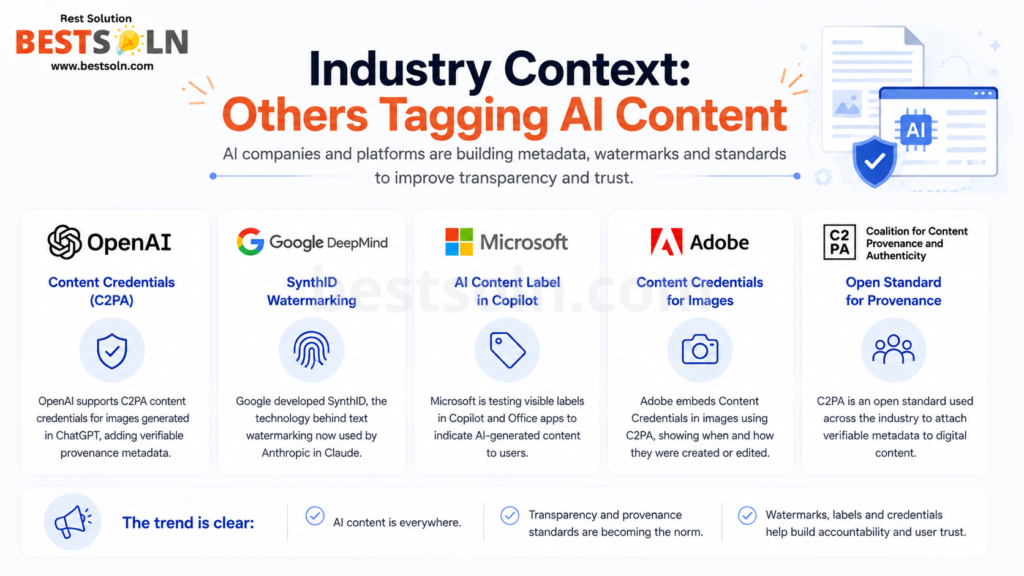
Claude isn’t alone in watermarking AI output. The idea has become a focus as regulators and platforms demand provenance signals. Google’s SynthID and Adobe’s “Signed Content” initiative and OpenAI using SynthID embed hidden codes in images; Google is extending it to text, audio and video. Elon Musk’s X platform currently adds a visible “Made with AI” label on some content. Universities in China have seen similar invisible watermarks on student work generated by local AIs.
However, Anthropic is the first major LLM company to openly roll out an invisible text watermark. (OpenAI still says it’s “working toward” text watermarking but hasn’t shipped it yet.) Because Anthropic is applying it globally from August 2nd, it is essentially sharing how it works in advance, which is unusual. In contrast, Google and OpenAI mainly apply watermarks on images at the platform level and have not exposed their text-wmarking schemes.
The European law also has odd wrinkles. One section of Article 50 actually exempts simple editing tasks (like grammar fixes) from needing any label. But Anthropic’s method can’t make that distinction: it marks all model outputs, even if Claude only did a light edit. As The Next Web points out, this means everyday tasks the law didn’t intend to flag (like a grammar check) still get marked, while a fully AI-written article might go unlabeled if a human editor simply “signs off”. In practice, it pulls in opposite directions: model-level marking versus editorial-labelling rules.
Reaction from Users and Experts
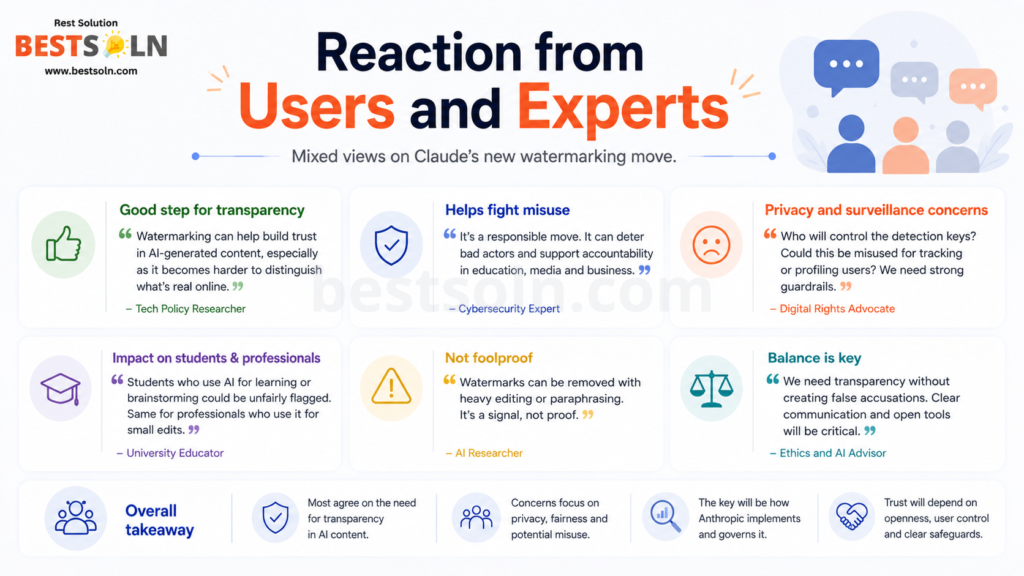
Anthropic’s announcement triggered mixed reactions. On one hand, many technologists and ethicists support watermarking. They argue readers deserve to know when text was AI-generated. Executive advisor Aadit Sheth summed it up: audiences should be able to tell if words reflect human thinking or an algorithm’s output. Developers note that watermarking can curb the “AI echo chamber” problem, and may even reduce AI model bias by limiting how much AI data is recycled. In Hacker News threads and some forums, users applauded the change as a way to restore accountability and discourage “sloppy” AI usage.
On the other hand, a vocal group of users bristled at being “marked”. Many complained on Reddit, X (formerly Twitter) and elsewhere that using Claude as a mere proofreader or aide would still flag their own words as AI content. A common gripe: a student asking Claude to restructure a paragraph or a manager having Claude summarize meeting notes could end up with a hidden “AI” tag on their work. One Redditor lamented it would put a “digital tattoo on their forehead”. Another called watermarked outputs “unethical” and “disgusting,” arguing that in many cases the human user did the real work and treated Claude as a tool.
Critics also voiced privacy and fairness concerns. Former Microsoft exec Steven Sinofsky warned that watermarks create a digital trail of one’s private writing (“your right to private thoughts free of a digital trail”). Others fear false accusations: for example, if a student lightly edits AI text, it could be flagged as AI-made. John Crickett (AI trainer) pointed out a copyright worry: if AI-generated code is watermarked, how do programmers prove the necessary human authorship for copyright? Another critique was that only Anthropic holds the key initially, so they effectively become the “judge, jury and prosecutor” of AI content.
However, not everyone agrees the backlash is warranted. Many tech-savvy users counter that any AI output, no matter how small, is use of AI. One commenter on TechCrunch noted there’s “literally no good argument” against the idea except to mislead others. Teachers and ethicists argue the watermark could help preserve academic integrity. Some even joked that opponents wouldn’t dare complain if it weren’t for a bit of bravado. Overall, reactions ranged from resigned acceptance to outright defiance.
What Others Are Doing
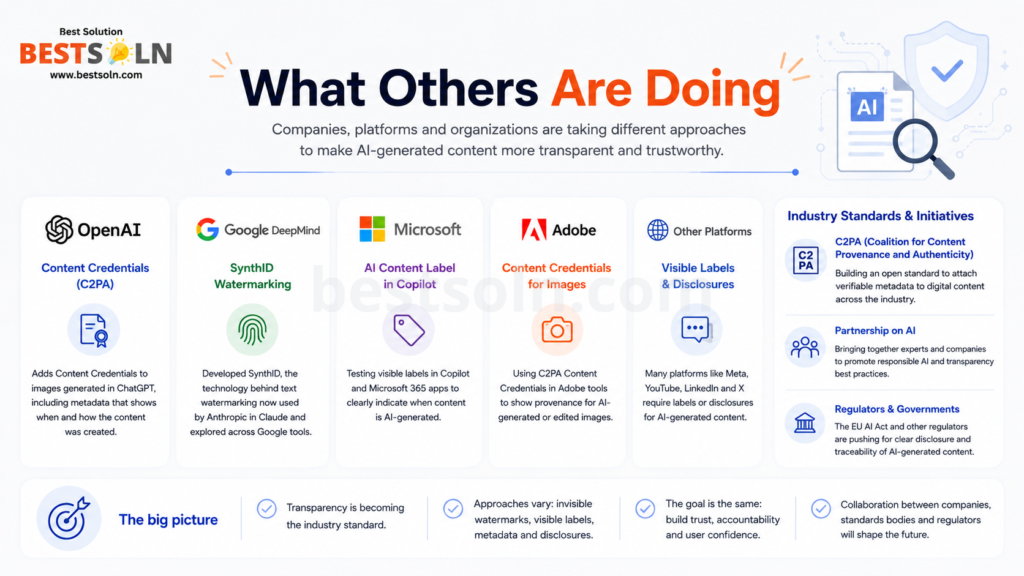
Anthropic’s move puts pressure on other AI labs. OpenAI has the tech but hasn’t activated it for text yet, mainly due to concerns about false positives and competitive fears. With EU compliance required, OpenAI will likely have to enable it for ChatGPT sooner or later. Google already applies its SynthID watermark to AI images and said it’s expanding it to text and other media. Meta and Microsoft have also signed the transparency code, and their platforms may adopt similar measures.
Legal and policy trends beyond Europe are also emerging. In the US, California’s new AI Accountability Act (effective 2027) will require firms to label or watermark AI-generated ads or news articles, with stiff fines for violations. The EU’s move could influence other governments, and some international bodies are discussing watermarking standards. So far, no global technical standard exists, though there are proposals in AI research.
Benefits and Drawbacks
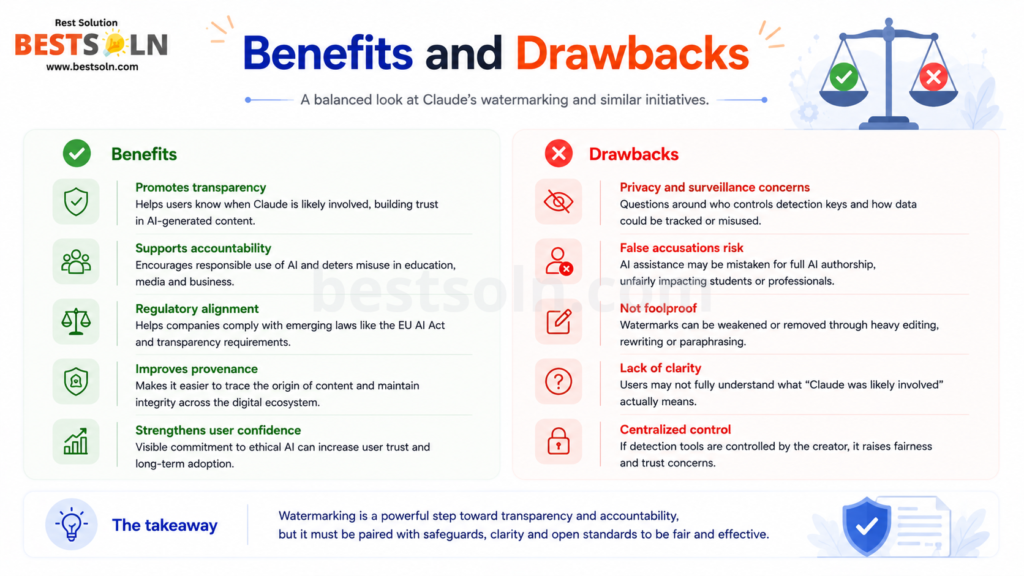
In theory, invisible watermarks have clear benefits. They provide a verifiable signal about content origin, which could deter plagiarism, automated disinformation, and unintended training on AI’s own output. For users, it could mean an extra layer of accountability: if you share a Claude answer publicly, others can tell it came from an AI. It also creates an audit trail: platforms or institutions could scan submitted work for watermarks and decide how to handle it (e.g. teachers checking student essays, publishers vetting articles).
But the approach has limits and costs. The watermark only signals potential AI involvement – for example, text that has been passed through Claude in some way will be marked even if the original idea was 100% human. Conversely, a long human-written text won’t get a watermark. This means both false positives and false negatives are possible. Anthropic warns that no watermark is foolproof. A malicious user could strip watermarks by paraphrasing or re-running the text through another model. File-based tags can be removed by taking screenshots or converting formats.
There’s also a subtle cost to content quality. Anthropic acknowledges that the watermark bias sometimes forces Claude to choose a slightly different word than it might have otherwise. They say testing shows this effect is negligible, but in theory it could make outputs marginally less “optimal” occasionally. And because Anthropic is the first to do this, there’s a competitive consideration: if other models don’t watermark yet, users might flock to those to avoid detection (or simply to escape this rule). However, within the EU those other companies would also be breaking the law if they sold unlabeled outputs.
Finally, there’s a philosophical debate: some see watermarking as aligning with honesty, while others worry it’s a slippery slope toward excessive surveillance of content. The New York Times and Ars Technica raise the “Scarlet Letter” analogy – even if invisible, people feel uneasy about being involuntarily tagged. In practice, though, this is now a regulatory requirement, and markets and courts may eventually treat a watermark as routine metadata.
Recommended Readings
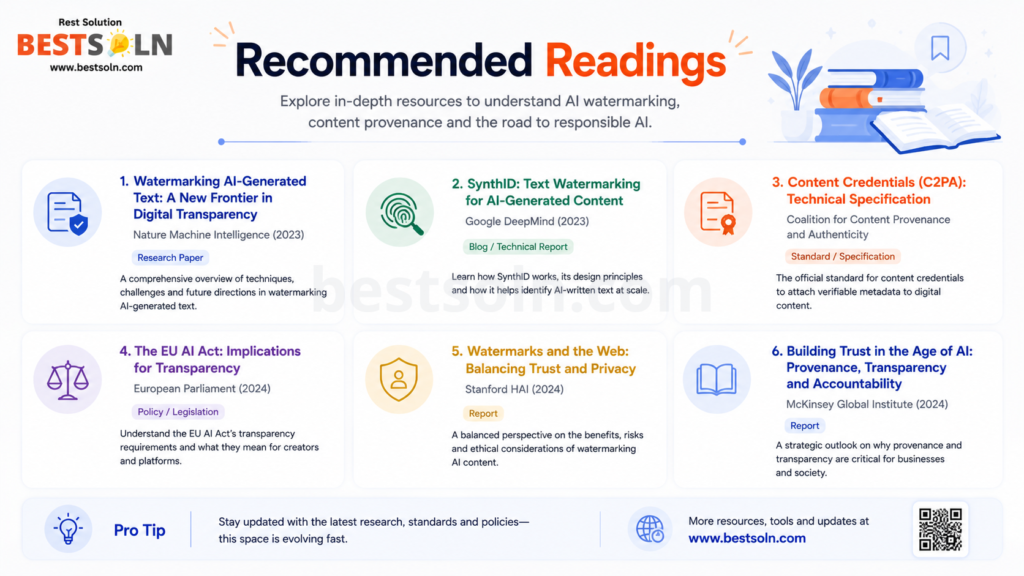
For further background on AI, ethics and content authenticity, consider these books:
- Atlas of AI: Power, Politics, and the Planetary Costs of Artificial Intelligence by Kate Crawford – A deep look at how AI systems are built and the impact they have on society (2021).
- Architects of Intelligence: The Truth About AI from the People Building It by Martin Ford – Interviews with leading AI researchers and entrepreneurs on the future of AI (2018).
- Life 3.0: Being Human in the Age of Artificial Intelligence by Max Tegmark – A broad overview of AI’s potential futures and how we might navigate them (2017).
- Artificial Intelligence: A Modern Approach by Stuart Russell and Peter Norvig – A comprehensive textbook on AI fundamentals (latest edition). It covers the technical ideas behind techniques like neural networks and natural language models.
- The Ethical Algorithm: The Science of Socially Aware Algorithm Design by Michael Kearns and Aaron Roth – A readable exploration of how to make AI systems fair and accountable (2019).
Each of these works provides insight into AI’s workings, its societal implications, and the challenges of building AI we can trust.
Frequently Asked Questions
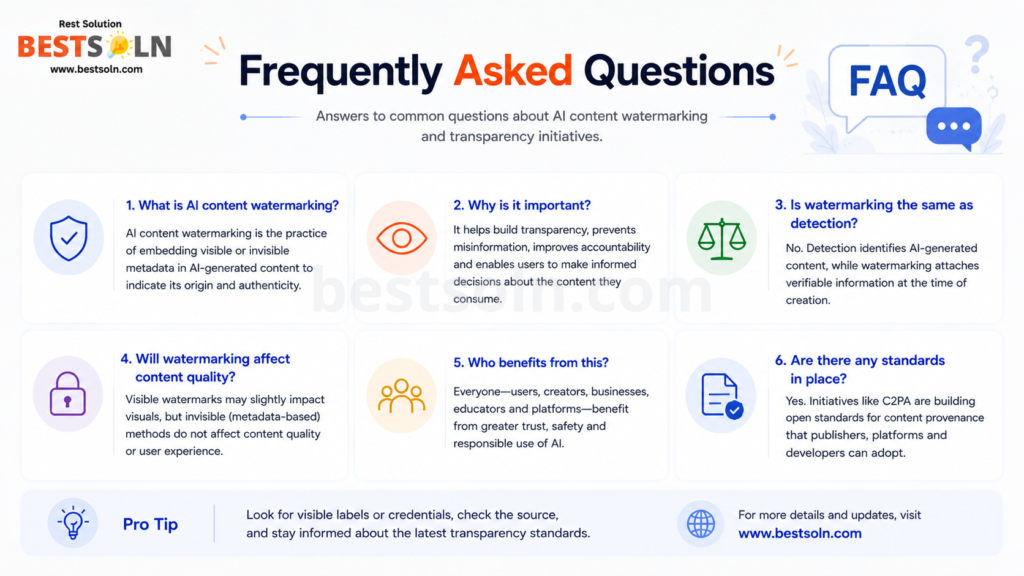
How do Claude’s invisible watermarks work?
Under the hood, Claude tweaks its random word choices to follow a secret pattern (a “key”). This creates a statistical imprint in the text that’s invisible to readers but detectable by special software. In effect, Claude still writes naturally, but it seeds each output with a hidden signature.
Will I notice any difference in Claude’s answers?
No. Anthropic and others report that the watermark does not change the content’s meaning or quality. It’s like using digits of π for randomness instead of dice – the moves look random to players, but you can verify the source later. Human evaluators saw no drop in quality in experiments.
Does the watermark apply to all Claude outputs?
Yes – any text Claude generates or processes on new models (Aug 2026+) will carry the mark. That includes code snippets, chat replies, summaries, or any edited text. However, the watermark may not be detectable if Claude only made very minimal edits or the passage is very short. Older Claude models (pre-Aug 2026) will be updated gradually.
Who can see or detect the watermark?
Initially, only someone with the detection key can. Anthropic says it will provide a free API for checking text. So anyone (teachers, platforms, authors, or regulators) should be able to verify a Claude watermark themselves once tools are released. Claude’s mark is not visible like a logo; it requires analysis.
Does a watermark mean Claude wrote the text?
Not necessarily. It means Claude touched the text. For example, if you wrote an essay and asked Claude to proofread or translate it, the output would likely carry the watermark because Claude processed it. Conversely, a human-penned text that has no detected watermark isn’t guaranteed purely human – Claude might have worked on it if it was short, highly edited, or run through an older model which wasn’t watermarked.
Can I remove or avoid the watermark?
In practice, the only ways to avoid it are: not using Claude (or using a model without watermarking), or rewriting the output in your own words. Since the watermark is statistical, copying Claude’s text verbatim or lightly editing it will keep the mark. But if you have a human rewrite or run it through another AI, the pattern can disappear.
What about images or other files?
Claude also adds digital provenance metadata to images (PNGs, SVGs, etc.) and some other files it creates. That metadata is industry-standard (C2PA) and can be inspected to see if Claude generated or processed a file. Like watermarks in text, it can be removed by taking screenshots or editing the file metadata.
Is this only for Europe?
No. Although driven by the EU AI Act, Anthropic is applying the watermarking globally on its new models. However, other companies might only deploy similar measures where legally required. US and other regions are watching closely; some new laws (like California’s) will also require AI disclosures in content.
When did this start?
Anthropic officially began marking Claude outputs on 2 August 2026. All Claude models released after that date have the feature turned on by default. Older models (Claude 3, Claude 2, etc.) will get updates over time.
What if I disagree or find a watermark on my original work?
Anthropic’s stance is that the watermarking is non-optional and global. Some users have canceled subscriptions in protest. In case of any dispute (for example, if a student’s essay returns a false watermark), Anthropic has not yet published a dispute process. Users concerned about privacy or unfair flagging will likely have to wait for the promised tools, transparency documentation, and possibly regulation clarifying how these marks can be used by others.
Will other AI tools do this too?
Likely yes. With the EU law, all major generative AI providers that want to operate in Europe will have to comply. Google already does it for images; OpenAI says it plans to extend to text. The industry is moving toward content provenance standards. In short, invisible watermarking is poised to become a common feature of next-gen AI models globally.
Conclusion
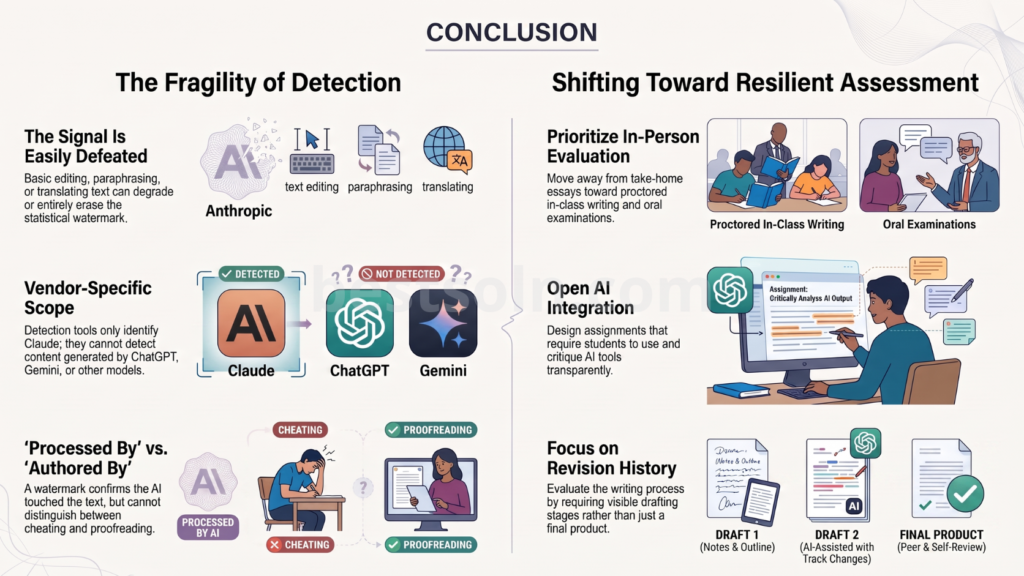
Anthropic’s invisible watermark is a landmark step in the evolving rules of AI transparency. By embedding a hidden signature in all new Claude outputs, Anthropic is betting on compliance and accountability. Whether this becomes a norm or just an EU-era anomaly depends on many factors: how well detection tools work, how users adapt (or circumvent), and how other companies react. One thing is clear: after August 2026, if you see text with Claude’s signature, you’ll know AI was involved – even if you can’t see the mark with your eyes.
This development underscores a larger shift: as generative AI becomes ubiquitous, the industry and regulators are racing to set standards. Watermarking is one approach to content authenticity, but it’s not a panacea. Readers, educators and creators will need to learn how to interpret these signals (or lack thereof) responsibly. We will likely see ongoing debate about privacy, fairness and efficacy. But for now, the cat (or the chatbot) is out of the bag: AI-generated text will no longer be indistinguishable by default.








Leave a Reply