


- Home
- /
- Case Studies
- /
- Substrate: Deconstructing a $1 Billion…
⏱️ Read Time:
The Genesis of a Challenger: Founders, Funding, and a Nationalistic Narrative

In the high-stakes arena of advanced semiconductor manufacturing, where entry barriers are measured in tens of billions of dollars and decades of research, the emergence of a new player is a rare event. Substrate, a San Francisco-based startup founded in 2022, has positioned itself at the center of this rarefied world by boldly announcing its intent to challenge the entrenched dominance of industry titans like ASML and TSMC. The company’s narrative is not merely one of commercial ambition but is deeply interwoven with themes of American technological resurgence, national security, and the urgent need to rebuild resilient domestic supply chains. This section dissects the origins of Substrate, examining the backgrounds of its founders, the formidable financial backing that has propelled it into the public eye, and the strategic story it has crafted to align with powerful economic and political currents.
The Proud Brothers and Thiel Connection
The leadership of Substrate traces back to James and Oliver Proud, who established the company in 2022. While detailed public records of their professional histories prior to founding Substrate are sparse within the provided sources, their association with Peter Thiel, the influential PayPal co-founder and prominent venture capitalist, is a defining feature of the company’s profile. Specifically, James Proud is described as a protégé of Peter Thiel, suggesting he is part of a select circle of entrepreneurs mentored by the billionaire investor. This connection places Substrate firmly within the ecosystem of companies backed by Thiel’s investment firm, Founders Fund, which led one of the key funding rounds. The involvement of such a high-profile figure provides significant social proof and access to a network of capital and expertise that is typically out of reach for most startups. Thiel’s investment philosophy is often characterized by contrarian bets on transformative ideas that challenge conventional wisdom, a pattern that seems to be reflected in his support for Substrate. Beyond the Prouds and Thiel, the company’s leadership includes Hemant Taneja, whose LinkedIn posts indicate an active role in shaping the company’s messaging around rebooting semiconductor supply chains.
The $100 Million War Chest
The financial foundation of Substrate is both substantial and indicative of high-confidence belief from top-tier Silicon Valley investors. In late 2025, the company secured a significant $100 million Series A funding round. This injection of capital reportedly resulted in a pre-money valuation between $1 billion and $1.2 billion, placing it in the elite “unicorn” category and signaling strong market interest despite the inherent risks of the semiconductor sector. The investor roster reads like a who’s who of influential venture capital firms. General Catalyst, a firm known for its long-term investments in foundational technology companies, is listed as a key participant. Other notable backers include Lux Capital. The participation of these firms suggests that Substrate’s vision extends beyond simple chip fabrication to potentially disruptive technological innovation that could reshape the industry. The scale of this funding round provides the necessary runway for years of research, development, equipment procurement, and facility construction, activities that are prohibitively expensive for smaller ventures.
Aligning with National Security
Central to Substrate’s identity is its carefully constructed narrative, which frames its mission not just as a business endeavor but as a strategic imperative for the United States. The company’s own website articulates this purpose clearly, stating its goal is to create a resilient, domestic semiconductor supply chain. This message directly taps into growing concerns over the concentration of advanced chip manufacturing in Taiwan, home to TSMC, a critical hub for the global tech industry. The physical nature of hardware allows for control over who can access it, making the location of production a matter of national security and economic stability. By positioning itself as a solution to this dependency, Substrate aligns its fortunes with a powerful bipartisan sentiment in Washington that favors strengthening domestic manufacturing capabilities. This alignment is further reinforced by its emergence during a period of intense government focus on semiconductors, exemplified by the passage of the CHIPS and Science Act, which provides federal incentives for building U.S.-based fabs.
The table below summarizes the key figures and financial details associated with Substrate’s formation and early growth.
| Category | Detail |
|---|---|
| Company Name | Substrate |
| Headquarters | San Francisco, California |
| Founded | 2022 |
| Founders | James Proud, Oliver Proud |
| Founder Background | James Proud is a protégé of Peter Thiel. Specific prior experience is not detailed in the provided sources. |
| Key Investor | Peter Thiel |
| Investor Affiliation | Founders Fund |
| Lead VC Firm | General Catalyst |
| Series A Funding | $100 Million |
| Reported Valuation | $1 Billion – $1.2 Billion (Pre-Money) |
| Other Investors | Lux Capital |
| Official Mission | To create a resilient, domestic semiconductor supply chain. |
This combination of elite backing, significant capital, and a resonant nationalistic narrative has created a potent launchpad for Substrate. It has successfully generated considerable media attention and positioned itself as a potential game-changer before it has even produced a single chip. However, this powerful narrative also sets extremely high expectations and exposes the company to intense scrutiny. The claims of technological disruption must ultimately be validated by tangible results, and the chasm between a compelling story and the brutal realities of semiconductor manufacturing is vast. The company’s journey will be defined by its ability to translate this initial momentum into verifiable technological progress and, eventually, commercial success.
Technological Claims Under Scrutiny: The Promise and Peril of X-Ray Lithography
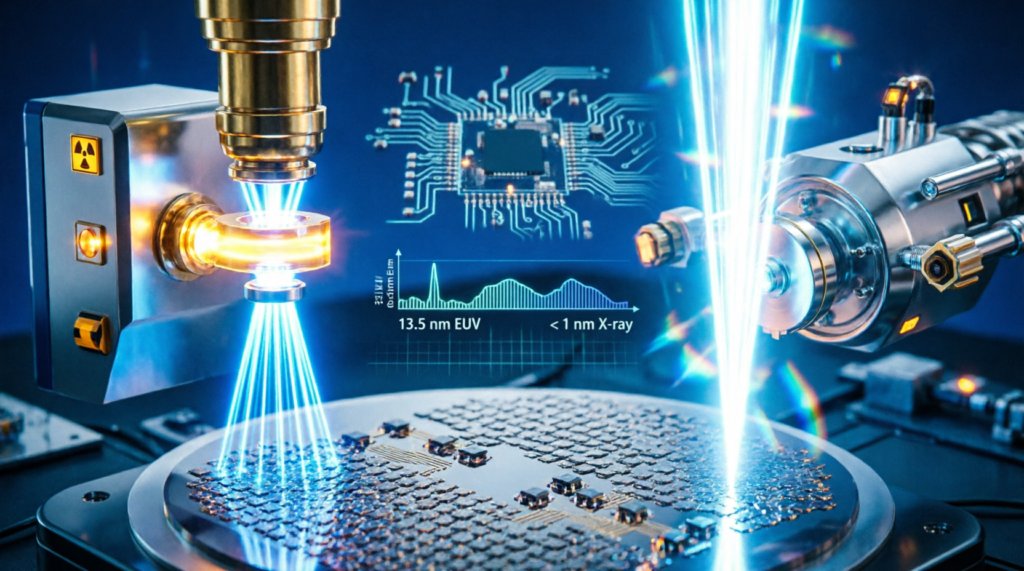
The core of Substrate’s disruptive ambition lies in its audacious technological claims. The company has publicly asserted the development of a revolutionary chipmaking technology capable of rivaling the sophisticated processes of industry leaders like ASML. This claim immediately places Substrate in direct opposition to the current paradigm of semiconductor manufacturing, which is almost exclusively dominated by Extreme Ultraviolet (EUV) lithography. The primary and most contentious assertion surrounding Substrate’s technology is its pursuit of X-ray lithography, a method that stands in stark contrast to the mainstream EUV approach. This choice of technology is both the foundation of its potential for radical innovation and the epicenter of the profound skepticism directed at the company. Understanding the promise and peril of this technological path requires a deep dive into the physics of chipmaking, the history of competing technologies, and the sober assessments of industry experts.
The EUV Monopoly
ASML, the Dutch company that holds a near-monopoly on EUV machines, built its dominant position through decades of grueling research and development. The technology involves using a complex laser system to zap tiny droplets of tin 50,000 times per second, creating a super-heated plasma that emits light with a wavelength of 13.5 nanometers. This short wavelength is essential for etching the incredibly fine features of modern transistors. The decision to pursue EUV was not made lightly; Japanese competitors in the field had previously abandoned similar efforts deemed “too risky,” highlighting the immense technical and financial hurdles involved. ASML’s roadmap is designed to meet the insatiable demand from customers like Nvidia, whose requirements for transistor density growth far exceed the traditional pace of Moore’s Law, aiming for a 16-fold increase every two years. To keep up, ASML is already working on the next generation of EUV technology, called High NA EUV, with a target for high-volume manufacturing by 2027-2028, and research is underway for an even more advanced Hyper NA version for the following decade. For a newcomer like Substrate to challenge this level of entrenched, multi-decade progress is an extraordinary undertaking.
The X-Ray Gamble
Substrate’s reported pivot to X-ray lithography represents a fundamental divergence from this well-trodden path. X-rays have an even shorter wavelength than EUV light, which theoretically offers the potential for higher resolution and the ability to print even smaller features on a chip. If Substrate has indeed mastered a viable, scalable, and cost-effective form of X-ray lithography, it could represent a genuine leapfrogging technology. It would bypass years of incremental improvement in EUV and potentially offer a new way forward for miniaturization. However, the history of X-ray lithography is fraught with difficulty. It is considered a highly challenging field that has seen limited commercial application compared to optical and EUV methods. One source explicitly states that pursuing X-ray lithography is a path that is considered “years away from production,” placing it significantly behind established leaders like ASML. This timeline discrepancy is a critical point of concern. By the time a new X-ray platform might become commercially viable, ASML’s EUV technology will have continued to advance, potentially closing any initial performance gap and leveraging its massive economies of scale.
Voices of Skepticism
This technological gamble has drawn intense skepticism from various corners of the tech industry. Analysts at Tom’s Hardware conducted a scrutiny of Substrate’s claims and technology messaging, going so far as to liken the venture to a fraud and pointedly “poke holes in the startup’s technology messaging and leaders”. This harsh critique reflects the deep-seated doubt felt by many engineers and analysts who are intimately familiar with the physics and engineering required for chip manufacturing. The fundamental challenge is that the semiconductor industry operates on a razor-thin margin for error. Achieving high yields, a measure of how many functional chips come off a wafer, is a function of mastering thousands of complex steps over many years. A new company attempting to introduce a fundamentally different core process faces a steeper learning curve and higher risk of failure than one building upon an existing, proven platform.
A lengthy discussion thread on SemiWiki, a forum frequented by semiconductor professionals, begins with the provocative title, “I think Substrate is a 1 billion fraud,” indicating that this sentiment of disbelief is not isolated but exists within technical communities. The argument against the plausibility of Substrate’s claims rests on several points. First, the sheer scale of innovation required to compete with ASML and TSMC is monumental. These companies employ tens of thousands of highly specialized engineers and invest tens of billions annually in R&D. Second, the lack of transparency from Substrate fuels speculation. As a company that emerged from stealth mode, it has not released peer-reviewed papers, detailed technical specifications, or independent verification of its claims. Its website outlines its purpose of creating a resilient supply chain but deliberately avoids providing granular technical details about its process, equipment, or yield rates. This information vacuum naturally leads to suspicion. Without verifiable evidence, its bold assertions remain unproven and appear, to skeptics, to be more marketing hype than a coherent technological roadmap.
Despite the overwhelming skepticism, there are some indicators that lend a degree of credibility to the venture. The most significant is the backing of sophisticated investors like Peter Thiel and General Catalyst. These investors are not typically swayed by superficial pitches; they make high-risk, long-term bets based on a deep conviction in a team’s potential and a technology’s transformative power. Their belief suggests they may have seen something in private that is not yet public, perhaps a prototype, a simulation, or a unique intellectual property portfolio, that gives them confidence in the founders’ ability to execute. Furthermore, the very existence of a serious attempt to develop X-ray lithography, if proven true, could mean that Substrate possesses breakthroughs in areas like X-ray source generation, mask technology, photoresist materials, or metrology that have eluded others. Such breakthroughs could indeed provide a competitive advantage, even if the overall timeline remains ambitious.
The following table contrasts the two primary technological paths in advanced chip manufacturing, highlighting the differences between ASML’s established EUV approach and Substrate’s rumored X-ray lithography.
| Feature | ASML’s EUV Lithography | Substrate’s Alleged X-Ray Lithography |
|---|---|---|
| Wavelength | 13.5 nanometers. | Shorter wavelength than EUV (exact value undisclosed). |
| Status | Mature, high-volume manufacturing. Current systems are in widespread use. | Considered years away from production. Significantly behind ASML’s roadmap. |
| Market Position | Near-monopoly held by ASML. Technology is the industry standard for advanced nodes. | No known commercial products or systems. A nascent, unproven technology path. |
| Historical Context | Adopted after Japanese competitors abandoned similar efforts as “too risky.” Built on decades of R&D. | A less common approach with a history of being technically challenging and having limited commercial adoption. |
| Industry Roadmap | Roadmap targets sub-2nm chips and beyond, with High NA EUV slated for HVM by 2027-2028. | Viewed with deep skepticism and disbelief by many analysts and engineers, some accuse the company of fraud. |
| Expert Perception | Viewed as the reliable, albeit increasingly complex and expensive, path forward by the industry. | Viewed with deep skepticism and disbelief by many analysts and engineers, some accuse the company of fraud. |
Ultimately, the truth of Substrate’s technological claims remains shrouded in secrecy. The company’s strategy appears to be to build momentum and secure resources while continuing its R&D in relative obscurity. Whether it is on the verge of a genuine scientific breakthrough that will redefine chipmaking or is engaged in a high-stakes bluff remains one of the most compelling questions in the technology sector today. The coming years will serve as a critical test, determining whether its X-ray vision is a glimpse of the future or a costly misstep.
Reshaping the Supply Chain: U.S. Industrial Policy and Geopolitical Rivalries

Beyond its speculative technology, Substrate’s significance is magnified by its potential to influence the structure of the global semiconductor supply chain. The company’s emergence is perfectly timed to capitalize on a confluence of powerful forces: a renewed national commitment to U.S. industrial self-sufficiency, acute geopolitical tensions with China, and a strategic desire to de-risk reliance on a single geographic region for advanced chip production. Even if Substrate fails to produce a single chip, its mere existence acts as a catalyst, reinforcing the importance of domestic capacity and encouraging further investment in next-generation technologies. This section explores how Substrate fits into the broader context of U.S. industrial strategy, the geopolitical chess game with China, and the potential for increased competition in a historically oligopolistic market.
The CHIPS Act Opportunity
The strategic importance of Substrate is most evident when viewed through the lens of U.S. industrial policy. The semiconductor industry is a cornerstone of the modern economy, underpinning everything from artificial intelligence and consumer electronics to national defense systems. The fact that the most advanced manufacturing is heavily concentrated in Taiwan, an area of persistent geopolitical tension, has become a major vulnerability. The U.S. government, recognizing this risk, has implemented policies designed to foster domestic production and reduce this dependency. The CHIPS and Science Act is the centerpiece of this effort, providing substantial federal funding and incentives for companies to build and expand semiconductor fabrication plants (fabs) within the United States. Arizona serves as a prime case study for this decentralized model of “techno-statecraft,” where state agencies, regional councils, universities, and utilities collaborate to attract global capital. Through aggressive land sales, water infrastructure funding, and workforce training programs, Arizona secured over $165 billion in investment commitments from industry giants TSMC and Intel. Substrate’s mission to create a “domestic supply chain” directly aligns with this national imperative, positioning it to potentially benefit from the same ecosystem of state and federal support that enabled the Arizona boom.
The Taiwan Dependency
This alignment with national interests is a crucial element of Substrate’s business strategy. By framing its work as essential to U.S. technological sovereignty and economic resilience, the company can tap into a powerful narrative that transcends purely commercial considerations. This narrative resonates with policymakers and the public, who are increasingly concerned about supply chain fragility. The state of Arizona has even taken para-diplomatic steps, establishing a trade office in Taipei to formalize supply-chain agreements with Taiwan’s Bureau of Foreign Trade, underscoring the seriousness with which these relationships are viewed. Substrate, by promising to add another pillar to the U.S. manufacturing base, becomes part of this larger, state-supported project. The designation of Arizona State University as a CHIPS for America R&D Flagship Facility highlights the deep integration of federal industrial policy with local academic and research institutions, a model that a new fab like Substrate’s would likely seek to emulate.
Geopolitical Chess
The geopolitical dimension adds another layer of urgency to the push for domestic semiconductor capacity. The United States is engaged in a technological competition with China, particularly in the realm of advanced computing and AI. Recognizing its lag in cutting-edge chip manufacturing, China has launched massive, state-funded initiatives to develop its own capabilities, including a parallel effort to master EUV lithography. While China’s Shanghai Micro Electronics is estimated to be 10-15 years behind ASML, a specialized team in Shenzhen has reportedly made progress, with working chips potentially achievable by 2028. In this context, fostering alternative paths to leadership becomes a strategic imperative for the U.S. A successful Substrate, even if it uses a non-EUV technology like X-ray lithography, could represent a hedge against Chinese advancements. It would provide the U.S. with a competitive edge in future generations of chips, ensuring that leadership in computing power does not shift decisively away from Western hands. The ability to exclude users from accessing powerful hardware is a physical reality of semiconductor ownership, making the location of production a tool of governance and influence.
Should Substrate succeed in establishing a viable U.S.-based manufacturing presence, it would introduce a new competitor into a market that is currently dominated by a small number of firms, creating a more fragmented and dynamic landscape. This increased competition could have several positive effects. Firstly, it could drive down costs for advanced chips, benefiting downstream industries like AI, automotive, and consumer electronics that rely on these components. Secondly, the presence of a challenger could act as a powerful incentive for incumbents like ASML and TSMC to innovate faster and more aggressively to defend their market share. Thirdly, it could create new opportunities for fabless semiconductor companies and smaller foundries that might find it easier to partner with a new entrant rather than navigate the complex relationships with the existing oligopoly. This could democratize access to advanced manufacturing and foster a more vibrant and diverse ecosystem.
However, the risks associated with such an endeavor are immense. The capital expenditure required to build a state-of-the-art fab runs into the tens of billions of dollars, and achieving high manufacturing yields is a notoriously difficult and time-consuming process. Failure is a constant possibility, and the collapse of a high-profile venture like Substrate would serve as a stark reminder of the formidable barriers to entry in the semiconductor industry. The entire enterprise is predicated on the successful translation of a secretive technology into a reliable, high-yield manufacturing process, a challenge that has defeated many before. The outcome of Substrate’s journey will therefore have significant implications, not only for its own survival but for the future of U.S. semiconductor manufacturing and the global balance of technological power.
The High-Stakes Gamble: Capital, Competition, and the Path to Commercialization

For a startup aspiring to disrupt the most capital-intensive and technologically mature industry in the world, securing substantial funding is the first, and perhaps most critical, step toward survival. Substrate has successfully navigated this initial hurdle, raising a significant $100 million Series A round that has provided the necessary fuel for its ambitious R&D program. This financial backing, coupled with a high valuation, has placed the company in a privileged position to pursue its radical technological goals without the immediate pressure of generating revenue. However, this capital is a double-edged sword. While it enables exploration of high-risk, high-reward pathways like X-ray lithography, it also creates immense pressure to deliver tangible results. The path from a funded startup to a profitable, commercially viable semiconductor manufacturer is exceptionally long, steep, and fraught with peril, marked by intense competition and unforgiving economics.
The Cost of Entry
The $100 million investment round, which valued the company at approximately $1 billion to $1.2 billion, is a testament to the confidence of its backers, including General Catalyst and Peter Thiel’s Founders Fund. This level of funding is sufficient to cover the costs of assembling a world-class team of scientists and engineers, procuring specialized (and often custom-built) equipment, leasing or constructing a cleanroom facility, and, most importantly, conducting years of experimentation to refine a new manufacturing process. In the semiconductor world, where a single EUV machine can cost upwards of $200 million, and a state-of-the-art fab can require an investment of over $20 billion, Substrate’s initial capital is a start, not a finish line. The company will need to demonstrate significant progress to attract subsequent rounds of financing, which will be required to scale up from a lab-scale operation to a pilot line, and eventually to full high-volume manufacturing (HVM).
The Yield Barrier
The competitive landscape Substrate aims to enter is arguably one of the most challenging in the modern industry. At the apex of the value chain, which involves key segments, actors, and inputs, are a handful of dominant players. On the equipment side, ASML holds a near-monopolistic grip on the supply of EUV lithography machines, the most critical tools for producing advanced chips. On the manufacturing side, TSMC of Taiwan is the undisputed leader in contract chip fabrication, possessing unparalleled expertise in process optimization and yield management. Competing against these giants requires more than just a good idea; it demands a multi-generational accumulation of knowledge, a global supply chain of specialized materials and parts, and a workforce trained in the intricate arts of microfabrication. The learning curve is vertical, and the cost of a single mistake, such as a defect in a billion-transistor design, can be catastrophic. Substrate is attempting to climb this mountain starting from sea level.
The Road to Profitability
The business model of a company like Substrate remains largely opaque, a common trait for stealth-mode startups operating in such a sensitive field. Publicly available information does not detail its specific plans for scaling production, achieving economies of scale, targeting customers, or establishing a pricing strategy. Will it aim to serve large, established Original Equipment Manufacturers (OEMs) like Apple, Nvidia, or Qualcomm? Or will it focus on niche markets or applications where its proprietary technology offers a unique advantage? The path to profitability is unclear, as semiconductor manufacturing is notorious for its high fixed costs and thin margins, especially during the ramp-up phase of a new process node. Achieving high yields, the percentage of functional dies on a wafer, is the ultimate arbiter of profitability, and it is a metric that takes years and billions of dollars to perfect. Incumbents like TSMC have spent decades honing this skill, giving them a massive, hard-to-replicate advantage.
The following table outlines the primary challenges and pressures that Substrate faces as it attempts to transition from a funded startup to a commercial entity.
| Challenge/Pressure | Description | Industry Context |
|---|---|---|
| Massive Capital Requirements | The cost of building and equipping a state-of-the-art fab runs into the tens of billions of dollars. Scaling from lab to HVM requires continuous, massive investment. | TSMC’s Arizona fab investment exceeds $165 billion, including follow-on spending. |
| Intense Competition | Dominance by a few key players (e.g., ASML in EUV equipment, TSMC in manufacturing) creates high barriers to entry and makes gaining market share extremely difficult. | ASML’s EUV monopoly was built over decades, deterring competitors. |
| Technology Uncertainty | The core technology (alleged X-ray lithography) is unproven and years away from production, creating uncertainty about its ability to compete with established EUV roadmaps. | ASML’s High NA EUV is on a clear path to HVM by 2027-2028, putting alternatives at a significant timeline disadvantage. |
| Yield Management | Achieving high manufacturing yields is critical for profitability and requires years of iterative refinement and deep process knowledge. | Yield is a function of mastering thousands of complex steps over many years, a domain where incumbents excel. |
| Talent Acquisition & Retention | The company must attract and retain a highly specialized workforce of scientists, engineers, and technicians with rare skills. | The semiconductor industry competes globally for a finite pool of talent. |
| Path to Profitability | A clear and sustainable business model, including customer acquisition and pricing strategy, is needed to justify the enormous investment. | High fixed costs and thin margins are typical, especially during the ramp-up phase of a new technology node. |
In essence, Substrate is playing a high-stakes game of chess against opponents who have been playing the game for decades. Its initial move, a successful fundraising round backed by influential investors, has given it the right to play. But every subsequent move will be scrutinized, and the board is filled with obstacles. The company’s ability to execute its technological vision, manage its capital wisely, and navigate the treacherous waters of the global semiconductor market will determine whether it becomes a footnote in the history of failed startups or a legitimate challenger that reshapes the industry.
Recommended Readings
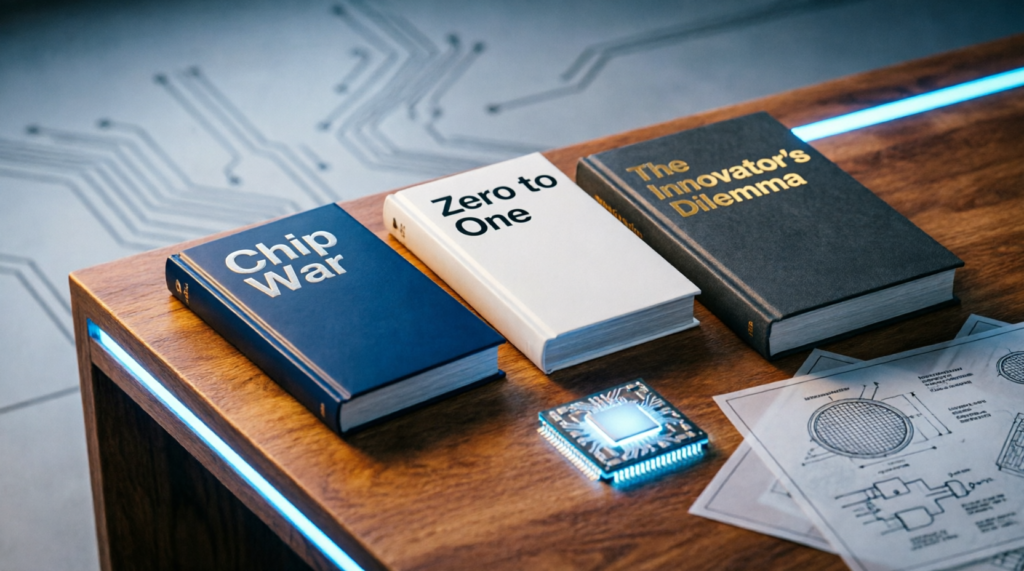
- “Chip War: The Fight for the World’s Most Critical Technology” by Chris Miller – This book provides a comprehensive history of the semiconductor industry and explains the geopolitical importance of chip manufacturing. It offers essential context for understanding why a company like Substrate matters on the global stage.
- “Zero to One: Notes on Startups, or How to Build the Future” by Peter Thiel – Written by one of Substrate’s key backers, this book outlines the investment philosophy behind supporting contrarian ideas. It helps explain why investors might back a high-risk venture like Substrate.
- “The Innovator’s Dilemma: When New Technologies Cause Great Firms to Fail” by Clayton M. Christensen – This classic business book explores how established companies can be disrupted by newcomers. It provides a theoretical framework for analyzing Substrate’s attempt to unseat industry incumbents.
Frequently Asked Questions
Q1: What is Substrate?
A: Substrate is a San Francisco-based semiconductor startup founded in 2022. It aims to manufacture computer chips using a proprietary technology that reportedly challenges the dominance of industry giants like ASML and TSMC.
Q2: Who are the founders of Substrate?
A: The company was founded by James and Oliver Proud. James Proud is noted as a protégé of venture capitalist Peter Thiel.
Q3: How much funding has Substrate raised?
A: Substrate secured $100 million in Series A funding in late 2025. This round valued the company at between $1 billion and $1.2 billion.
Q4: What technology does Substrate use?
A: Reports and analysis suggest Substrate is pursuing X-ray lithography. This differs from the Extreme Ultraviolet (EUV) lithography currently used by industry leaders like ASML.
Q5: Is Substrate’s technology proven?
A: No. The technology is currently unproven in commercial settings. Many industry analysts and engineers have expressed deep skepticism regarding the feasibility of their claims.
Q6: Why is Substrate significant?
A: Beyond its technology, Substrate represents a push for U.S. domestic semiconductor manufacturing. It aligns with national security goals and policies like the CHIPS and Science Act to reduce reliance on foreign supply chains.
An Investigative Synthesis: Weighing Vision Against Feasibility
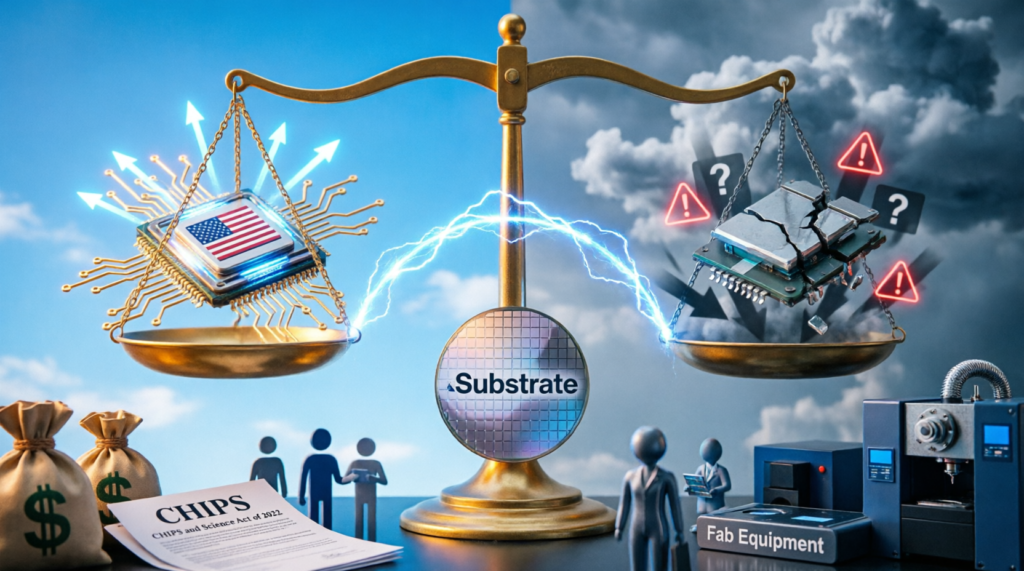
The story of Substrate is a compelling narrative woven from threads of audacious ambition, elite capital, geopolitical strategy, and profound technical skepticism. It represents a fascinating case study in modern venture capitalism, where high-stakes bets on radical science are inextricably linked with national identity and global power dynamics. After dissecting the available information regarding its founders, funding, technological claims, and strategic positioning, a nuanced picture emerges, one that resists simple categorization as either a genuine revolution or a hollow fraud. Instead, Substrate appears to be a high-risk experiment whose ultimate value may be as much strategic as it is commercial.
The Strategic Asset Argument
On one hand, the vision articulated by Substrate is undeniably powerful and timely. The call to “reboot semiconductor supply chains” and establish a resilient domestic manufacturing base in the United States strikes a deep chord with contemporary economic anxieties and national security concerns. The company’s alignment with the goals of the CHIPS and Science Act and its potential role as a counterweight to China’s technological ambitions provide it with a powerful political and social license to operate. The backing of formidable investors like Peter Thiel and General Catalyst lends significant weight to this vision, suggesting that beneath the public-facing mystery, there is a perceived basis for belief in the founders’ ability to deliver. If Substrate has genuinely cracked the code on a viable, scalable X-ray lithography process, its impact could be transformative. It could offer a new pathway to miniaturization, bypassing the escalating costs and complexities of EUV and potentially revitalizing U.S. manufacturing leadership. In this scenario, the company would be remembered as a pivotal innovator that dared to challenge the impossible.
The Verdict on Viability
On the other hand, the weight of expert skepticism cannot be overstated. The technical community, particularly on forums like SemiWiki and among analysts at outlets like Tom’s Hardware, has reacted to Substrate’s claims with disbelief, pointing to the company’s messaging as riddled with holes and questioning its very legitimacy. The history of semiconductor technology is littered with dead ends and abandoned projects, and X-ray lithography is a path that major players once deemed too difficult to pursue commercially. Given that ASML’s EUV roadmap is already pushing towards High NA technology for high-volume manufacturing by 2027-2028, the notion that a new startup could develop a competing platform from scratch and catch up is met with extreme doubt. The chasm between a billion-dollar valuation and a working product is immense, and Substrate has provided no verifiable data to bridge it. This lack of transparency invites the conclusion that the company may be more focused on maintaining hype and attracting capital than on solving the fundamental physics and engineering problems of chipmaking.
Ultimately, the fate of Substrate hangs in the balance between these two narratives. It functions simultaneously as a potential commercial enterprise and as a strategic asset. Even if it fails to produce a single chip, its existence validates the importance of investing in alternative technologies and reinforces the political will to bolster domestic semiconductor capacity. In this sense, it serves a purpose similar to a DARPA grant: a high-risk bet intended to explore possibilities that the private sector might otherwise ignore. The company’s success or failure will provide invaluable data for the entire industry. A successful outcome would rewrite the rules of the game. A spectacular failure would serve as a powerful cautionary tale about the perils of disrupting the world’s most complex manufacturing ecosystem.
For now, the answers remain locked away behind the walls of a stealth-mode startup. The truth of Substrate’s technological prowess will only be revealed through time, patience, and the eventual public demonstration of its technology. Until then, it stands as a symbol of the tension between visionary ambition and the immutable laws of physics and finance. It is a story still being written, and its final chapter has yet to be determined.










Leave a Reply