


Introduction: The Teenager Who Predicted the Future
In 1968, a 13 year old student at Seattle’s Lakeside School was granted special permission to skip math class to learn a new skill: computer programming. He became so engrossed that he would sneak out of his house at night to use the university’s mainframe. That teenager was Bill Gates. Just a few years later, he would confidently tell his surprised teachers that he would be a millionaire by the age of 30. He was wrong. He became a billionaire by 31.
Bill Gates’ story is the defining narrative of the software industry. He was the first to understand that in the dawning personal computer age, the real value was not in the hardware, but in the operating system that controlled it. He built Microsoft into an indomitable force, a company that both powered and was accused of monopolizing the digital revolution. And then, in a second act arguably more impactful than the first, he walked away to tackle humanity’s oldest problems: disease, poverty, and inequality.
The Early Years: The Partnership That Changed Computing

From a young age, Gates displayed a fierce competitive spirit and a brilliant, analytical mind. At Harvard University, he spent more time in the computer lab than in class. It was there, in 1975, that his childhood friend Paul Allen showed him the cover of Popular Electronics featuring the Altair 8800, one of the first microcomputers.
Gates and Allen saw the opportunity instantly. While hobbyists were focused on the hardware, they understood that the machine needed software to be useful. They contacted the company, Micro Instrumentation and Telemetry Systems (MITS), and claimed to have a working version of the BASIC programming language for the Altair. They didn’t. They worked feverishly for eight weeks, with Gates writing much of the code, to create it. The software worked flawlessly, and MITS bought it. This was the foundation of Microsoft, a company originally named “Micro-Soft.”
The Big Idea: The Deal of the Century
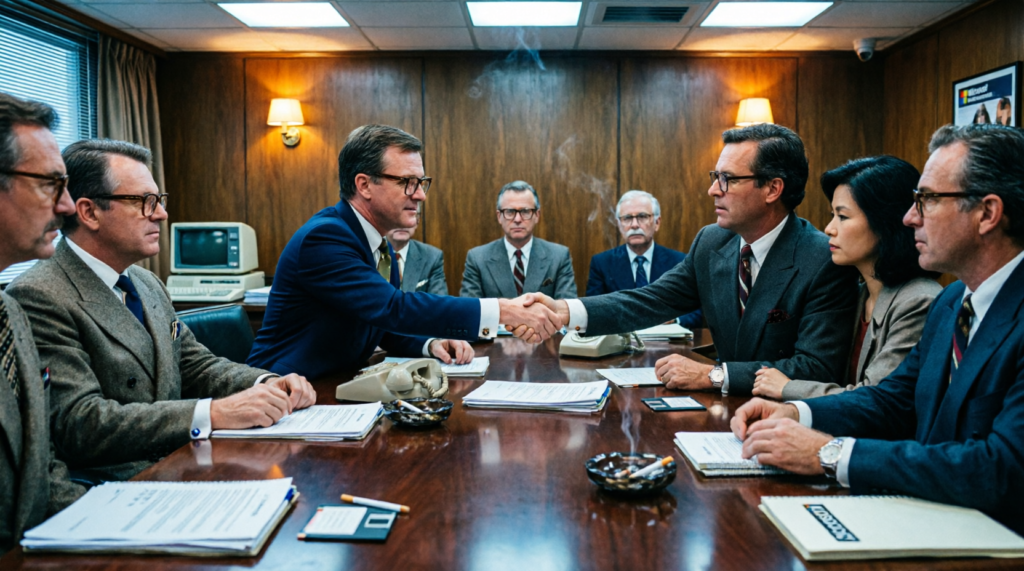
Microsoft’s defining moment had nothing to do with writing code, but with a brilliant business decision. In 1980, IBM, the titan of the computing world, was rushing to create its own personal computer. They came to Microsoft to license an operating system.
Instead of selling IBM an operating system he didn’t have, Gates made a pivotal move. He bought a simple operating system from another company for $75,000, renamed it MS-DOS (Microsoft Disk Operating System), and licensed it to IBM. Crucially, he retained the right to license MS-DOS to any other computer manufacturer.
This was the masterstroke. As IBM PC clones flooded the market, every one of them needed an operating system. Gates was there to sell it to them. Microsoft, not IBM, became the gatekeeper of the PC industry. The software was the crown jewel.
Building the Empire: The Windows to the World
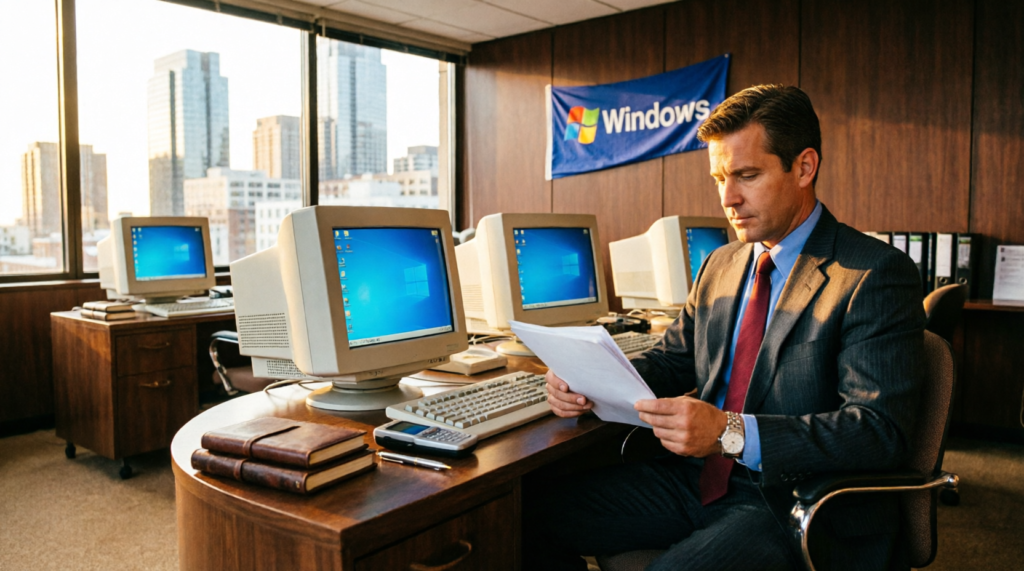
Gates was never one to rest. Seeing the early success of Apple’s Macintosh with its graphical user interface, he knew the command line of MS-DOS was the past. He embarked on a years long project to create Windows, a graphical operating system for IBM compatible PCs.
The first versions were clunky and slow to catch on. But Gates was relentless, pouring resources into improvement. With Windows 3.0 and then the blockbuster Windows 95, Microsoft achieved near total dominance. He then used this dominance to bundle other software, like the Internet Explorer web browser, crushing competitors like Netscape and drawing the attention of the U.S. Department of Justice.
The subsequent antitrust lawsuit in the 1990s was a major crisis, with a judge initially ruling that Microsoft should be broken up. The company eventually settled, but the case tarnished its and Gates’ reputation, painting him as a ruthless monopolist in the public eye.
The Second Act: The World’s Largest Foundation

In 2000, Gates stepped down as CEO of Microsoft and, together with his then wife, Melinda French Gates, established the Bill & Melinda Gates Foundation. He shifted his full time focus from business to philanthropy, bringing the same data driven, strategic mindset to giving that he had to software.
The foundation’s ambitions are staggering. It has spent billions fighting infectious diseases like malaria and polio, improving agricultural yields in developing nations, and enhancing education in the United States. Gates has personally championed causes like global vaccine distribution and clean energy innovation, arguing that technology and capitalism, when directed properly, can solve the world’s biggest problems.
The Man and the Mind: A Geek at the Top

Unlike the charismatic Steve Jobs, Gates was the archetypal nerd. He was known for his intellectual curiosity, his rocking motion when deep in thought, and his memorably sharp, high pitched voice. He was a fierce competitor in business, known for challenging employees with penetrating questions in meetings. His personal life is largely private, though his divorce in 2021 after 27 years of marriage was a highly publicized event.
Recommended Reading
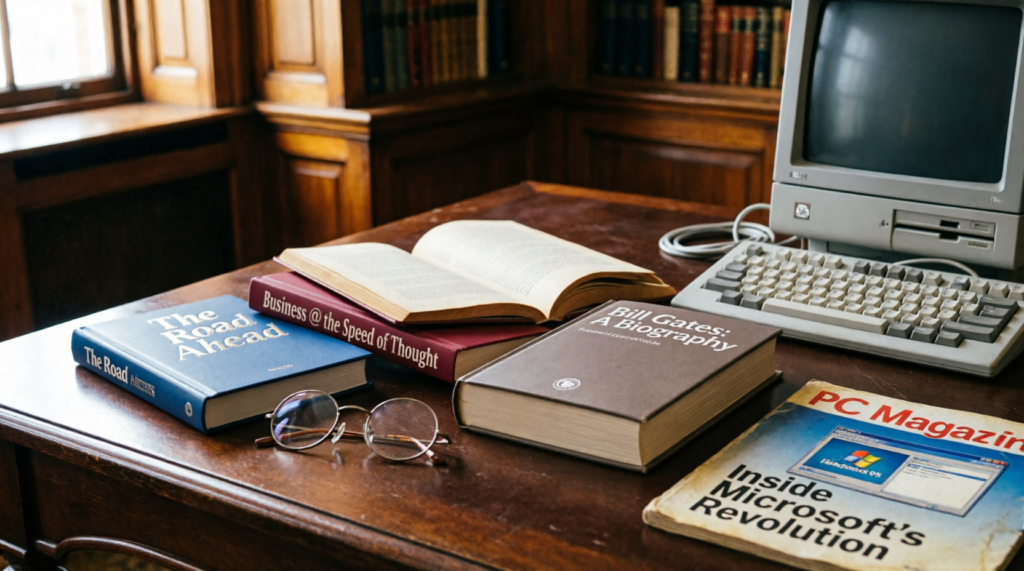
To understand the mind and journey of Bill Gates, these books are essential:
- “The Road Ahead” by Bill Gates: His first book, written in 1995, predicting the future of technology and the internet. It is a fascinating time capsule of his thinking at the peak of Microsoft’s power.
- “Business @ the Speed of Thought” by Bill Gates: His second book, focusing on how digital infrastructure would transform business operations.
- “Gates: How Microsoft’s Mogul Reinvented an Industry and Made Himself the Richest Man in America” by Stephen Manes and Paul Andrews: A detailed and critical biography covering his rise and the antitrust battles.
Frequently Asked Questions (FAQs)

Q1. Is Bill Gates a self made billionaire?
A: Yes, largely. He came from an upper middle class family that provided him with excellent education and opportunities, but he built Microsoft’s fortune through his own vision, business acumen, and relentless work ethic, without inheriting significant wealth.
Q2. What is Bill Gates’ net worth?
A: As of 2024, his net worth is estimated to be over $120 billion, making him one of the richest people in the world. It is important to note that he has already donated tens of billions to his foundation.
Q3. Did Bill Gates actually write code for Microsoft?
A: Yes, especially in the early years. He was deeply involved in programming, writing key parts of early software like Altair BASIC. As the company grew, his role shifted to management and strategy.
Q4. Why is Bill Gates so focused on philanthropy?
A: He has stated that he believes those with great wealth have a responsibility to give back to society. He was influenced by the example of Andrew Carnegie and John D. Rockefeller and wants to use his resources to solve problems that markets and governments have failed to address.
Conclusion: From Code to a Cure

Bill Gates’ legacy is a tale of two halves. The first is that of the brilliant, competitive, and sometimes ruthless businessman who saw the future of software and built an empire that defined the PC era. He is the original tech titan, whose work fundamentally shaped how the modern world operates.
The second, and ongoing, legacy is that of the philanthropist. He has set a new standard for giving, applying a venture capital mindset to global health and development. While his business practices remain a topic of debate, his post Microsoft work has saved millions of lives and inspired a generation of tech billionaires to pledge their wealth to charity.
Bill Gates is more than a coder or a billionaire. He is a symbol of the immense power of focused intellect, whether directed at building a fortune or trying to save the world.








Leave a Reply