

- Home
- /
- Online Games
- /
- Raji Kaliyuga: How India is…
⏱️ Read Time:
Introduction
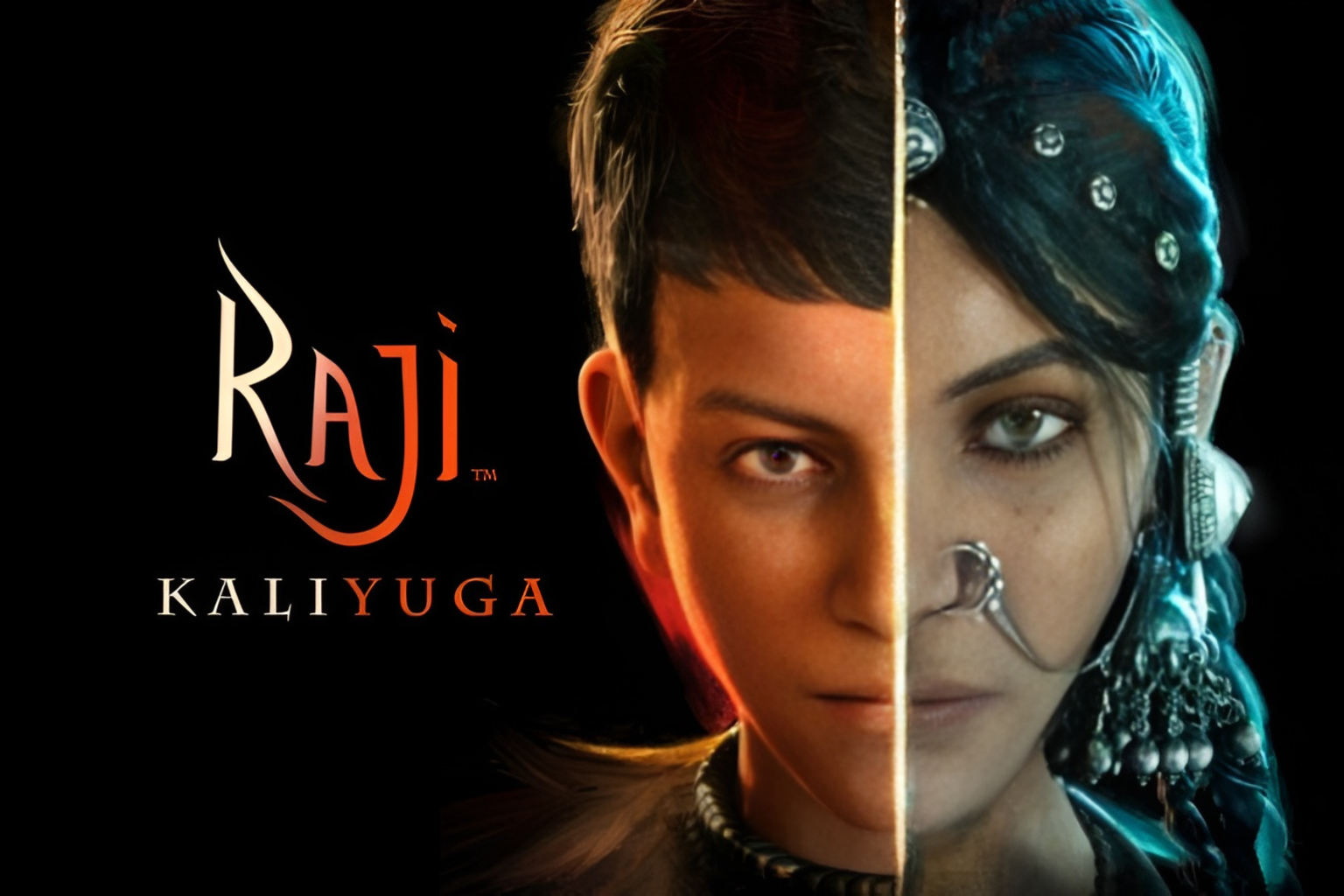
The global video game industry has long been dominated by narratives rooted in Western and East Asian mythologies, with the stories of the Norse gods and the legends of the Three Kingdoms providing a seemingly inexhaustible well of inspiration. However, the release of Raji An Ancient Epic in 2020 signaled a profound shift in this cultural monopoly. Developed by the Pune based studio Nodding Heads Games, the title served as a standard bearer for Indian prestige gaming, reaching over two and a half million players and proving that authentic Indian narratives could resonate with a worldwide audience. The recent announcement of the sequel, Raji Kaliyuga, represents a significant escalation in both ambition and scope, transitioning the series from a niche indie gem into a high fidelity third person action adventure that seeks to explore the darkest epoch of Hindu cosmology.
The Rise of Indian Prestige Gaming and the Nodding Heads Legacy
To understand the weight of the Raji Kaliyuga announcement, one must first appreciate the landscape from which its predecessor emerged. For decades, the Indian gaming sector was largely defined by its role as an outsourcing hub, an asset farm where local artists produced high quality models and textures for Western AAA titles without owning the creative direction of the projects. When Avichal Singh, Shruti Ghosh, and Ian Maude founded Nodding Heads Games in 2017, they aimed to dismantle this paradigm by creating a game that was authentically Indian in both its aesthetic and its soul.
The road to the original game’s success was fraught with financial hurdles. The Indian investment climate at the time was heavily skewed toward mobile gaming, specifically in the realms of real money gaming such as poker and fantasy sports. Venture capitalists were often hesitant to fund a PC and console project that lacked the immediate, aggressive monetization cycles of mobile platforms. Despite these challenges, the team persevered, even selling personal belongings to keep the studio afloat during the early stages of development. Their tenacity was rewarded when Raji An Ancient Epic became the first Indian game to be featured in a Nintendo Indie World showcase, eventually garnering accolades from The Game Awards and BAFTA.
The impact of this success cannot be overstated. By the year 2021, the Indian gaming market was predicted to reach one billion dollars with over three hundred million gamers. Within this booming market, Raji emerged as a crossover hit, bridging the gap between digital entertainment and traditional Indian arts such as film and literature. The game was even highlighted by the Prime Minister of India as a prime example of utilizing local folklore to build a modern creative industry. This cultural resonance set the stage for Kaliyuga, a project that is no longer just a sequel but a testament to the growing maturity of Indian game development.
The Eschatology of Kaliyuga: A World in Decay
The subtitle of the sequel, Kaliyuga, is a reference to the fourth and final age in the Hindu cycle of time. In Puranic cosmology, time is viewed as a repeating rhythm of four yugas: Satya, Treta, Dvapara, and Kali. As the cycle progresses, there is a steady decline in spiritual purity, moral integrity, and social order. The following table provides a breakdown of the traditional durations of these ages according to sacred texts.
| Name of the Age | Length in Divine Years | Length in Solar Years | Characteristic |
| Satya Yuga | 4,800 | 1,728,000 | The Golden Age of Truth |
| Treta Yuga | 3,600 | 1,296,000 | The Age of Ritual and Duty |
| Dvapara Yuga | 2,400 | 864,000 | The Age of Duality and Decline |
| Kali Yuga | 1,200 | 432,000 | The Age of Darkness and Discord |
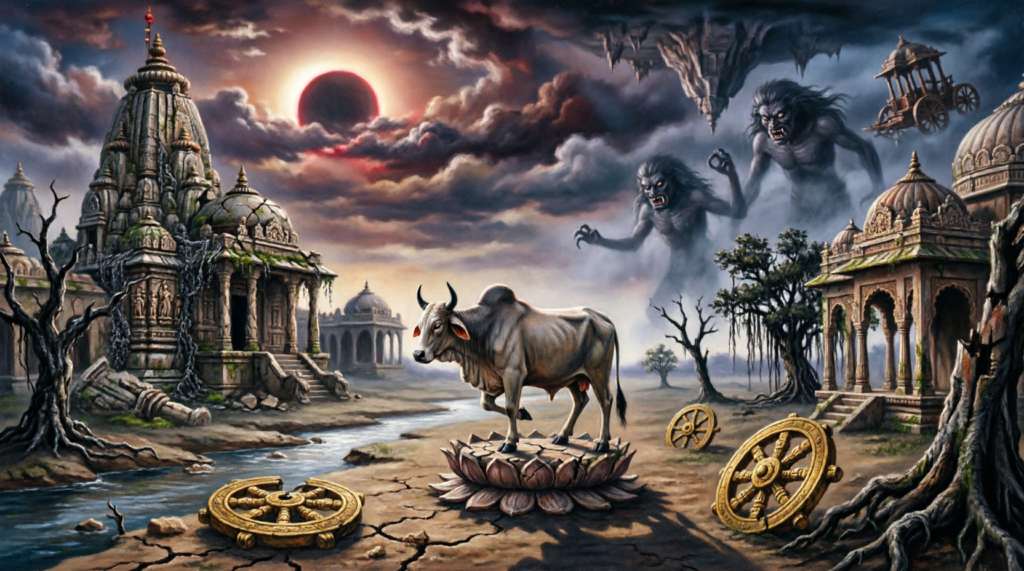
The Kali Yuga is believed to have commenced at the moment of the departure of Lord Krishna from the physical world, a date traditionally identified as the midnight between February 17 and 18 in 3102 BCE. In this era, morality is often represented by a bull standing on only one leg, which symbolizes truth, while the other three legs of austerity, cleanliness, and compassion have been lost. The scriptures describe this age as one where greed, hypocrisy, and conflict dominate human interactions.
In the narrative of Raji Kaliyuga, this cosmic decline is accelerated by the actions of the asura warlord Mahabalasura. By prematurely unsealing the doors to heaven, Mahabalasura has shattered the divine equilibrium, plunging all realms into a state of endless war. This setting allows the developers to move away from the bright, vibrant palaces of the first game toward a darker, more atmospheric world that reflects the post apocalyptic nature of the Iron Age. The game explores the concept that during Kaliyuga, every choice made by an individual possesses the potential to either save or unmake the entire universe.
The Puranas list several specific signs that define the onset of this dark age, many of which are mirrored in the environmental storytelling of the sequel. These signs include a lack of discrimination in food habits, the rise of corruption in justice systems where wealth dictates the outcome of trials, and a profound environmental imbalance where people destroy groves and trees without hesitation. The narrative of the game places the protagonists, Raji and Darsh, in the midst of this societal and cosmic collapse, forcing them to navigate a world where the boundaries between gods, mortals, and demons have become dangerously blurred.
The Evolution of the Protagonists: From Rescue to Cosmic Duality
One of the most compelling aspects of the sequel is the six year time skip following the events of the original game. This period has transformed the protagonist, Raji, from a young girl driven by the desperate need to find her brother into a seasoned warrior of faith. Her character design has aged to reflect this experience, utilizing the facial features of co founder Shruti Ghosh to ensure an authentic and mature Indian aesthetic.
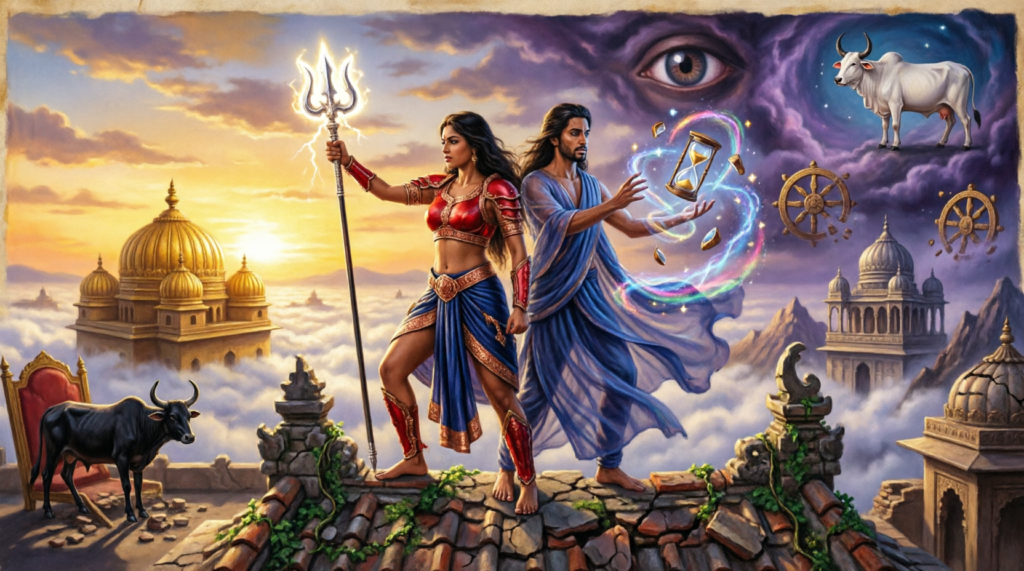
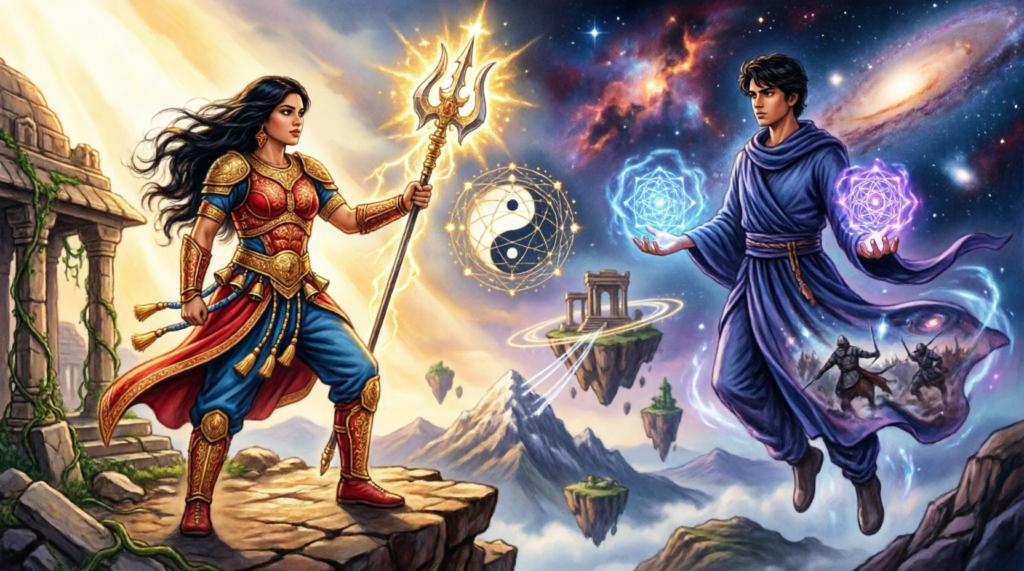
The introduction of Darsh, formerly known as Golu, as a secondary playable protagonist is a significant narrative and mechanical evolution. In the first game, Golu was the emotional anchor, a child whose kidnapping served as the catalyst for the journey. In Kaliyuga, he has grown into a dreamwalker, a character who is haunted by visions of both the past and the future. This duality between Raji and Darsh forms the emotional core of the sequel, representing the balance of the cosmos itself. Raji represents the path of faith and the physical strength of the warrior, while Darsh represents the path of vision and the introspective nature of the dreamwalker.
The relationship between the siblings has shifted from protector and protected to a partnership of equals. Throughout the story, players switch between the two characters, who act as companions to one another as they journey toward the Eternal Summit. This shifting perspective offers a multifaceted understanding of the conflict, as players witness how each sibling has evolved during their separation and how their combined strengths are necessary to face the cosmic threat of Mahabalasura.
Technical Transformation: The Leap into the Third Person and Unreal Engine 5
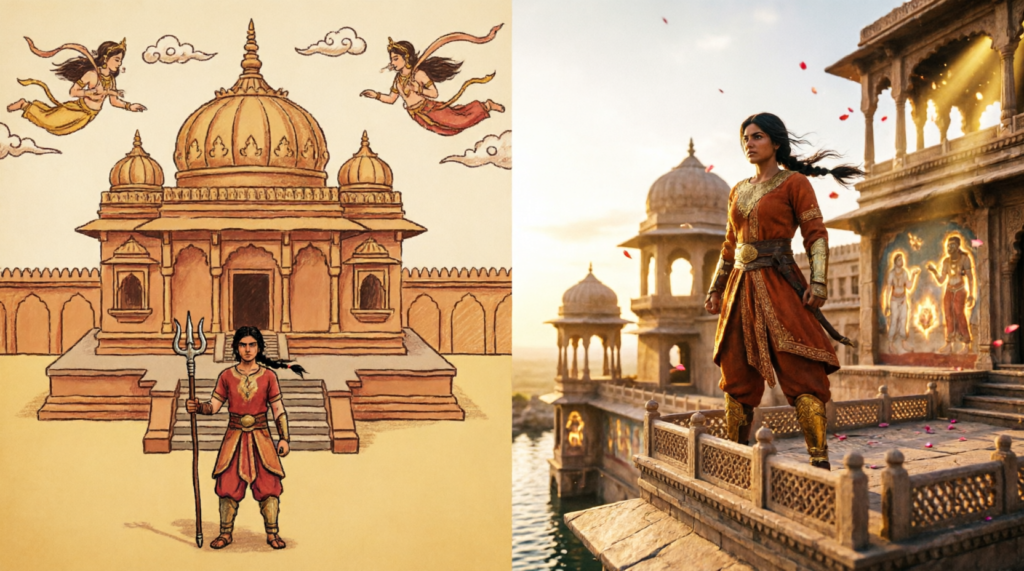
The most radical change in the development of Raji Kaliyuga is the transition from the isometric perspective of the first game to a full third person action adventure viewpoint. The developers noted that while the isometric camera served the story of the original well, the grander scale and more complex mechanics of the sequel necessitated a more intimate and cinematic camera angle. This move brings the series into direct competition with major global action adventure franchises, requiring a higher level of detail in character animations and environmental design.
To support this ambitious shift, Nodding Heads Games is leveraging the capabilities of Unreal Engine 5. This allows for modern features such as advanced lighting systems and modular world building, which are essential for creating the vast and varied realms that the protagonists must explore. The handcrafted art style that was a hallmark of the first game has been enhanced, with the static murals of the past evolving into living murals that breathe and tell stories in real time as the player progresses.
The technical requirements for the PC version of the game reflect this move toward high fidelity graphics and complex simulation.
| System Category | Minimum Requirement | Recommended Requirement |
| Operating System | Windows 10 (64 bit) | Windows 10 (64 bit) |
| Central Processing Unit | Intel Core i5 8400 / AMD Ryzen 5 1600 | Intel Core i7 9700 / AMD Ryzen 5 5500 |
| Random Access Memory | 8 GB | 8 GB |
| Graphics Processing Unit | NVIDIA RTX 2070 / AMD RX 5700 XT | NVIDIA RTX 3060 / AMD RX 6600 XT |
| DirectX | Version 11 | Version 12 |
| Storage Space | 100 GB | 100 GB |
This technical evolution is not merely aesthetic; it fundamentally changes how players interact with the world. The larger environments allow for more complex traversal mechanics and verticality, while the third person camera provides a better sense of scale when facing the massive mythological creatures and bosses that inhabit the lokas. The developers have invested significant time in mastering this new perspective, ensuring that the essence of the Raji experience is preserved despite the change in viewpoint.
Combat Mechanics: The Interplay of Martial Arts and Siddhis
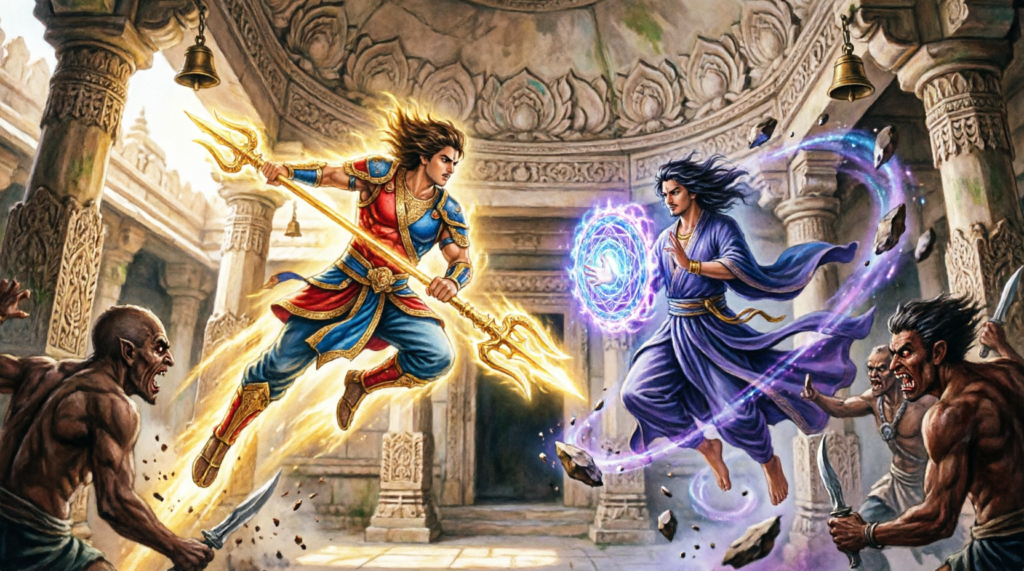
The combat in Raji Kaliyuga is built on the foundation of the unique abilities possessed by each of the two protagonists. Raji continues to master the divine arts and celestial combat, utilizing the Trishul and acrobatic martial arts to engage her enemies. To refine her playstyle, the game introduces a customized evasion system that allows for more fluid and responsive movement during high intensity encounters.
Darsh offers a completely different mechanical experience. As a dreamwalker, he awakens to immense supernatural powers known as Siddhis. These powers allow him to manipulate the fundamental forces of the universe, including gravity, time, and energy. The game features a dedicated siddhi yielding system for Darsh, which provides distinct movement and combat abilities. This mechanical variety enriches the gameplay by allowing players to craft their own combat styles, switching between the physical prowess of Raji and the mystical manipulations of Darsh to solve puzzles and defeat enemies.
The interplay between these two combat styles is particularly evident in the boss battles, where players must utilize the strengths of both siblings to overcome the wrath of Mahabalasura. The shifting control between the characters at different story junctures keeps the pacing fresh and ensures that the player remains engaged with both the physical and metaphysical aspects of the conflict. This dual protagonist approach also allows the narrative to explore the emotional weight of their reunion, as they learn to rely on each other’s evolved strengths.
Exploring the Realms: Artistic Design and World Building
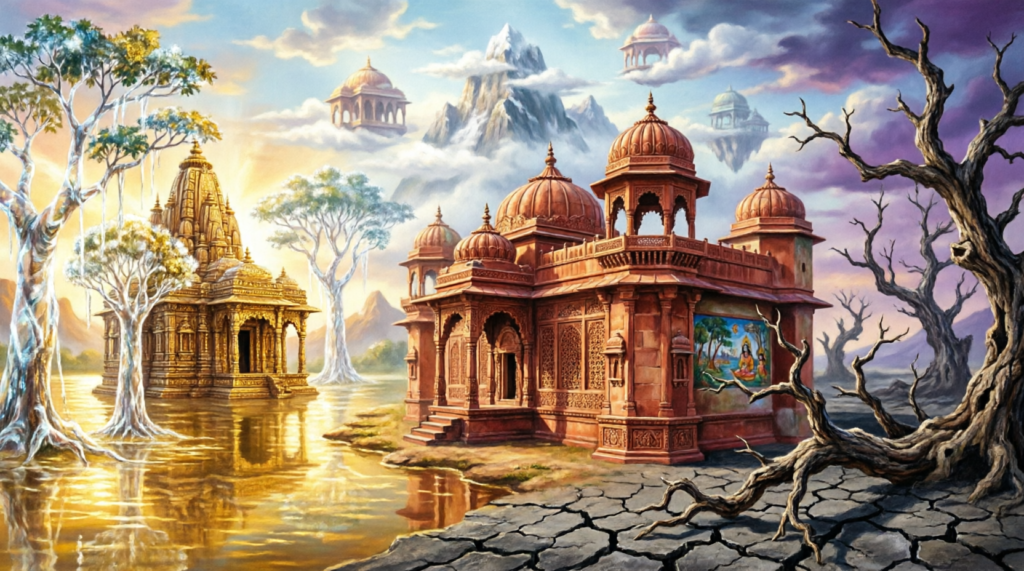
The world of Raji Kaliyuga is composed of various realms, or lokas, that the siblings must traverse on their journey toward the Eternal Summit. One such realm is Vitla, a location within Patal Lok that is themed around the concept of greed. This realm features unique environmental elements such as golden water and spiritual trees, utilizing environmental storytelling to convey the themes of the Kaliyuga. The design of these realms continues the series’ tradition of being inspired by Indian and Balinese mythology, as well as the historical architecture of Rajasthan.
The art direction of the game remains a primary focus, with the team emphasizing that every visual element is human made. By avoiding generative AI, the developers aim to preserve the handcrafted, painterly quality that distinguished the first game. The architectural inspiration is drawn from medieval Indian palaces and forts, which are meticulously researched to ensure cultural authenticity. This commitment to detail extends to the character animations, which incorporate traditional Indian dance poses to give the movements a distinct cultural flair.
Music and sound design also play a critical role in the world building of Kaliyuga. Composer Linos Tzelos has adopted a music first approach, often building trailers and gameplay sequences around specific musical themes. The soundtrack incorporates authentic Indian instruments, such as the Ravanhatta, which Tzelos learned to play in Ajmer, Rajasthan, to ensure the music was representative of the culture. The audio landscape of the sequel is described as darker and more emotionally heavy, reflecting the shift in tone as the characters confront their fears and destinies in the Age of Darkness.
The Global Strategy: Accessibility and Localization
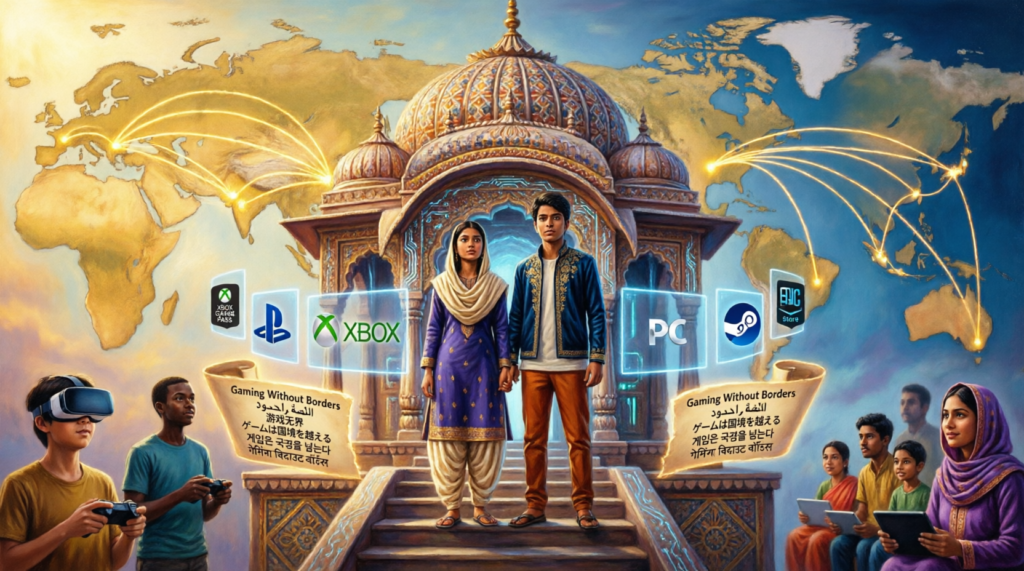
Nodding Heads Games is committed to ensuring that Raji Kaliyuga is accessible to a wide audience, both in India and internationally. The narrative is designed to be self contained, allowing new players to grasp the core premise without having played the original title. Essential backstory elements are revealed naturally through memory murals, dialogue, and environmental cues, providing context for the siblings’ journey.
The localization efforts for the sequel are particularly extensive, reflecting the diverse linguistic landscape of India and the global nature of the gaming market. The game will feature full audio in both English and Hindi, along with subtitles in a wide range of international and Indian languages.
| Language Type | Supported Subtitle Languages |
| International | English, French, Italian, German, Spanish (Spain), Arabic, Danish, Finnish, Japanese, Korean, Polish, Portuguese (Brazil), Russian, Simplified Chinese, Turkish |
| Indian Regional | Assamese, Bangla, Hindi, Kannada, Marathi, Punjabi, Tamil, Telugu |
The game is planned for release on all major current gaming platforms, including PlayStation 5, Xbox Series X|S, and PC via Steam and the Epic Games Store. Furthermore, it will be available on Xbox Game Pass on its first day of release, providing immediate access to a large subscriber base. The developers have also expressed their intention to bring the game to the successor of the Nintendo Switch, further expanding its reach.
The Impact on the Indian Game Development Community
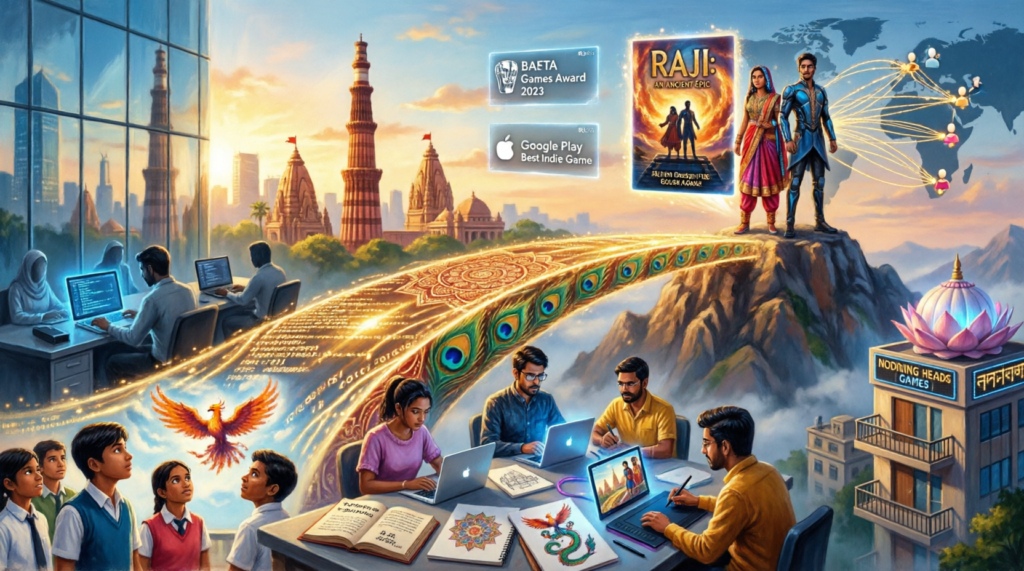
The success of the Raji franchise has had a profound impact on the Indian game development community, serving as an inspiration for many aspiring developers. For a long time, the perception of the industry in India was that it was a place for outsourcing and mobile gaming, not for the creation of high quality console titles. Nodding Heads Games has challenged this perception, proving that a dedicated team with a strong vision can create original IP that competes on a global level.
The original game reached over 2.5 million players, a milestone that was celebrated on its fourth anniversary. This success has helped to legitimize gaming as a serious career path in India, encouraging parents and educators to view game design and development as viable professions. The studio founders, who previously worked as game trainers, noted that they often had difficulty explaining their work to older generations, but the success of Raji has begun to change the mindset of the public.
As the industry in India grows, with over three hundred studios now operating in the country, the release of Raji Kaliyuga is seen as a benchmark for what is possible. The studio’s commitment to delivering a high quality experience without relying on exploitative monetization or AI generated assets has set a high standard for other local developers to follow. By focusing on authentic storytelling and cultural representation, Nodding Heads Games is helping to put India on the map as a center for creative excellence in the global gaming industry.
Recommended Readings
The following books provide deep insights into the mythology, cosmology, and chronological theories that form the foundation of the Raji series.
- The Cosmology of the Bhagavata Purana: Mysteries of the Sacred Universe by Richard L. Thompson.
- The Vishnu Purana: A System of Hindu Mythology and Tradition by Horace Hayman Wilson.
- The Crisis of the Modern World by Rene Guenon.
- Myth = Mithya: A Handbook of Hindu Mythology by Devdutt Pattanaik.
- Mahagatha: 100 Tales from the Puranas by Satyarth Nayak.
Frequently Asked Questions
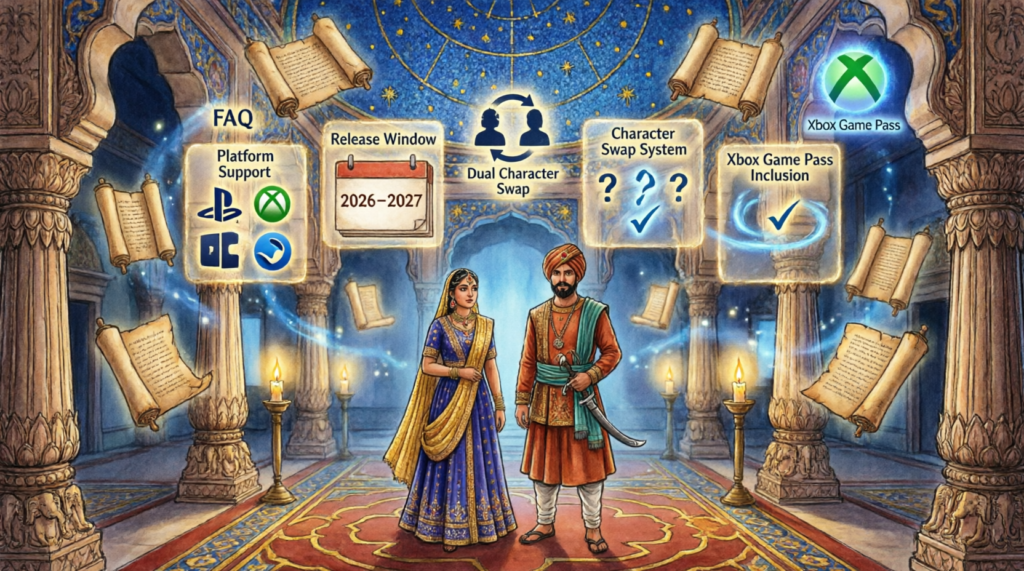
Q1: What are the main platforms for the release of Raji Kaliyuga?
A: The game is confirmed for release on the PlayStation 5, Xbox Series X|S, and PC through Steam and the Epic Games Store. Additionally, the developers are targeting a release for the successor to the Nintendo Switch.
Q2: When is the expected release date for the sequel?
A: While no firm release date has been officially confirmed by Nodding Heads Games, industry projections and the “Coming Soon” status on Steam suggest a launch window between 2026 and 2027.
Q3: Will Raji Kaliyuga be available on subscription services?
A: Yes, the game has been confirmed for a day one release on Xbox Game Pass.
Q4: Can players control multiple characters in the sequel?
A: Yes, the game features dual protagonists, Raji and her brother Darsh. Players will switch between the two characters based on specific story events, with each character offering unique gameplay mechanics and combat styles.
Q5: What is the mechanical difference between Raji and Darsh?
A: Raji remains a warrior of faith, using her divine Trishul and acrobatic martial arts with a new customized evasion system. Darsh is a dreamwalker who wields Siddhis, allowing him to manipulate gravity, time, and energy through a dedicated siddhi yielding system.
Q6: Do I need to have played Raji An Ancient Epic to understand the sequel?
A: No, the game is designed to be a standalone experience. While returning players will have a deeper emotional connection to the characters, new players will be introduced to the necessary backstory through environmental storytelling and memory murals.
Conclusion
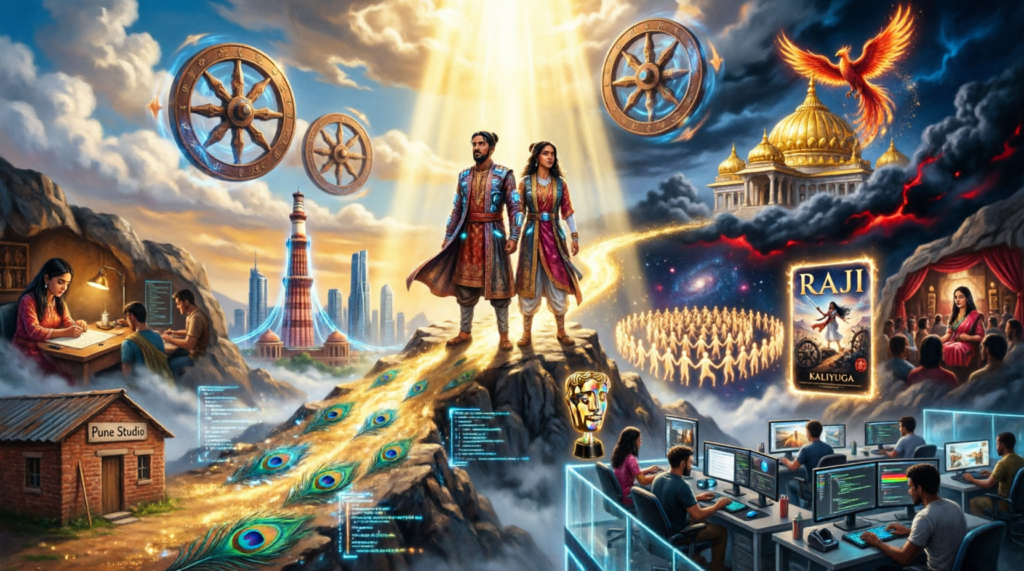
The announcement of Raji Kaliyuga is a landmark moment for Indian gaming, representing a bold leap forward in scale, technology, and narrative complexity. By choosing to explore the themes of the Kaliyuga, Nodding Heads Games is not only creating a compelling action adventure but is also providing a profound commentary on the cyclical nature of time and the decline of virtue in the modern world. The transition to a third person perspective and the utilization of Unreal Engine 5 demonstrate a studio that is willing to take significant risks to realize its creative vision.
As Raji and Darsh journey toward the Eternal Summit, their story serves as a metaphor for the struggles and triumphs of the studio that brought them to life. From the early days of personal sacrifice and financial uncertainty to the global stage of the Xbox Partner Preview, the journey of Nodding Heads Games is a testament to the power of faith and resilience. Whether players choose to save the universe or destroy it to end the conflict, the impact of Raji Kaliyuga will undoubtedly be felt across the gaming landscape for years to come, further establishing India as a vital and creative force in the world of digital entertainment.












Leave a Reply