

- Home
- /
- Product Management
- /
- The Integrated Product Manager: Principles,…
⏱️ Read Time:
Introduction
The role of a product manager has transformed from a tactical coordinator of tasks into a high stakes leadership position that sits at the center of organizational success. In the current technology landscape, a product manager must navigate the complex intersection of user psychology, technical constraints, business objectives, and team dynamics. This comprehensive report synthesizes the foundational principles of modern product management, offering an exhaustive analysis of the strategies required to build products that are not only functional but essential to their users. By examining the methodologies of industry experts, this analysis provides a roadmap for new product leaders to transition from simply shipping features to delivering meaningful outcomes.
The evolution of the field reflects a broader shift in how value is created in the digital age. Success no longer depends solely on the ability to manufacture at scale but on the capacity to solve specific human problems through iterative, software driven solutions. This requires a shift in mindset from project management, which focuses on timelines and outputs, to product management, which focuses on value and outcomes. The following sections detail the architectural elements of this discipline, providing a deep dive into strategic planning, behavioral design, risk mitigation, and team leadership.
Strategic Foundations and the Architecture of Innovation
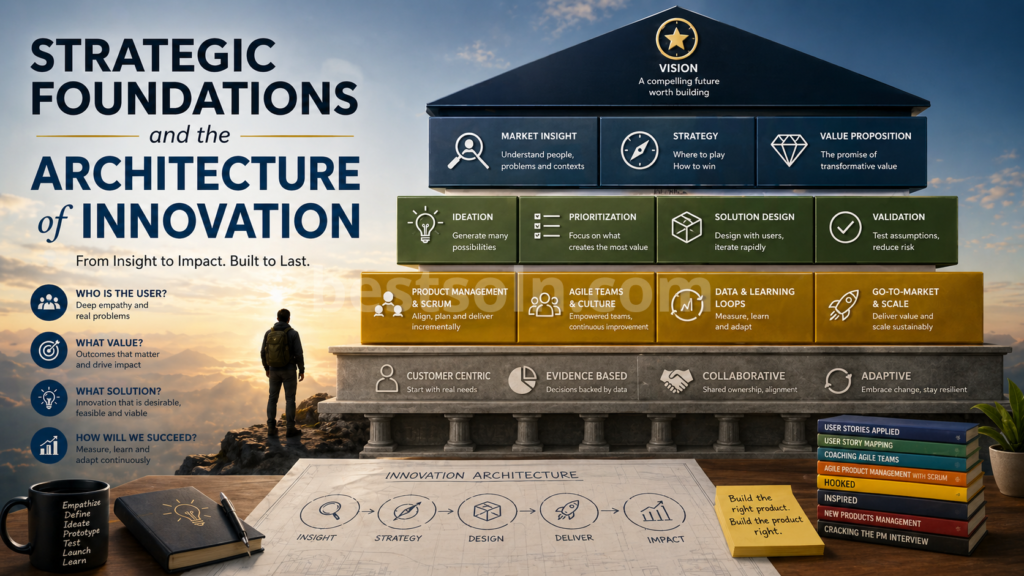
Successful product development does not begin with an idea for a feature. It begins with a rigorous strategic framework that aligns the efforts of the product team with the broader goals of the enterprise. This alignment is often codified through a Product Innovation Charter (PIC), a concept developed by Merle Crawford to ensure that innovation is a directed and purposeful pursuit rather than a random series of experiments.
The Product Innovation Charter as a Strategic Compass
A Product Innovation Charter serves as a comprehensive document that outlines the rationale for a product’s existence. It provides the boundaries within which a product team can operate freely while ensuring their output remains relevant to the company’s core competencies. The charter typically consists of four critical sections: background, focus, goals and objectives, and special guidelines. The presence of a formal PIC significantly increases the success rate of new products. Research indicates that firms with a defined product development process succeed 50 percent of the time, compared to a 21 percent success rate for those without a structured approach.
The background section contextualizes the project, utilizing environmental scanning tools to identify trends that necessitate a new solution. The focus section identifies the business arena where the firm will compete, defined by the intersection of a specific technology and a specific market. Goals and objectives provide quantitative and qualitative targets, such as achieving a specific market share or profitability threshold. Finally, special guidelines outline operational constraints, such as utilizing existing distribution channels or adhering to specific regulatory requirements.
| PIC Component | Primary Function and Rationale | Implementation Examples |
| Background | Provides the contextual “why” for the project, aligning it with corporate strategy. | Responding to a specific market shift or a new technological capability. |
| Focus | Defines the competitive arena by linking technology and market segments. | Leveraging proprietary data analytics for mid sized healthcare providers. |
| Goals | Establishes measurable targets for success, including financial and market metrics. | Mandating that 30 percent of sales must come from products released in the last four years. |
| Guidelines | Sets operational rules of the road to manage risk and maintain focus. | Requiring the use of current distribution channels or specific design standards. |
Forecasting Market Success through the ATAR Model
Once the strategic focus is set, the product manager must evaluate the commercial viability of the proposed concept. The ATAR model (Awareness, Trial, Availability, Repeat) provides a multiplicative framework based on the diffusion of innovation theory to forecast potential sales and market penetration. This model assumes that for a customer to become a regular user, they must move through a sequence of behavioral states.
The mathematical forecasting of the ATAR model allows teams to identify potential bottlenecks in their launch strategy. If awareness is high but trial is low, the problem likely lies in the value proposition or price point. Conversely, if trial is high but repeat usage is low, the product itself may be failing to meet the customer’s needs. This systematic approach helps managers make smarter choices during periods of high uncertainty.
| ATAR Variable | Definition and Mechanism | Strategic Leverage Point |
| Awareness | The percentage of the target market that is cognizant of the product’s existence. | Marketing and advertising spend; public relations efforts. |
| Trial | The percentage of aware customers willing to test or purchase the product for the first time. | Introductory pricing; samples; ease of sign up. |
| Availability | The percentage of potential customers who have access to the sales or distribution channel. | Channel strategy; retail partnerships; digital distribution reach. |
| Repeat | The percentage of triers who become habitual or regular users of the product. | Product quality; user experience; ongoing value delivery. |
Behavioral Design and the Psychology of Habit Formation
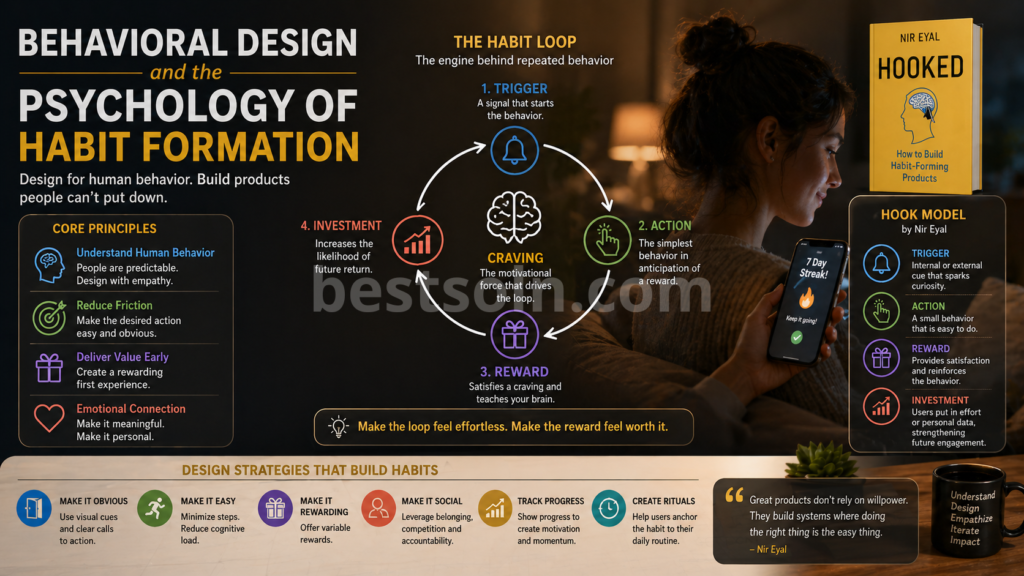
Building a product that provides value is only the first step. For a product to succeed in a crowded market, it must become a part of the user’s daily or weekly routine. Nir Eyal’s Hook Model provides a framework for creating habit forming products by leveraging the mechanics of human psychology. This model consists of four phases: Trigger, Action, Variable Reward, and Investment.
The Four Phases of the Hook Model
The objective of the Hook Model is to create a cycle where the user’s internal triggers, such as boredom, loneliness, or frustration, become linked to the product’s solution. This process begins with external triggers but eventually transitions to internal associations that drive engagement without the need for expensive marketing.
The trigger is the actuator of behavior. External triggers, such as push notifications or email reminders, prompt the user to take an initial action. The action is the simplest behavior done in anticipation of a reward. Following the Fogg Behavior Model, an action occurs when there is sufficient motivation, high ability (simplicity), and a clear trigger.
The variable reward is the phase where the user’s need is satisfied. Crucially, the reward must be variable to maintain interest. Predictability leads to boredom, while variability creates a dopamine driven state of curiosity and desire. Finally, the investment phase is where the user puts something back into the product, such as data, time, or social capital. This investment makes the product more valuable to the user and sets the stage for the next external trigger, closing the loop.
| Hook Model Phase | Core Function and Rationale | Implementation Strategies |
| Trigger | Cues the user to take action, moving from external prompts to internal emotional cues. | Timely notifications; linking the product to common emotions like boredom or FOMO. |
| Action | The low friction behavior performed in anticipation of a reward. | Simplifying the user interface; reducing the number of steps to reach the value. |
| Variable Reward | Satisfies the user’s itch while maintaining interest through unpredictability. | Infinite feeds; social validation; novelty in content or features. |
| Investment | The user commits resources to the product, increasing its future value and personal relevance. | Storing data; building a profile; inviting friends; learning new features. |
The Ethics of Engagement: The Manipulation Matrix
While the Hook Model is a powerful tool for driving engagement, it carries significant ethical responsibilities. Eyal introduces the Manipulation Matrix to help product managers evaluate the moral implications of their work. The matrix asks two questions: Will I use the product myself? And, does the product materially improve the user’s life? A product manager who answers yes to both is considered a Facilitator, creating value that they truly believe in. Those who answer no to both are Dealers, effectively manipulating users for profit without providing genuine benefit.
Product Discovery and the Management of Risk
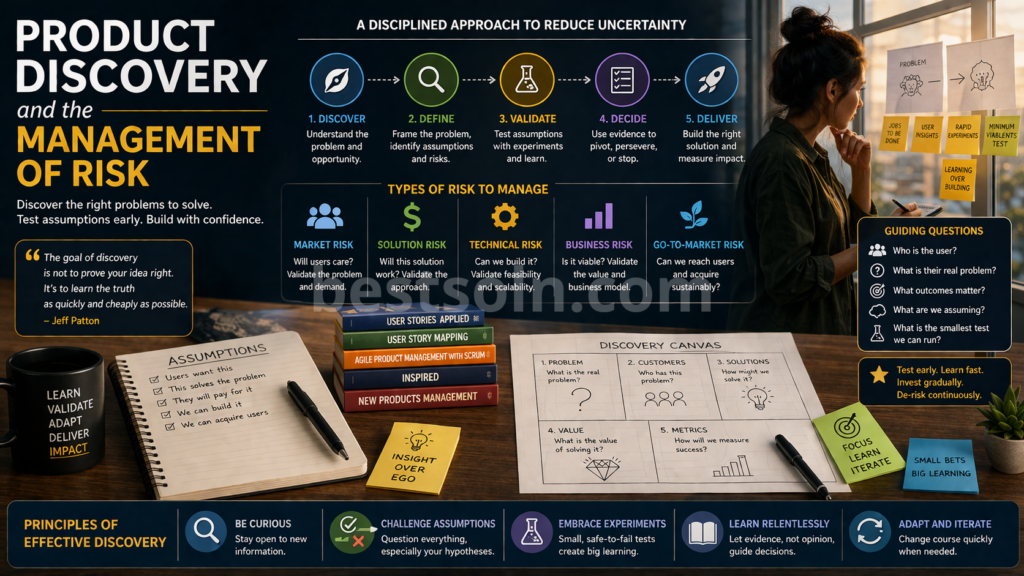
In the contemporary technology landscape, the greatest risk is not the inability to build software, but building software that nobody wants to use. Marty Cagan emphasizes that most companies over invest in delivery and under invest in discovery. Effective product discovery is a continuous process aimed at mitigating four fundamental risks: value risk, usability risk, feasibility risk, and business viability risk.
Addressing the Four Pillars of Risk
To manage these risks, the product manager must work as part of a product trio, consisting of a product manager, a designer, and a lead engineer. This cross functional group validates assumptions quickly and cheaply before committing to full scale development.
Value risk addresses whether a customer will choose to use the product. This requires evidence that the solution provides enough benefit to overcome the inertia of current habits. Usability risk focuses on whether the user can figure out how to use the product, ensuring that the interface does not become a barrier to value. Feasibility risk considers whether the engineers can build the solution within the constraints of time and technology. Finally, business viability risk ensures that the solution works for all aspects of the business, including legal, financial, and sales constraints.
Prototyping as a Learning Accelerator
Discovery relies on the use of prototypes rather than fully functional products. The goal is to run numerous experiments per week to gain insights at a minimal cost. These prototypes vary in fidelity based on the specific risk being tested.
| Prototype Type | Primary Purpose and Risk Addressed | Implementation Characteristics |
| Feasibility Prototype | Tests technical assumptions and algorithm performance; addresses feasibility risk. | Quick and dirty; often uses throwaway code; built by engineers. |
| User Prototype | Simulates the user experience to test usability and perceived value; addresses usability risk. | Ranges from low fidelity wireframes to high fidelity interactive designs. |
| Live Data Prototype | Collects actual usage data from a small subset of traffic; addresses value risk. | Limited implementation; uses real data but is not fully productized. |
| Wizard of Oz Prototype | Simulates a complex automated system with manual human effort; addresses value risk. | Functional front end with a manual back end; excellent for service testing. |
The discovery process is not a one time event but a continuous loop. Teams should aim to conduct 10 to 20 experiments per week to stay ahead of market changes and user needs. This requires a culture that values learning over being right and a willingness to kill ideas that do not meet the necessary criteria for success.
Collaborative Visualization through User Story Mapping
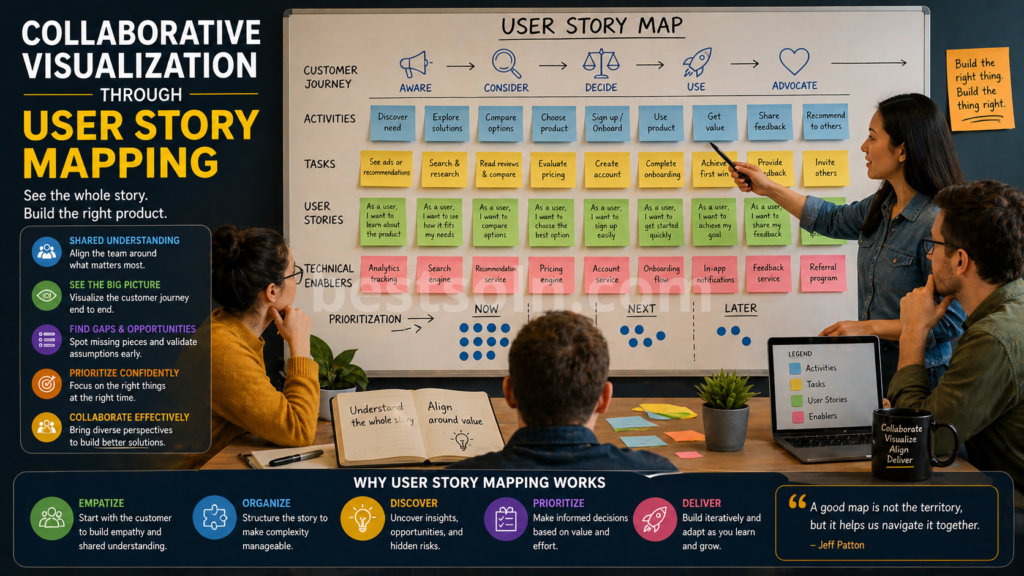
A common failure in product development is the creation of a disjointed user experience, often referred to as a Frankenstein product. This happens when features are built in isolation without a clear understanding of the overall user journey. Jeff Patton’s User Story Mapping addresses this challenge by providing a visual framework to build shared understanding within the team.
The Structure and Flow of a Story Map
A story map is a two dimensional grid that organizes user stories into a coherent narrative. The horizontal axis represents the narrative flow, following the sequence of activities a user performs over time. The vertical axis represents the details and alternative tasks, sorted by their necessity to the user journey.
The backbone of the map consists of high level activities, such as “Manage Account” or “Purchase Item”. Underneath the backbone, the team identifies the specific tasks and stories that support each activity. This visual structure allows the team to see the big picture and identify gaps in the user experience that might be missed in a traditional, flat product backlog.
Story mapping shifts the focus from writing perfect documents to having rich conversations. The goal is not to gather requirements but to build a common understanding of user problems and potential solutions. This collaborative exercise incorporates the wisdom of the makers, the needs of the users, and the objectives of the stakeholders.
Slicing for Strategic Releases
One of the most powerful applications of a story map is the ability to “slice” the map to define release strategies. Instead of building a product feature by feature, the team identifies a horizontal slice that provides a functional, end to end experience for the user. This is often referred to as the walking skeleton or the Minimum Viable Product (MVP).
Subsequent slices can be planned to address different business goals, such as learning about user behavior, reducing technical risk, or expanding into new markets. This iterative approach ensures that the product delivers value early and often, rather than waiting for a massive, high risk launch.
The Technical Execution of Agile Requirements
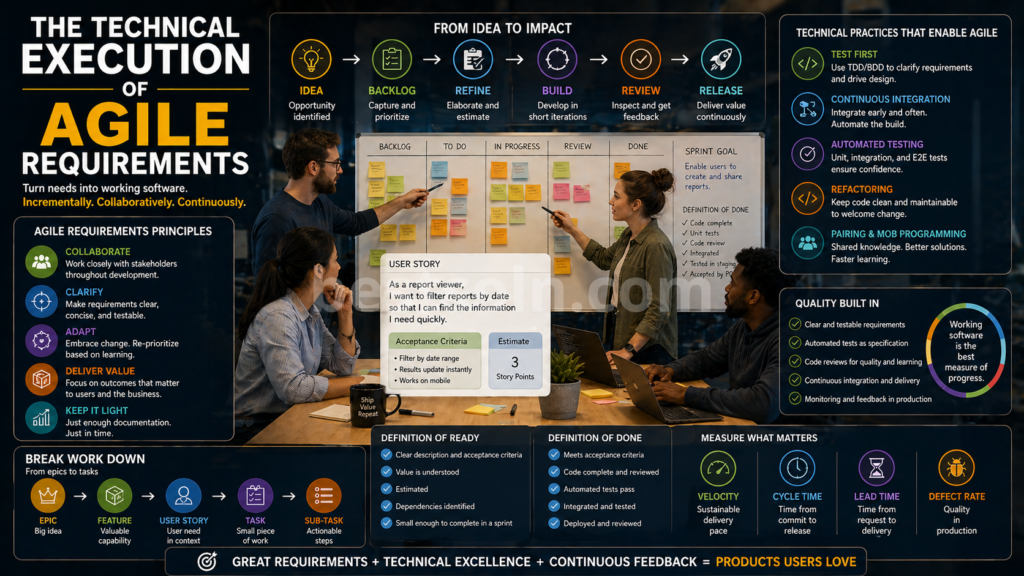
Once the big picture is established through story mapping, the team must translate these insights into actionable work items. Mike Cohn’s methodology for user stories provides a structured approach to writing and managing requirements in an agile environment. User stories are not formal specifications but are designed to shift the focus from writing about requirements to talking about them.
The INVEST Criteria for Quality Stories
To ensure that a user story is well structured and ready for development, it should meet the INVEST criteria. This acronym helps teams assess the quality of their backlog items and avoid common pitfalls in planning.
| INVEST Criterion | Description and Rationale | Practical Application |
| Independent | The story can be developed and delivered without being blocked by other items. | Reduces prioritization and planning complexities. |
| Negotiable | The story is a placeholder for a conversation, not a rigid contract. | Allows for trade offs and adjustments based on team feedback. |
| Valuable | Each story must provide a clear benefit to the user, the business, or the customer. | Ensures the team is building things that matter. |
| Estimatable | The team must have enough information to estimate the effort required. | Facilitates accurate sprint planning and forecasting. |
| Small | The story should be small enough to be completed within a single iteration. | Increases the flow of work and reduces risk. |
| Testable | There must be a clear way to verify that the story is done and meets the need. | Defines clear conditions of satisfaction. |
The 3C Model and Story Splitting
Cohn emphasizes the 3C model for user stories: Card, Conversation, and Confirmation. The Card is the written description used for planning. The Conversation is the verbal exchange that fleshes out the details. The Confirmation represents the acceptance tests used to determine when a story is complete.
When a story is too large to fit into a single iteration, it is known as an Epic. These must be split into smaller, more manageable pieces using patterns such as the SPIDR technique.
- Spike: Creating a small research task to resolve technical uncertainty before committing to full development.
- Path: Breaking down a task based on different user workflows or payment methods.
- Interface: Splitting a feature by browser type, device, or level of UI complexity.
- Data: Focusing on a subset of data initially, such as supporting one file type before adding others.
- Rules: Temporarily relaxing business rules to get a basic version of a feature into production.
The Product Owner and the Dynamics of the Scrum Team
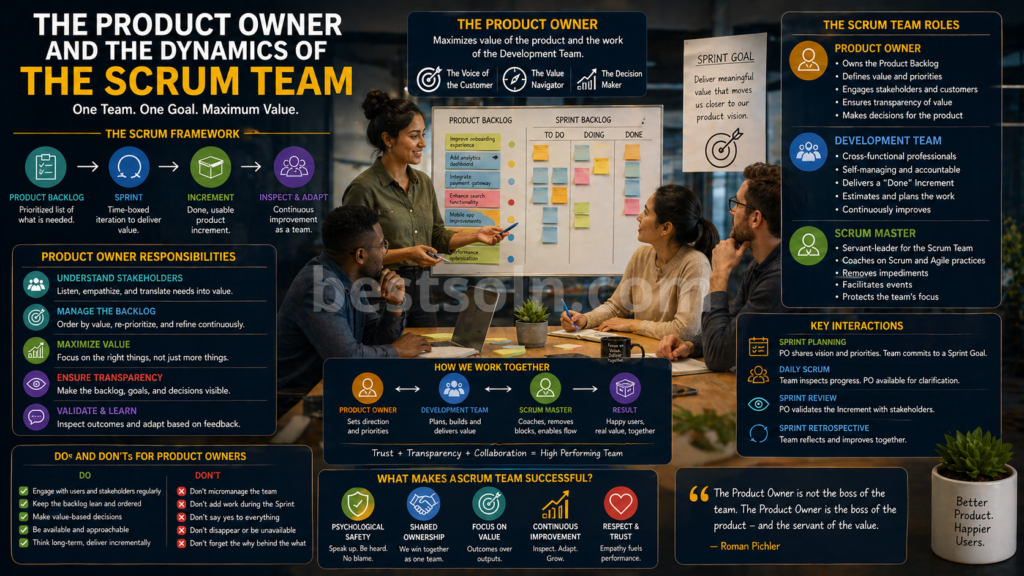
In the Scrum framework, the Product Owner (PO) is the central role responsible for maximizing the value of the product. This role is inherently entrepreneurial and requires a unique blend of strategic vision and tactical execution. Roman Pichler notes that the PO role often unites the responsibilities of traditional product management and product marketing to ensure end to end accountability.
Strategic Backlog Management
The PO is the sole individual responsible for the product backlog. This is not merely a to do list but a prioritized inventory of all work required to achieve the product vision. Items at the top of the backlog are small, detailed, and ready for development, while items further down are larger and more abstract.
The PO’s duty is to ensure the backlog is clear and that the team understands the order of importance for each task. This requires continuous refinement, often involving up to 10 percent of the team’s capacity in each sprint to size items and break down larger epics. By focusing on customer needs and ensuring every item provides a clear benefit, the PO prevents the backlog from becoming a dumping ground for every random idea.
Collaboration and Team Autonomy
While the PO has the final say on what is built, the development team has the autonomy to decide how it is built. This relationship is based on trust and mutual respect. The PO sets the goals and outlines the objectives, leaving the team to devise the technical strategies to achieve them.
Effective POs are not detached from the development process. They are active members of the Scrum team, participating in sprint planning, reviews, and retrospectives. They act as the voice of the customer, ensuring the team’s output aligns with market needs and business goals.
Leadership and Coaching in Agile Environments
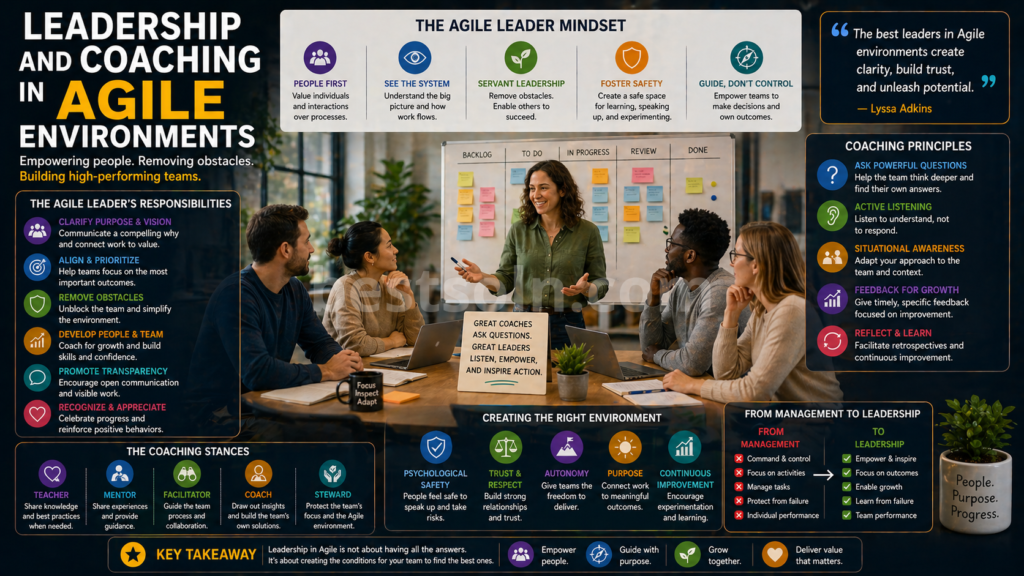
As product teams mature, the role of leadership shifts from managing tasks to coaching people. Lyssa Adkins provides a framework for transitioning from a command and control management style to an agile coaching mindset. The goal of an agile coach is to guide teams to autonomy and extraordinary performance.
The Stances of the Agile Coach
An agile coach must master several specific roles to support team growth. These are often applied based on the team’s stage of development, utilizing frameworks like Shu Ha Ri. Shu represents following the rules strictly, Ha represents deeper contemplation and experimentation, and Ri captures instinctive adherence to principles.
The coach acts as a Teacher, instructing the team on agile values and practices. As a Mentor, they share personal experience and wisdom to help team members grow. In the stance of a Facilitator, they foster an environment of collective problem solving. Perhaps most crucially, the coach acts as a Conflict Navigator, guiding the team through the inevitable tensions that arise in collaborative environments.
Navigating Conflict and Fostering High Performance
Conflict is not something to be avoided but navigated. Adkins emphasizes that a coach should not step in to solve every problem but should empower the team to unearth their own solutions. This involves diagnosing the level of conflict and using techniques to de-escalate destructive behaviors.
| Level of Conflict | Team Behavioral Signals | Coach’s Navigational Response |
| Level 1: Problem to Solve | Focused on facts; respectful debate. | Encourage information sharing and collaborative resolution. |
| Level 2: Disagreement | Personalities start to clash; people keep secrets. | Help the team separate the people from the problem. |
| Level 3: Contest | The goal is to win; people take sides. | Facilitate a structured conversation to find common ground. |
| Level 4: Crusade | Ideological battle; people stop talking. | De-escalate the situation and re-establish safety. |
| Level 5: World War | The goal is to destroy the other party. | Stop the interaction and protect the individuals. |
Creating a high performance environment requires the coach to set a vision of excellence and inspire the team through metaphors and stories. By staying actively engaged without dominating, the coach allows the team’s self organization to emerge, leading to innovation and creative problem solving.
Career Progression and Interview Mastery
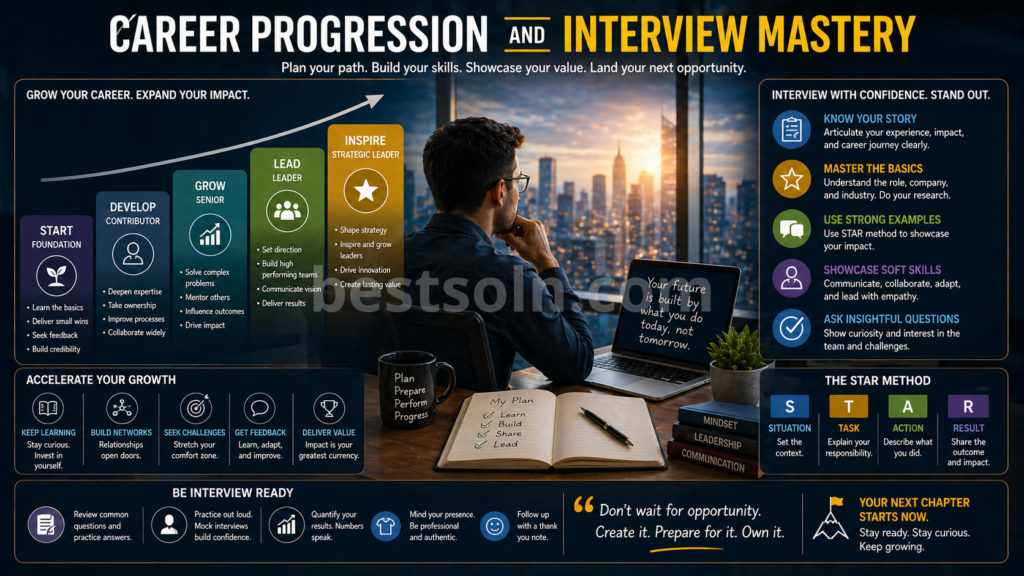
The professional journey of a product manager often involves a series of rigorous interviews designed to test product sense, technical execution, and strategic thinking. Gayle Laakmann McDowell provides the frameworks necessary to master these evaluations and thrive in the role.
The CIRCLES Method for Product Sense
When faced with product design questions, such as “How would you improve Google Maps?”, candidates should use a systematic approach to demonstrate their thought process. The CIRCLES method is particularly effective for this.
- Comprehend the Situation: Ask clarifying questions to understand the context and constraints.
- Identify Customers: Define the target user personas and their unique characteristics.
- Report Customer Needs: Identify the primary pain points and desires of those personas.
- Cut through Prioritization: Select the most impactful problem to solve based on business goals.
- List Solutions: Brainstorm multiple creative solutions to the identified problem.
- Evaluate Trade-offs: Discuss the pros and cons of each solution, including feasibility and impact.
- Summarize: Provide a final recommendation and define how success will be measured.
The AARM Metrics Framework
To evaluate the execution of a product or feature, product managers must be comfortable with data and analytics. The AARM framework helps identify the key metrics that drive business success.
- Acquisition: Measuring how users discover and sign up for the product. This includes tracking sign up rates and cost per acquisition.
- Activation: Identifying the percentage of users who perform a meaningful action for the first time, such as logging in or completing a profile.
- Retention: Tracking the number of users who return to the product over time. This is the most critical metric for long term viability.
- Monetization: Measuring the revenue generated from the user base, often through metrics like average revenue per user (ARPU) or customer lifetime value (LTV).
By applying these frameworks, product managers can approach complex scenarios with sound logic and a focus on measurable results. This ability to think at scale while attending to minute details is a hallmark of great product leadership.
Integrating the Pillars of Product Management
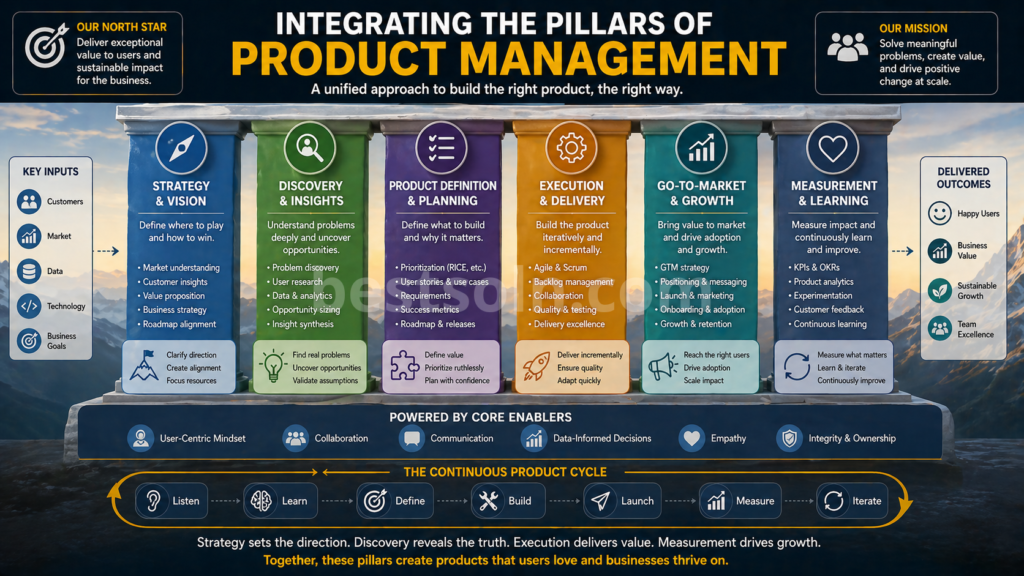
The true power of these methodologies lies in their integration. A successful product manager does not use these tools in isolation but weaves them together into a coherent operating model. The strategic direction established by the PIC and ATAR model informs the focus of Product Discovery. The insights gained during discovery are visualized through User Story Mapping, which in turn feeds the Product Backlog.
This integrated approach ensures that the team is not just building things right, but building the right things. It bridges the gap between high level business strategy and daily tactical execution. Furthermore, by adopting a coaching mindset, product leaders can empower their teams to navigate conflicts and reach a state of high performance, where innovation becomes a natural byproduct of the collaborative process.
The transition from a project based mindset to a product based mindset requires a commitment to continuous learning and a willingness to embrace uncertainty. It involves listening to what customers do rather than just what they say, and using experiments to validate every assumption. By focusing on outcomes rather than outputs, product managers can create products that truly solve customer problems and drive sustainable business growth.
Recommended Readings for Product Leaders
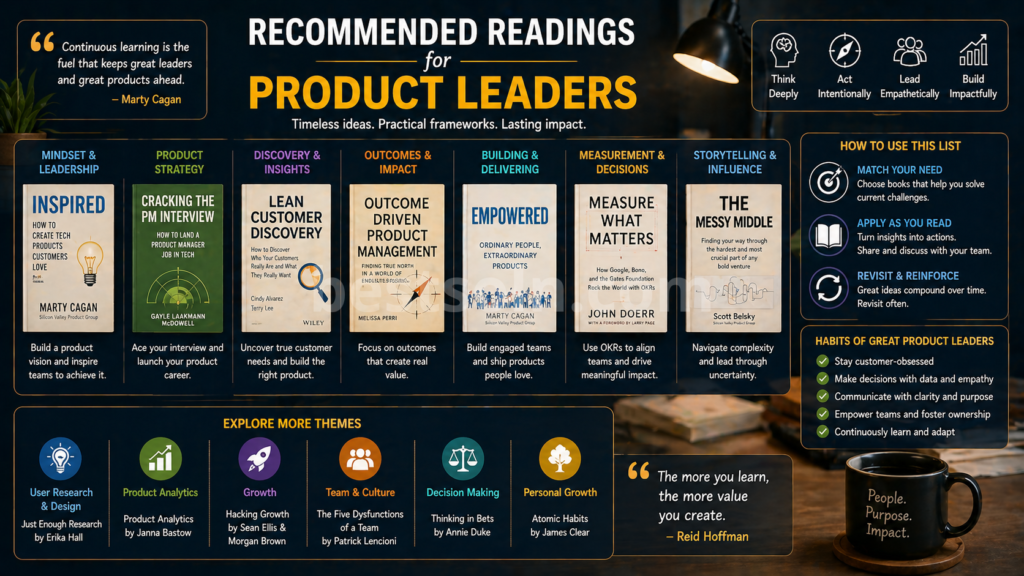
- Inspired: How to Create Tech Products Customers Love by Marty Cagan
- Hooked: How to Build Habit-Forming Products by Nir Eyal
- User Story Mapping: Discover the Whole Story, Build the Right Product by Jeff Patton
- User Stories Applied: For Agile Software Development by Mike Cohn
- Agile Product Management with Scrum by Roman Pichler
- Coaching Agile Teams by Lyssa Adkins
- New Products Management by C. Merle Crawford
- Cracking the PM Interview by Gayle Laakmann McDowell
- Escaping the Build Trap by Melissa Perri
- The Lean Startup by Eric Ries
- Continuous Discovery Habits by Teresa Torres
- Crossing the Chasm by Geoffrey Moore
- The Mom Test by Rob Fitzpatrick
- Product Roadmaps Relaunched by C. Todd Lombardo
Frequently Asked Questions
Q1: How does a product manager balance discovery and delivery?
A: Dual track development is the standard approach, where discovery (figuring out what to build) and delivery (building it) happen in parallel. The product trio (PM, Designer, Engineer) leads discovery to ensure that the delivery track is only building validated, high value features.
Q2: What is the difference between an Epic and a User Story?
A: A user story is a small, manageable description of functionality that can be completed within a single sprint. An epic is a larger story that encompasses many smaller stories and must be split before it can be executed by the development team.
Q3: Why is the Variable Reward phase of the Hook Model so effective?
A: Human psychology is wired for curiosity. When a reward is predictable, the dopamine surge diminishes over time. Variability creates a state of wanting and search, which drives repeated engagement as users seek that next burst of satisfaction.
Q4: What is the primary responsibility of a Product Owner in Scrum?
A: The Product Owner’s main responsibility is to maximize the value of the product by managing the product backlog and ensuring that the development team is working on the most impactful tasks.
Q5: What are the four critical risks in product discovery?
A: According to Marty Cagan, they are Value risk (will they buy?), Usability risk (can they use it?), Feasibility risk (can we build it?), and Business Viability risk (does it fit the business?).
Q6: How do you determine if a market is big enough for a new product?
A: The ATAR model helps by multiplying the potential Awareness, Trial, Availability, and Repeat rates against the total market size to forecast realistic annual sales and profitability.
Conclusion
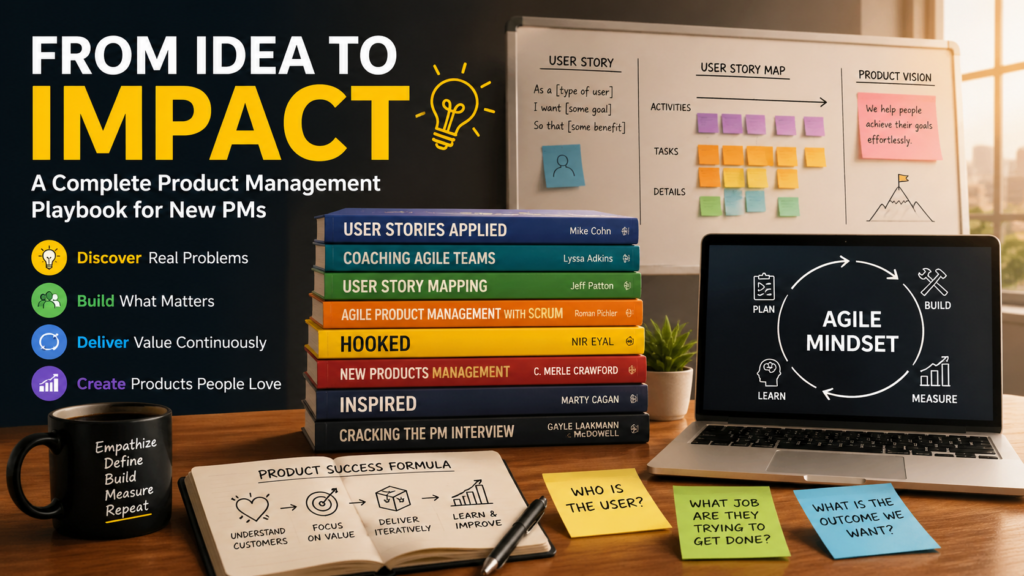
The profession of product management is both an art and a science. It requires the analytical capacity to forecast market adoption and the emotional intelligence to lead cross functional teams through the complexities of agile development. By internalizing the strategic frameworks of the Product Innovation Charter and the ATAR model, product managers can provide their organizations with the focus and direction necessary for long term success.
Furthermore, by understanding the behavioral mechanics of the Hook Model and the risk mitigation techniques of continuous discovery, leaders can build products that are not only viable but deeply resonant with their users. User Story Mapping and the INVEST criteria provide the tactical tools needed to translate high level vision into actionable, high quality development tasks. Finally, by embracing the coaching stances necessary to foster high performance, product managers can transform their teams into engines of innovation.
As technology continues to evolve at an accelerating pace, the role of the product manager will only become more critical. Those who can synthesize strategy, psychology, and execution into a coherent whole will be the ones who define the future of the digital economy. The path to mastery is one of continuous experimentation, validated learning, and an unwavering focus on delivering genuine value to the customer. This blueprint provides the foundation, but the true impact lies in the application of these principles to the unique challenges of every new product journey.








Leave a Reply